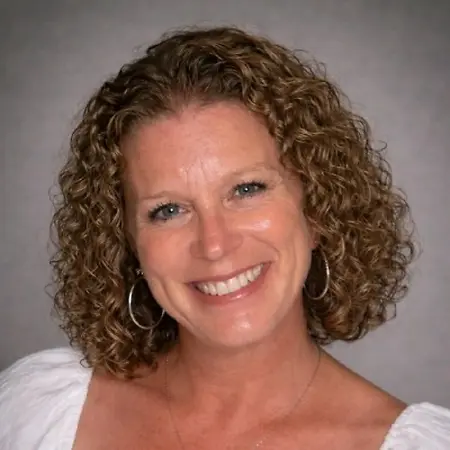
Her Story
About Jama
I always wanted to be a nurse since I was young. After high school, I took a small break before committing to my studies, then ended up working full-time while going to school full-time to get my RN. Along the way, I continued my education and earned my MBA. I got out of bedside care and moved into the care management space because the healthcare system is really complicated, complex, and hard for someone who doesn't understand it to navigate. Now I help teams develop programs to help their health plan members figure out how to navigate the system, get them connected to resources, and make sure they're seeing their providers or get them connected to the right providers. My typical day involves building clinical programs by looking at data to determine which populations we need to help the most. For example, if we see members who aren't engaging with their primary care physician regularly, we figure out how to help them connect. Or if we see members with congestive heart failure constantly in and out of the hospital, we reach out to figure out what the problem is - whether they don't understand the diet they should be following or aren't taking their medication. I write out processes, workflows, and build education materials for patients so care teams can engage with specific members to help them with their specific needs. I've been part of many pilots to help specific populations of patients really understand how to manage their healthcare, identifying groups of members who don't understand something and are going to the ER all the time, then building a complete plan for how nurses and care teams should assess them, what questions to ask, and how to respond based on their answers.
Her Interview
Ten minutes with Jama
01What do you attribute your success to?
I am one of those people who enjoy school and learning so learning more is something I actually like to do. I truly attribute my success to my husband. He has always been extremely supportive in my education and my career. I call him my biggest cheerleader.
02What’s the best career advice you’ve ever received?
I have been fortunate to be surrounded by some really great mentors. But one of those, Julie LaPrade, taught me a lot about learning to balance life and work while still being successful. She emphasized the importance of looking at the downstream effects of any process changes and ensuring one thing doesn't break something else.
03What advice would you give to young women entering your industry?
I think for so many women, imposter syndrome is so rampant, and especially particularly in young women. The nursing program is probably one of the hardest programs in all of the education system, so just don't doubt yourself. Just push, don't give up. I think that's the key thing. Just because you feel like 'Can I really do this?' - it's okay to question that sometimes, but don't let it overtake you.
04What are the biggest challenges or opportunities in your field right now?
Funding is always one of the issues that comes to mind with healthcare - not only funding, but just the cost of healthcare in general. It's really hard for the geriatric population I typically work with because they're already on a fixed income. A lot of times, unfortunately, they're choosing, do I buy food, or do I buy my medicine? And we already know which one they typically choose. The other piece would be behavioral health and mental health resources and funding. It's something that is widely underfunded and even underutilized, and I think it's almost a negative type of connotation with it, like let's just not talk about it and it doesn't exist. So I think those would probably be two of the things, and they both go back to funding.
Join Influential Women and start making an impact. Register now.