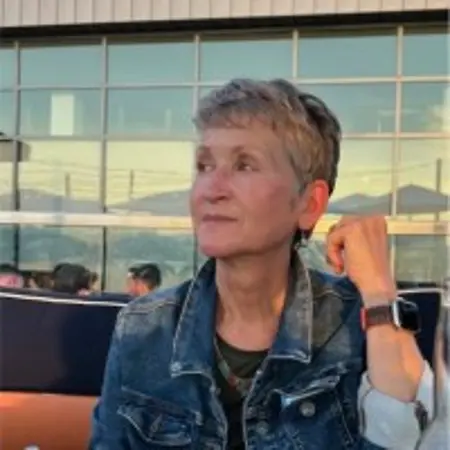
Her Story
About Julie
I am an attorney, registered nurse and healthcare executive with 20+ years of leadership experience across U.S. and international health systems, with expertise navigating complex healthcare regulatory, risk and operational challenges with pragmatic, patient-centered strategies that strengthen compliance, reduce liability and support high-quality care delivery.
Her Interview
Ten minutes with Julie
01What do you attribute your success to?
I attribute my success to perseverance, continuous learning and the courage to expand beyond a single professional identity. Beginning my career as a nurse taught me discipline, compassion, and accountability. Pursuing law required intellectual rigor, and the confidence to step into new, often unfamiliar spaces. I built expertise and acumen at the intersection of healthcare and law.
To young women, especially those drawn to leadership or complex fields, I would say this: you are allowed to evolve. You are allowed to pursue more than one passion. Do not shrink your ambition to make others comfortable. Competence creates confidence, and integrity sustains success. Stay curious, do the work, and trust that your unique path is your strength.
02What’s the best career advice you’ve ever received?
The best career advice I've ever received was encouragement to leave nursing to pursue a law degree. I appreciate the fact that I went to law school at a time when there were very few nursing professionals like me, pursuing legal degrees. The encouragement and advice pushed me to take risks and pursue opportunities even when they seemed daunting or unconventional, and it's shaped the entire trajectory of my career.
03What advice would you give to young women entering your industry?
My advice to young women entering healthcare law is to build depth before building title. Master the substantive challenges, regulatory frameworks and reimbursement systems and clinical realities of healthcare delivery. Competence is your strongest currency.
Seek mentors, but also seek experience that stretches you. Do not be afraid of legal challenges, or complex environments - those moments accelerate growth.
Protect your integrity fiercely. In healthcare law, your reputation for sound judgment and ethical clarity will carry more weight than any credential or title. Your job is to tell clients what they have to hear - not necessarily what they want to hear.
And finally, do not feel pressured to narrow yourself too soon. Interdisciplinary strength, whether clinical operations, litigation or healthcare policy can become your distinguishing advantage. The future of healthcare needs women who are analytical, principled, and unafraid to lead.
04What are the biggest challenges or opportunities in your field right now?
Artificial Intelligence (“AI”) is reshaping healthcare in profound ways. It offers extraordinary promise, but also presents significant challenges. For example, AI driven tools can detect patterns in imaging, pathology and data that may be difficult for humans to identify quickly. AI should augment but not replace clinical judgement by improving speed and sensitivity. AI helps systems with operational efficiency, through efficient staffing models, scheduling and patient flow, which can optimize patient care. Expanding AI enabled telehealth tools and decision-support systems can help address provider shortages, particularly in rural or underserved areas.
In terms of challenges, AI models are only as good as the data they access. Risks include incomplete data reflecting socio-economic and under-represented minority populations, which can worsen disparities rather than reduce them.
05What values are most important to you in your work and personal life?
As a first-generation professional, my path into nursing and then law required determination and a willingness to step into unfamiliar spaces. I’m passionate about mentoring young individuals who are also first-generation professionals because like them, I did not inherit networks or a blue-print - I created my own. That experience shaped my independence, work ethic and confidence, which in turn fuels my commitment to mentoring and empowering young women to pursue ambitious, multi-dimensional careers.
I also deeply value culturally competent care, which goes beyond interpreting a patient’s language, but understanding a patient’s cultural background, health beliefs and lived experience. Health disparities often stem from communication gaps, implicit bias, and systemic barriers. When clinicians understand and respect a patient’s cultural background, health beliefs and lived experience, patients are more likely to share accurate information, adhere to treatment regimens, and participate in preventative care.
Join Influential Women and start making an impact. Register now.