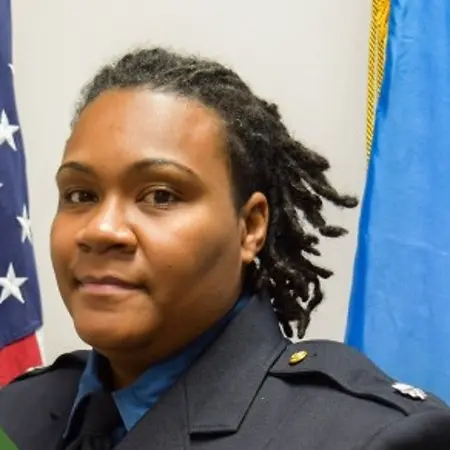
Her Story
About Kimberly
My journey into corrections was born out of necessity. I came to Delaware to attend Delaware State University where I majored in radio production as a mass communication major, dreaming of becoming a radio personality. After being suspended from school for fighting, I found myself essentially homeless, sleeping on people's couches and working as a waitress at Ruby Tuesdays and Fridays just to survive. When I started the corrections academy, I began saving money and was finally able to get my own place. I didn't even have a car until almost a year after completing the academy - I was hitching rides with coworkers. This career chose me, I did not choose it, but God brought me to corrections. Over the past 20 years, I've grown from those humble beginnings to executive leadership. Achieving the rank of Facility Warden was my most notable achievement - having that sense of ownership where you're responsible for a building, the staff, the offenders, and the success of the operation. It's a great honor to have the state place that much trust in you. I completed my doctorate in organizational learning, leading, and innovation, which helped me understand that our greatest resources are people, not just fiscal budgets. I wrote my dissertation on the importance of acknowledging personal trauma so that when you're in leadership, you're not bleeding on your staff. I've had the privilege of teaching criminal justice at the community college here in Delaware and serving as a co-facilitator in training for the Office of Business and Management. Now I work for the Bureau of Community Corrections in an executive leadership position, overseeing facility wardens and a probation and parole director, working with community stakeholders, unions, and the Attorney General's office.
Her Interview
Ten minutes with Kimberly
01What are the biggest challenges or opportunities in your field right now?
One of the biggest challenges we're facing right now, nationwide, is the staffing crisis. We need to find the ability to fully staff our agency while also helping officers sustain an important quality of life. Getting that work-life balance under control as a correctional officer is very challenging. Unfortunately, while correctional officers like to work a lot of overtime and say you can write your own check, it comes at a great sacrifice, and usually it's their quality of life that suffers. As a result, staff start participating in activities that are less desirable and not conducive to the mission - substance abuse issues, domestic violence. We have to do a better job of ensuring that while we're trying to staff the jails, we're also properly managing and maintaining people's quality of life. We're past the generation where everybody just wants to work. People don't care about the money anymore. Now it's like, what's my days off? Quality of life is a big deal. As an organization in corrections across the country, we have to do a better job. We can't keep using our staff, we can't turn our staff into sacrificial lambs for the agency. There's also the challenge of generational gaps in the workplace - you have the generation where it's if you don't work, you don't eat, and then you have the other generation where it's well, there's more to life than just working. How do we bridge that gap? Because both sides are right. That is a constant struggle and I've not figured it out yet.
Join Influential Women and start making an impact. Register now.