Her Story
About Ping
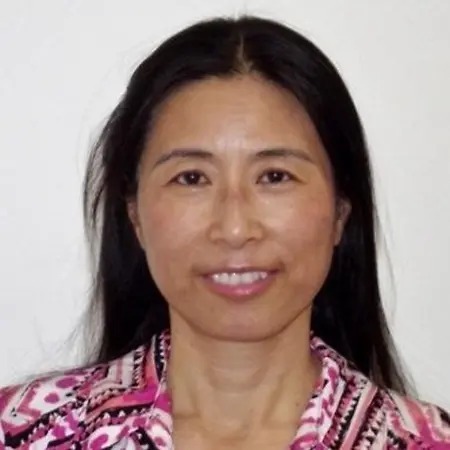
I have been working in engineering consultants for over 40 years, starting my career in 1982 after earning my bachelor's degree from Wuhan Institute of Technology in China. My engineering career has been split between China and the United States - I moved to the U.S. in 2006 when I was 45 years old. Currently, I work as a Senior Instrumentation and Controls Engineer at Oak Ridge National Laboratory on the U.S. ITER project, an international fusion energy experiment with a facility in France. This project is working to create fusion energy - a process that mirrors the power of the sun - and I'm incredibly proud to be part of this work. In my role, I have designed over 30 control panels for systems that operate under extreme conditions including vacuum, radiation environments, and strong magnetic fields. These local control panels allow operators to monitor and control processes remotely from a control room, which is especially important in dangerous areas where people cannot safely enter. Throughout my career, I have worked across many different industries including oil, gas, chemical plants, power and utility, water & wastewater treatment, mining, and now fusion energy. I am an Arizona Registered Professional Engineer, which I obtained in 2014. When I first came to the U.S., I was nervous about finding work because my experience was from China, but I was fortunate to be hired based on my extensive experience. I believe that instrumentation and control engineering is vital work that can truly improve people's lives by enabling automation in dangerous environments and advancing new technologies like fusion energy.
Her Interview
Ten minutes with Ping
01What do you attribute your success to?
My father was a doctor, and I originally wanted to be a doctor too, but in the 1980s when China opened up, they needed a lot of engineers to build things, so my father wanted me to be an engineer. I wasn't really interested at first, but since I started doing this work, I really like my job. I think this work can truly help improve our lives. For example, in chemical plants where it's dangerous for people to be in the field due to toxic, flames and explosions, corrosion, we can use automation system so people don't have to be in dangerous places - we can monitor and control remotely. I'm proud of what I do because each time a project is commissioned or starts up, you can see everything you designed come to life. When you sit in the control room, watch the monitors and see it all working, you're really proud of yourself. Each project that turns on successfully makes you feel really happy. That's my feeling - that's why I like it.
02What’s the best career advice you’ve ever received?
When I started as an engineer, the advice from the senior engineers was important. They told me that you have to learn what you studied in college solidly - you have to know what's there. When you go to work, you can connect it and understand, oh, why they do this? Oh, because we learned this. You have to have that foundation. Everything at the beginning is a little bit harder, but if you commit yourself and continue, you'll learn. Science can seem boring at first, but when you're doing this work, you learn a lot of different things and it gives you a different view. Engineering is fun, not boring, because you learn so many different things. In my job, I have to deal with all kinds of different disciplines, and when you're doing construction, you also deal with contractors and all those things. It's a challenge, but it's fun for me.
03What advice would you give to young women entering your industry?
I think young women should not be afraid of engineering. I was in school and it was kind of hard at the beginning - it doesn't matter what you do, the beginning is always harder because you don't know what is real. But that's what I'm saying - when you start out, you have to learn. Nothing comes easy. For me, everything, you have to study hard. That's my feeling. So if you want to be good, you have to study. You have to continuously study. Everything starts out harder, especially in science and engineering, but if you commit yourself and keep learning, you can succeed.
04What are the biggest challenges or opportunities in your field right now?
As an instrumentation and controls engineer, you need to learn the process, you have to understand the process needs. You also familiar with all type of automation instruments, and sometimes do calculations to select the right solution for the application. We have to know a lot of different things. The team have the process, equipment, piping, structure, and electrical disciplines. We have to work closely with all of them, especially process engineers, to understand what their needs are and what solutions we can provide. Right now, AI is getting involved, and we're really hoping that new technology can help with diagnostics - collecting process datas and using AI to diagnose what's going on. AI can also save labor. Recently, I've noticed on LinkedIn that instrumentation and controls engineers are in high demand - the trend shows companies are looking for these people.
05What values are most important to you in your work and personal life?
I think when you talk about science, you have to be open - you have to let people know how you're thinking. I don't like when people play games, especially in engineering and science. You have to be honest. For me, continuous study and learning is essential, especially for instrumentation and controls engineers. New technology is always happening, so we have to continue to study and learn new things. These values of openness, honesty, and continuous learning are what matter most to me.
Join Influential Women and start making an impact. Register now.