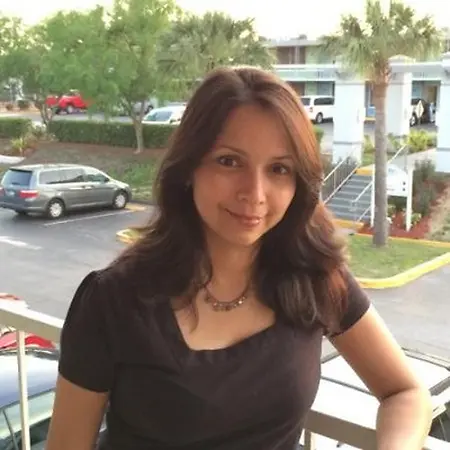
Her Story
About Pradnya
My career in technology spans over 22 years, though it hasn't been a straight path. I started as a junior programmer at a small offshore software company in Barbados, where I quickly rose through the ranks to become a senior developer. When the company folded operations, I was moved to the United States. I think of my career as having two parts - before kids and after kids. When my children were born, I had to take a 6-7 year break from my career. Coming back wasn't easy, especially as a woman in technology. There weren't any programs to help at that time, so I had to start again pretty much at the beginning. I began with consulting work, then joined a company. To strengthen my credentials and get looked at more seriously, I went back and earned my master's in computer science in 2015. That really made a big difference. After refreshing my skills and learning all the latest trends, I moved into an architect position and spent about 11 years in my previous role, where I became fully immersed in technology again. Now I'm in a leadership position. At this point in my career, I'm focused on mentoring and influencing other young women, sharing my story and giving them advice, especially in a world with increasing automation.
Her Interview
Ten minutes with Pradnya
01What do you attribute your success to?
I attribute much of my success to being someone people know they can rely on to get things done. Throughout my career, I’ve built a reputation for stepping into complex or ambiguous situations, staying focused, and following through on results.
One of the things that has shaped my leadership style most is understanding that the best solutions rarely come from one person alone. I value collaboration deeply and make a point to involve my team in problem-solving and decision-making. I believe people do their best work when they feel trusted, empowered, and heard, and I’ve found that strong teams consistently produce stronger outcomes.
A major part of my journey was also learning resilience. After having my children, I stepped away from the workforce for a period of time, and re-entering the technology industry was much more difficult than I anticipated. I had to rebuild my career from a lower level, return to school to earn my Master’s degree in Computer Science, and work my way back up again. That experience taught me perseverance, adaptability, and the importance of continuing to invest in yourself, even during challenging seasons of life.
I’ve also been fortunate to work under leaders who influenced how I lead today.
02What’s the best career advice you’ve ever received?
One of the most valuable lessons I’ve learned throughout my career is the importance of empowering people and trusting your team. I have experienced how much stronger a team becomes when people feel trusted, supported, and empowered to contribute their ideas.
One more lesson that stayed with me is the importance of resilience and persistence. Careers are rarely linear, and there are seasons in life that can completely change your trajectory. Re-entering the technology field after taking time away to raise my children was incredibly challenging, and there were moments where starting over felt discouraging. But persistence, continuous learning, and staying committed to long-term growth helped me rebuild my career and ultimately become a stronger leader because of it.
Those experiences taught me that success is not just about technical ability or titles — it is about how consistently you show up, how you treat people, and your willingness to keep growing even when the path becomes difficult.
03What advice would you give to young women entering your industry?
My advice to young women entering the technology industry is to stay curious, never stop learning, and continue to invest in yourself, especially in a world that is increasingly driven by AI and automation.
Foundational knowledge and a true understanding of how systems, technology, and processes work are still incredibly important. The people who will thrive long-term are the ones who can combine emerging technology with critical thinking, problem-solving, and real expertise.
I would also encourage young women not to be discouraged by setbacks or nontraditional career paths. Careers evolve, life changes, and sometimes you have to rebuild or pivot along the way. What matters most is resilience, persistence, and the willingness to continue investing in yourself and your skills.
I’ve also learned is that leadership is not about having all the answers. Strong leaders listen, collaborate, and empower the people around them. Some of the best outcomes I’ve seen have come from creating environments where teams feel trusted and encouraged to contribute their ideas.
Most importantly, believe that you belong in the room. Technology needs diverse perspectives, strong communicators, problem-solvers, and empathetic leaders just as much as it needs technical expertise.
04What are the biggest challenges or opportunities in your field right now?
One of the biggest challenges in the technology industry is the constant pace of change. Technologies, platforms, and trends evolve incredibly quickly. One year a particular language or framework is considered essential, and the next year the industry has shifted focus entirely. While innovation is exciting, maintaining that pace over the course of a long career can also be demanding.
As someone who has spent many years in technology, I’ve seen firsthand how continuous learning becomes both necessary and challenging. At times, keeping up with rapid changes can feel overwhelming, especially as the industry constantly reinvents itself. However, I also believe adaptability is one of the most important skills a person can develop. The willingness to keep learning, even when it becomes difficult, is what allows professionals to continue growing and staying relevant.
At the same time, I see enormous opportunity in the evolution of AI and automation. These technologies have the potential to improve efficiency, reduce repetitive work, and help organizations scale faster than ever before. But I also believe there is a growing need for people who truly understand the underlying systems and processes behind the technology. AI can accelerate work, but it cannot replace critical thinking, sound decision-making, strong leadership, or deep technical understanding.
Another major opportunity is the growing recognition that technology is ultimately about people. The most successful organizations are not just building powerful systems — they are building solutions that are intuitive, scalable, and meaningful for the people using them. I believe the industry will continue to need leaders who can bridge the gap between technical complexity and human experience.
05What values are most important to you in your work and personal life?
I believe strong leadership starts with empowering people. Whether I’m working with my team, collaborating with colleagues, or mentoring others, I want people to feel trusted, supported, and encouraged to contribute their ideas. Some of the best leaders I’ve worked with created environments where people felt empowered to grow, and that is something I strive to carry forward in my own career.
Empathy is equally important to me. In both technology and leadership, it’s easy to become focused solely on processes, deadlines, or outcomes, but at the end of the day, every project and every organization is built around people. I believe understanding different perspectives, listening well, and treating people with respect creates stronger teams and better results.
Adaptability has also become one of the most important values in my life and career. The technology industry changes constantly, and life itself often takes unexpected turns. I’ve learned that resilience and the willingness to keep learning are essential, especially during challenging periods or transitions.
Finally, reliability is something I take great pride in. I want people to know that if I commit to something, I will follow through. Whether in my professional or personal life, being dependable and consistent is incredibly important to me.
As I’ve progressed through my career, I’ve realized that success is not just about technical expertise or accomplishments — it’s about the impact you have on people, the trust you build, and the way you help others grow alongside you.
Join Influential Women and start making an impact. Register now.