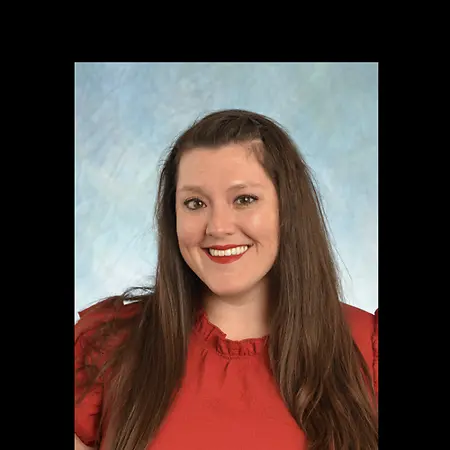
Her Story
About Rebekah
About Rebekah Sanchez-Hodge, B.S. MPH-VPH, “Becky Sanchez”
Becky Sanchez wears many hats. She is first and foremost a cardiovascular research associate in the Schisler Lab https://research.web.unc.edu/, while also serving as a lab manager for around 30 undergraduates, a postbaccalaureate trainee, and a postdoctoral fellow, and as program coordinator for MHI SUMMER https://tarheels.live/mhisummer/, an undergraduate research program at the UNC-CH McAllister Heart Institute in the School of Medicine.
In these roles, she has helped reshape how undergraduates experience cardiovascular research and mentorship. She, along with PI, Dr. Jonathan Schisler developed and coordinates MHI SUMMER, a 10-week research immersion program that has trained 21 undergraduates since 2023, all of whom have remained in STEM fields; 43% have entered MD, PhD, or MD/PhD programs, 38% have taken full-time research positions, and 19% are pursuing advanced allied health degrees.
Under Becky’s leadership, MHI SUMMER has become a nationally recognized model that blends hypothesis-driven research with structured professional development. The program incorporates phlebotomy training, exposure to CPR skills and basic life support concepts, UNC catheterization lab shadowing, professional development workshops, STEM career panels with local scientists, and networking dinners that connect AHA-funded programs across the country. She also helped create a platform for undergraduates to present their work at the American Heart Association’s Basic Cardiovascular Sciences (BCVS) conference, elevating student visibility and strengthening UNC’s presence on a national stage. The program was recently renewed for three additional years, extending through 2028.
Across her career, Becky has mentored more than 100 undergraduate students in the lab setting, starting from her time at The Ohio State University through her current role at UNC. One of her first mentees from Ohio State is now an orthopedic surgery resident at Stony Brook, reflecting on the long-term impact of her mentorship. Among the undergraduates she has mentored outside of formal programs, approximately 98% have remained in STEM, entering graduate programs, medical school, allied health training, or research positions. In addition to MHI SUMMER, Becky manages a semester-based cohort of around 30 undergraduates in the Schisler Lab, using a near-peer mentorship structure in which experienced students train new lab members. This approach builds leadership, ownership, and community while supporting strong research productivity.
Her commitment to early outreach extends beyond UNC, including a week-long dissection bootcamp she led in St. Thomas in February-March 2025 for elementary and middle school students, designed to spark curiosity about anatomy and biomedical science. During this program, students learned anatomical terminology that she did not encounter until late high school and college, explored basic physiology concepts, and engaged in hands-on learning with mouse specimens while being introduced to proper use of personal protective equipment (PPE). By the end of the week, they successfully completed quizzes and a lab practicum assessing organ identification and function, demonstrating how much they had absorbed in a short, intensive experience.
Alongside her extensive mentoring and program-building, Becky is advancing her own research, focused on atherosclerosis and the chemokine CXCL5. Building on prior work implicating CXCL5 in atherosclerotic processes, she developed an atherosclerosis mouse model and was the first to test exogenous CXCL5 as a therapeutic intervention in this context, work captured in protocolized methods and conference abstracts that now support a manuscript in preparation and an R01 application under review.
Her Interview
Ten minutes with Rebekah
01What do you attribute your success to?
I attribute my success to persistence and resilience more than anything else. When a door closes, I look for another way in, and each setback becomes a prompt to learn, adjust, and keep going rather than a reason to stop.
02What’s the best career advice you’ve ever received?
The best career advice I have ever received is that “it’s about who you know, not just what you know.” Technical skills and knowledge matter, but if you do not invest in building relationships, rapport, and trust, you will struggle to move forward. The ability to connect with people, listen, and take the time to nurture a genuine network has opened more doors for me than any single line on my CV.
03What advice would you give to young women entering your industry?
For young women entering this field, the biggest advice is to get as close to the reality of the work as possible before you commit. Shadow multiple people in the roles you think you want, not just one, and ask them honest questions.
Ask what they love, what they dislike, what drains them, and what keeps them going. Ask what they would have done differently if they could start over. Seeing the day-to-day from different perspectives will help you choose a path that fits who you are, not just what sounds impressive on paper.
04What are the biggest challenges or opportunities in your field right now?
One of the biggest challenges in biomedical research right now is the growing gap between how essential this work is and how little it is being valued and supported in the public and political sphere. Public trust in higher education and science has declined, degrees are increasingly framed as “not worth it,” and federal funding has become unstable, with policy changes and proposed cuts threatening NIH budgets, university research infrastructure, and training pipelines. This combination creates a sense that rigorous education and research, especially in areas like infectious disease and public health, are expendable, which not only harms current labs but also discourages the next generation from entering or staying in the field.
05What values are most important to you in your work and personal life?
The values that matter most to me are a strong work ethic and a real fire for the work, with the drive and ambition to keep going when things are hard. Just as important are reliability, accountability, and trustworthiness: showing up when you say you will, following through on commitments, and being someone others can depend on consistently. In this work, persistence is not optional; sometimes you have to repeat an experiment a hundred times before it finally works, because that is how reliable, meaningful results are built. The real question is whether you can keep showing up with that level of effort, curiosity, and grit, or if you are going to decide it is too hard and walk away, because if you are not willing to push through that kind of trial and error, this is probably not the right field for you.
In my personal life, the values that matter most to me are honesty, kindness, and being someone you can truly rely on when it counts, and I also try to be that person for the people around me. I want people in my corner who will lend an ear, show up when needed, and genuinely have my back, because life is too short to spend time on relationships that are not real or worth the emotional energy.
Giving back is also a core value for me, which is why I run a summer program that helps students get their feet wet in a heart research lab and gives them structured career development, networking, and a chance to present their work at a national cardiovascular conference. Shameless plug, applications typically open around December at the program website: https://tarheels.live/mhisummer/.
Join Influential Women and start making an impact. Register now.