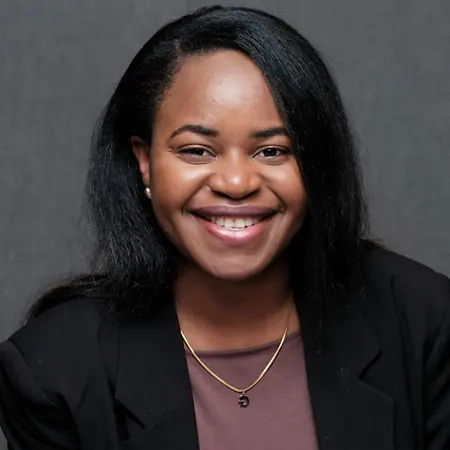
Her Story
About Shelby
Shelby Terrell is an educator, researcher, and AI safety analyst whose work is rooted in mentorship, accessibility, and expanding opportunity for first-generation college students. Based in Houston, Texas, Shelby’s own experience as a first-generation student deeply shaped her path through higher education and continues to influence the way she teaches, researches, and supports others. Without family role models who had previously navigated college, she learned many aspects of higher education by observing the professors who encouraged and guided her along the way. Their ability to combine academic rigor with compassion and mentorship inspired her to pursue teaching herself. Since beginning her teaching career in 2019 at the community college level, Shelby has become known not only for her instruction in online synchronous and asynchronous classrooms, but also for the way she helps students navigate the often-unspoken “hidden curriculum” of college life.
Shelby recently earned her PhD in Higher Education Leadership and Policy Studies, where her research focused on college readiness within dual enrollment programs. Her dissertation explored how educators define and facilitate college readiness in practice, centering the voices of teachers and faculty who work most closely with students. Through interviews and qualitative research, she examined how institutional systems support—or fail to support—students as they transition into higher education. Her work reflects a broader commitment to making higher education more transparent, accessible, and equitable, particularly for students who may not have inherited knowledge about how to navigate academic spaces. She is especially passionate about mentorship and creating pathways that help students feel capable, informed, and supported throughout their educational journeys.
In addition to teaching part-time, Shelby works full-time as a remote AI safety analyst, a role that closely aligns with her academic interests in AI governance and the evolving relationship between technology and education. Her work explores how educators and students are responding to artificial intelligence and the broader ethical and institutional questions emerging from its rapid integration into higher education. A member of organizations including American Educational Research Association and Association for the Study of Higher Education, Shelby brings an interdisciplinary perspective that bridges education, technology, and policy. Guided by values of mentorship, adaptability, care, and community, she is committed to helping others navigate systems that can often feel unfamiliar while contributing thoughtfully to conversations shaping the future of education and AI.
Her Interview
Ten minutes with Shelby
01What do you attribute your success to?
My village, absolutely. Of course, I mean, yes, I put a lot of hard work and grit into it, but I think that's not possible, or it's a heck of a lot harder when you don't have the people that, when your grit runs out, when that perseverance runs out, and you fall apart - because we all do - those people that pick you back up and let you fall apart, but don't let you stay there. My husband, my children, my best friends, my mother - my village, 100%. I completed my PhD while raising four young children, two of whom were born during my doctorate program, just 15 months apart. That was a ride, but I survived. That period of my life required a level of resilience and coordination that I carry with me still. It shaped how I think about persistence, time, and what it means to pursue long-term goals while actively caring for a growing family.
02What’s the best career advice you’ve ever received?
The role of mentors in shaping my academic development, particularly during my doctoral program. My advisor, Dr. Vincent Corrales, had a profound impact on how I approach scholarly work—providing feedback that was rigorous, honest, and constructive in a way that pushed me to grow without diminishing my confidence. That balance has stayed with me in how I now approach both teaching and research.
03What advice would you give to young women entering your industry?
Don't be scared to explore opportunities that may not initially look like they're in alignment. I think, especially with AI, it's reshaping a lot of things, and it's basically got its fingerprints in all industries these days, so just be open. Be open to opportunity. Of course, use your discernment, use your judgment, but something that may not look aligned on the surface could be something that turns out really great. You never know. For anyone who is a first-generation student or professional, I would say give yourself permission to learn the unwritten rules without assuming you were supposed to already know them. So much of navigating higher education and professional spaces is about decoding systems that were never clearly explained. Coming from where I came from, learning how to navigate different environments and learning how to code switch - I think I can talk to a lot of people, I can talk to anybody. I think that's a skill, and I think that's a value that we should all strive for, because if we've got a message, then we need everybody to hear it.
04What are the biggest challenges or opportunities in your field right now?
I think we can all say AI. I find myself in the middle as I do a lot of things. A lot of us in higher ed, we're very concerned with misuse, and I think that's appropriate. There are students using these tools, but I think even of more concern is, here we are, what, 2026, ChatGPT and the like became popular in 2022. So if you put that into perspective, realistically, a student could have started college and now be getting ready to graduate, or graduating, where all of us are not in agreement of how we're going to approach this, what's ethical use, how do we integrate it, what's our infrastructure look like, governance - I could go on and on. I'm highly concerned about that, because students shouldn't be left to figure this out. A whole degree of time has gone by, and we're still all scratching our heads, and I think that's concerning. While I recognize the potential for AI to expand access, support learning, and increase efficiency, I also see significant gaps in policy, infrastructure, and institutional readiness. Many colleges and universities are still navigating how to define appropriate use, ensure academic integrity, and support both faculty and students in adapting to these tools.
05What values are most important to you in your work and personal life?
I'm first gen, and I didn't have a great childhood - I'll just say it blatantly. But I think coming from where I came from, and learning how to navigate different environments, and learning how to code switch - I think I can talk to a lot of people, I think that's a skill. I could talk to anybody. I could talk to scholars, I can talk to, you know, anybody, anybody. I think that's a value that we should all strive for, because if we've got a message, then we need everybody to hear it. The importance of my support system - my village - has been essential in sustaining me through each stage of my academic and professional life. My family and close network, my husband, my children, my best friends, my mother - those people that pick you back up when you fall apart but don't let you stay there. As a first-generation professional, I've developed a strong ability to navigate different institutional spaces, often relying on communication, adaptability, and code-switching as essential skills. My life beyond work includes my role as a parent to four young children, two of whom were born during my doctoral program just 15 months apart. That period of my life required a level of resilience and coordination that I carry with me still. It shaped how I think about persistence, time, and what it means to pursue long-term goals while actively caring for a growing family.
Join Influential Women and start making an impact. Register now.