Her Story
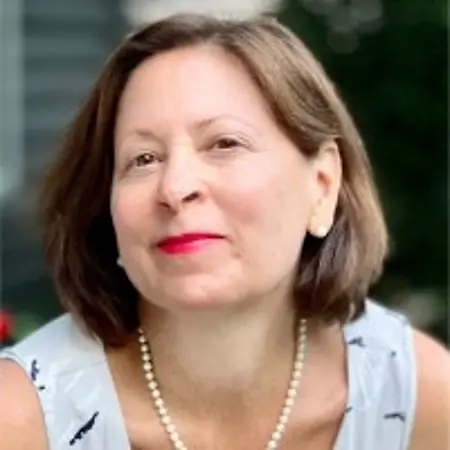
About Susan
My career has taken me through multiple industries, always driven by a desire to use my communication skills meaningfully. After graduating with an English degree, I started in news broadcasting but didn't want to spend my life following negative stories. I moved to Los Angeles and worked in film and television for 10 years, which I enjoyed, but after a decade I felt called to do work that held more meaning for me. I went back to school and got a graduate degree in English literature, which led me to higher education. I worked at Yale University out of the vice president's office, where my portfolio included student affairs, public safety, and communication around public safety issues. That's when I reached a major turning point in my career. I was standing up to the university for students' civil rights when they reported harassment and rape, and I found Yale had falsified crime stats to the federal government. I sued them in what was the first non-sports related Title IX retaliation case in the country, with support from the Association of American University Women. It was a lengthy legal battle where I lost my marriage, my career, and almost everything. The university terminated me twice without cause. The very issues I was trying to address internally turned into two federal investigations of the university, where they were found to be under-reporting rape. Yale was found without fault on Title IX technically, but they had to sign an agreement and the federal government monitored them for years. I was blackballed from being able to work in the state of Connecticut for 6 years by Yale. If it was just myself being retaliated against, maybe I would have let it go, but I saw young people really suffering, and this was before Me Too. I turned to adjunct teaching and formed a nonprofit called Allies Reaching for Equality, under which I help mostly females who are being discriminated against stand up for themselves. I've helped over 40 people since then. Now I adjunct teach and advocate for people on civil rights issues in higher education, and I've also started to work and help people in the federal government as well. I am also a plaintiff in a groundbreaking whistleblower lawsuit against Yale University, where I'm using Title IX civil rights in the arena of the False Claims Act for the first time in the United States. This case is currently before the district in Washington, D.C., and it aims to address systemic civil rights violations at universities by leveraging the federal funds they receive. I devised this method to provide a tool to disincentivize universities from discriminating, mostly against women, because individual plaintiffs don't threaten universities in any meaningful way. I'm also working on a book about my experience, which I hope to publish within 2 years.
Her Interview
Ten minutes with Susan
01What advice would you give to young women entering your industry?
I would say that, remember that the start of your career, in other words, we're all becoming. So be open to where your path kind of leads you, rather than having such a fixed idea. Be open to things. If anyone ever said to me when I was young, you know, you're gonna stand up to Yale University, I'd be like, what? No kidding. So you have to just follow what your gut is telling you. And be open to things, and know that your career's a tapestry, not a line.
02What are the biggest challenges or opportunities in your field right now?
I think that though people believe this kind of harassment doesn't exist anymore, it does. There are pockets of it. And it really does affect our ability on the world stage, because if you look at a statistic from the DOJ, which notes that one in four women are assaulted at our universities. So take all those, let's say there are 5 million women at universities in the United States, that would mean about a million of them have been assaulted, harassed, or affected in a negative way. And once this happens, the trajectory of the person declines. And so, think about what that means on the world stage. If we don't have everyone being able to reach their potential, our country suffers, our future suffers. So I see it as an economic issue, as well.
03What values are most important to you in your work and personal life?
The most important value to me is that my work is meaningful. After 10 years in film and television, I had this thought in my heart that I wanted to feel that my work was meaningful. While working in film wasn't not meaningful, it didn't hold as much meaning to me as I wanted it to. I also deeply value standing up for what's right, even at great personal cost. If it was just myself being retaliated against, maybe I would have let it go, but I saw young people really suffering, and I couldn't stand by. I believe in using my skills and experience to help others, particularly women who are being discriminated against, which is why I formed my nonprofit and continue to advocate for people facing civil rights issues. I would say the fact that I stood up to Yale University for civil rights is my most notable professional achievement. I was diagnosed with chronic PTSD from the stress of that battle, but I knew it was the right thing to do.
Join Influential Women and start making an impact. Register now.