How She Learned to Adapt in Changing Times
Stories of resilience and reinvention during shifting circumstances.


Stories of resilience and reinvention during shifting circumstances.
For years, I measured my value by my output, the high-capacity fundraiser who closed gaps through 60-hour work weeks. I perfected the 'expert script,' believing that education and sheer will could fix any broken system. Namibia shattered that lens. I entered the Peace Corps carrying the heavy baggage of Western productivity, ready to 'solve' problems. But when my local clinic's Sister-in-Charge prioritized social ties over technical plans, I realized my expertise was a barrier. To move forward, I had to stop doing and start being. When we relinquish the 'hero' lens, we become 'ecosystem architects.' Adaptation requires trading the safety of an expert script for the vulnerability of collaboration. Structural healing requires an honest audit of our survival scripts; we must ask whether we are supporting our community or merely preserving our need to be the expert. Today, I root my work in systemic stewardship. The most radical act for any movement is staying healthy, maintaining boundaries, and building systems that share power rather than hoard it. Success lives in the integrity of the relationship and the architecture of the possible.

Change has been a constant throughout my career, but one of the most defining moments was navigating the uncertainty of COVID while working in a healthcare environment. At the time, I was also a new mom. My daughter had just started daycare for the first time, and within that same week, everything shut down. Suddenly, I was balancing the demands of working in a hospital during a global crisis while trying to navigate motherhood in completely uncharted territory. At work, everything was shifting rapidly. Processes, priorities, and expectations were changing daily, often without clear direction. It forced me to rethink how I approached my role. I could no longer rely on structure alone. I had to become more adaptable, more intuitive, and more comfortable making decisions with limited information. That period challenged me both professionally and personally, but it ultimately strengthened my confidence in navigating uncertainty. It changed my mindset. I moved from trying to control every detail to focusing on how I could stay steady, responsive, and solutions-focused in the moment. I learned that adaptability is not about having all the answers, it is about maintaining clarity and composure when things are uncertain. That lesson has stayed with me as I transitioned into supporting executive leadership in a fast-paced business environment. Today, I don't just react to change. I anticipate it, create structure where I can, and help others stay focused and aligned even when things are evolving quickly.
I used to think success was something you built alone, brick by brick, through sheer effort and determination. But as I’ve moved through different stages of my life, I’ve come to understand a quieter truth: none of us rises in isolation. We are, each of us, standing on shoulders, lifted by the wisdom, patience, and belief of those who chose to guide us. Some mentors entered my life with intention. Teachers who stayed after class, not because they had to, but because they saw something in me I hadn’t yet recognized in myself. They asked harder questions, pushed me past easy answers, and refused to let me settle for “good enough.” At the time, I didn’t always appreciate the pressure. Now, I see it for what it was: belief in disguise. Others arrived more unexpectedly. A colleague who took the time to explain not just what to do, but why it mattered. A supervisor who trusted me with responsibility before I felt ready. Even a quiet conversation with a friend at the right moment, those words have a way of lingering, reshaping how you see yourself and what you believe is possible. What unites all these people is not their titles, but their impact. Mentorship, I’ve learned, isn’t always formal. It’s in the small, consistent acts: the encouragement when you doubt yourself, the honesty when you need to hear it most, the example set through action rather than instruction. These moments accumulate, forming a foundation you don’t even realize you’re building until you look back and see how far you’ve come. There were times I resisted their guidance. Times I thought I knew better, or needed to prove I could do it on my own. But even then, their influence lingered, nudging me toward better decisions, reminding me of standards I had learned to hold myself to. In many ways, their voices became part of my own internal compass. Looking back, I can trace so much of who I am to those who invested in me without expecting anything in return. Their lessons show up in how I approach challenges, how I treat others, and how I define success, not just as achievement, but as growth and contribution. And perhaps that’s the most important realization of all: standing on shoulders isn’t just about what we’ve received. It’s about what we choose to pass on. The true measure of mentorship is not only how it shapes us, but how it moves through us, how we, in turn, lift others. I am who I am because someone took the time to guide me. The responsibility now is to do the same.

You cannot control the cards life deals you, but you can control how you play them. Keeping a positive attitude by surrounding myself with communities of like-minded people, repeating & writing positive affirmations to myself, and continuing to show up on days that feel hard are all methods that keep me moving forward through unconventional life circumstances. Whether coping with grief, mental health troubles, or injuries, all of these strategies have allowed me to find the good in everything that life throws my way. Being able to accept rejection as redirection, whether it's not getting a job I applied for, all the way to battling through a gruesome concussion recovery, I genuinely believe that everything is working out for me exactly as it's supposed to, and things that don't go as I intended are not life-ending, they are opportunities to grow.
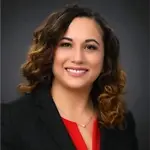
One of the biggest transitions in my career was moving from the highly structured environment of the military and into healthcare leadership during a time of organizational change. While accountability and decisive leadership remained important, I quickly learned that success in healthcare also requires collaboration, empathy, and strong relationships. I adapted by becoming more flexible in my leadership approach and more intentional about listening to teams and stakeholders. Through that experience, I discovered that effective leadership is not about having all of the answers, it's about staying true to your values while adapting to the needs of the situation.

When I was laid off from the CDC on April Fools' Day 2025, I lost my job, my identity, and my health insurance overnight and built Self-Care Shirts in the month that followed. I didn't find a new direction so much as I discovered that the direction had been inside me all along, waiting for the thing that was blocking it to finally move.

Moving from India to the U.S. compelled me to completely rethink how I communicated and wrote. By unlearning old habits, seeking feedback, and adapting to a new style of writing, I discovered that growth often begins when we are willing to start over. This mindset shift ultimately opened doors to fellowships and senior leadership opportunities.
After retiring from a high-level global career, I was met with the unexpected challenge of ageism in the modern job market. This led me to pivot into a retail role which I had not originally envisioned. This transition to a lower-paying role showed my deep sense of resilience and adaptation and ultimately reinforced my belief that even when traditional doors seem closed true leadership is defined by one's character and work ethics.

Becoming a single mother has recently forced me to rethink the direction of my health coaching career path, including adapting my goals and starting my own business, which I discovered helps me be more present throughout my daily life in more ways than one.

At 65, after forty years as a photographer, often working 18 hour days and lugging around heavy camera equipment on movie and TV locations, it was time to retire. Drawing on my experiences, I reinvented myself as a novelist and despite a considerable learning curve and innumerable courses on writing technique, it was a pleasure to use my brain and work at my own pace, and write an award-winning novel!

One of the biggest times I had to adapt was when my professional responsibilities began growing far beyond my original role. What started as focusing mainly on direct patient care evolved into balancing leadership responsibilities, program development, operations, staff support, community outreach, and helping expand addiction treatment services during a time when the needs in our communities were rapidly increasing. At first, I tried to handle everything the same way I always had, by working harder and pushing through. Eventually, I realized that adapting wasn't about doing more; it was about learning how to prioritize differently, communicate more effectively, delegate when appropriate, and become comfortable with constant change. Working in behavioral health and addiction treatment also taught me that flexibility is essential because no two days are ever the same. Community needs shift, regulations change, programs grow quickly, and unexpected challenges arise constantly. I learned how important it is to stay solution-focused and grounded even during stressful periods. What I discovered along the way is that growth often comes from situations that initially feel overwhelming. Adapting to change helped me become more resilient, more confident in my decision-making, and more open to opportunities I may not have pursued otherwise. It also reinforced how important it is to remain connected to the purpose behind the work, especially during periods of uncertainty or transition.
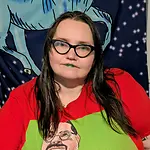
When I was accepted into the EA Creator Program I felt it was important to shift my focus from making comics to making game content and portraits, because I really wanted to go after the opportunity that was in front of me.
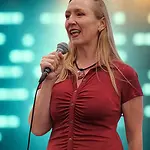
When my marriage shockingly ended during the pandemic, the life I thought I knew disappeared overnight, and I realized I could not simply think my way through that kind of transformation. I had to move my body through the grief and reinvention by taking surfing lessons in Costa Rica, dancing my heart out in salsa clubs, and swimming in the oceans of Greece, Australia, and Fiji because the biggest life changes are not healed through thought alone, but through motion, breath, and embodied courage.

If there's one thing life has consistently taught me, it's how to adapt. I grew up in foster care, so stability was not always something I could depend on. From a young age, I learned how to adjust quickly, stay strong in uncomfortable situations, and keep moving forward even when life felt uncertain. At the time, I didn't realize those experiences were shaping qualities I would later carry into motherhood, my career, and every major transition in my life. When I became a young single mother, everything changed for me. Suddenly, every decision I made carried more weight because it was no longer just about me. I knew I wanted to create a life that my daughter could look up to, so I pursued healthcare and became a CNA after earning my Associate of Science degree. Nursing gave me purpose because I genuinely loved caring for people and being there for them during vulnerable moments. But as the years went on, I started noticing something about myself. While I loved healthcare, I was naturally drawn toward the communication side of it. I loved building relationships, educating people, connecting clinics and providers, and helping patients better understand the resources available to them. That realization eventually led me into healthcare outreach and physician relations, which was honestly a scary transition at first. Leaving a more traditional clinical path felt risky, especially as a single mother, because security matters when you're responsible for someone else. There were moments where I questioned myself, wondered if I was making the right decision, and worried about whether everything would eventually work out. But looking back now, I can honestly say some of the best things in my life came from the moments where I chose growth even when it felt uncomfortable. Today, I'm grateful for every chapter of my journey because each one taught me something different. Foster care taught me resilience. Motherhood taught me purpose. Healthcare taught me compassion. And stepping outside of my comfort zone taught me confidence. I still believe success is built one step at a time, and I hope my story reminds other women that where you start does not have to define where you're capable of going.

Change forced me to stop chasing the version of success I thought I was supposed to want and start building the work I was actually called to do. In the shifting, I discovered that purpose does not disappear when the plan changes… sometimes the plan changes so purpose can finally take its rightful place.
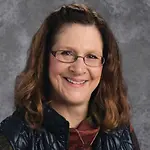
For me, change has not just been a constant, it has been the catalyst for my entire career evolution. From my early days as a classroom teacher to serving as a multi-state superintendent and now CEO of Colorado Early Colleges, I have continually adapted to meet the changing needs of students and education. One of the biggest turning points in my journey came when I realized traditional, one size fits all school structures were often too slow to truly serve modern students. That realization pushed me toward a "whatever it takes" approach to student centered learning. Moving from traditional public districts into the charter school space taught me how to navigate complex systems while still maintaining the flexibility needed to innovate quickly. As education continued to evolve, so did my focus. I began centering my leadership around what I call the "Big Three": college access, industry credentials, and real world work experience. I realized students need more than a diploma. They need a clear pathway toward meaningful careers and opportunities. Through every shift in my career, the most important lesson I learned has been my "People First" philosophy. Systems, policies, and expectations will always change, but leadership remains rooted in supporting the whole child. For me, adapting to the future is not just about technology or academics. It is about creating environments that support mental health, families, and long term student success. My journey has taught me that the best leaders stay flexible in their methods while remaining deeply committed to the people they serve.