When She Saw a Problem Everyone Else Had Accepted
Questioning “that's just how it is” became the beginning of change.



Questioning “that's just how it is” became the beginning of change.

I noticed that while hotels strive to make every guest feel welcome, families living with autism, developmental disabilities, and sensory sensitivities were often left to navigate travel without the support they needed. Instead of accepting that as "just the way hospitality is," I created an Inclusivity Program at our hotel that turns empathy into action through sensory-friendly resources, team awareness, and intentional support. My hope is that it not only helps one family feel more comfortable, but inspires other hotels and businesses to rethink what truly welcoming everyone can look like.

As we celebrate Life Insurance Awareness Month, let’s ask ourselves a different question: “It’s not just about whether I can afford life insurance. Can my family afford for me not to have enough?”

I voiced my opinion, put my foot down and did the do.

The problems that survive the longest are often the ones people have learned to work around. I've found that real change starts by asking, "What have we normalized that is no longer serving us?" and then being willing to redesign it.

What I've observed in the workplace that has become the norm is the belief that "everyone must agree with everything in a collaborative approach." Collaboration, however, involves understanding where the other person is coming from, even if it may not be an agreed-upon experience. I'm striving to be an example of this: we may not agree, but that doesn't diminish the value of each person's contribution, and we can still leave the table with mutual respect.

I learned that some injustices survive not because they are hidden, but because the people suffering have become invisible. When I saw older, justice-impacted women returning to communities with nowhere safe to heal, I could no longer call awareness enough so I turned my own scars into a doorway and founded Keepers of the Kingdom to help restore their dignity, stability, and hope.

I've learned that sometimes the biggest obstacle to solving a problem is simply the belief that 'this is how we've always done it.' When I see something that isn't serving people well, I bring the right people to the table, ask better questions, and work to turn 'someone should do something' into 'let's do something.'

As a woman in the corporate world, I experienced and also saw other women experiencing multiple double-standards and harassment. Many times, it was by the men that had influence over our careers. As my career grew, I moved into leadership, my influence expanded, and I felt compelled to stand up for other women as my courage also increased along the way. While on a work retreat where we could bring our spouses, the men in my organization started to haze and bully my husband at the time, making fun of what he was wearing and what he did for a living. For me, this was the last straw. I had put up with hazing in the past, but now that it was to my spouse, it was completely unacceptable and I had to do something about it. I went to HR and filed a complaint. As part of my interview, I stated, "do you think one of them would be ok if I started hazing or bullying one of their wives or looked down on her for being a stay-at-home mom?" Of course, I would never dream of doing this, but my point was, why did they think it was ok to do this to my spouse? It was disrespectful to him and to me as their EQUAL peer. HR addressed it, and when I saw the main person involved in this situation some months later at another event, they apologized to me face to face. My hope was that by using my position of leadership and by standing up to this unacceptable behavior, that the women who followed me would not have to face the same thing.

When women lead in public systems, they bring a clarity that cuts through decades of institutional noise. In transportation and infrastructure, emotional intelligence is just as important as technical expertise. Communities respond to leaders who listen first and act with intention. The future of public service depends on women who can hold both strategy and humanity at the same time.
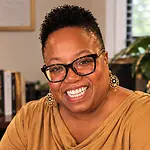
For years I watched the church treat sex as a subject to avoid rather than a gift to understand. Couples were told to wait, then told very little else, and many were left to learn about intimacy from a culture that doesn't share their values. I decided to stop waiting for someone else to break the silence. I wrote The Sacredness of Sex, a 31-day devotional on covenant, purity, and God's design for intimacy, and I wrote it with the same care I'd give any devotional on prayer or gratitude. What happened next told me how many people had been waiting. The book reached #1 in Amazon's Top 100 Free lists in three categories, including Christian Values & Virtues. Sometimes the problem everyone has accepted is simply the conversation no one wanted to start.