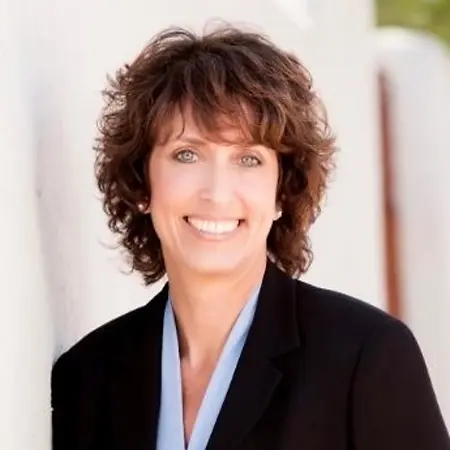
In Conversation
Adena Bank Lees for Bold. Brilliant. Unstoppable.
Read the transcript
Adena Bank Lees: What does being an influential woman mean to me? It means that my life has been filled with purpose, that I have followed my wild and adventurous heart, that I have taken risks, and I've been able to sustain myself and my family from my passionate heart.
What's one piece of advice you would give to younger women chasing their dreams?
Adena Bank Lees: What is one piece of advice that I would give to younger women chasing their dreams? Younger women, what I would tell you. Is follow that heart. Follow your passion. Get really specific about what your dream is and don't let anybody stop you. Take risks. Don't listen to nose. Follow the yeses. Never give up.
Her Story
About Adena
Adena is an adventurous and driven woman who's greatest passions are global travel, guiding humans in deeply listening and taking inspired action on what their heart desires, and laughing with loved ones.
Adena is also a woman of integrity. She is committed to her own personal and spiritual growth, as she cannot guide others in what she is not doing herself.
Adena's favorite roles are :
- consultant-mother to Ian, her 31 year old son,
- heart-centered psychodramatist where she provides clinical services to recovering addicts and trauma survivors, as well as consultees and trainees.
- Global traveller where her young, curious and adventurous parts marvel at nature and other cultures
- Dedicated member of the 12-Step Recovery community- where she continues to grow, deepen her faith in self and others, and give back what she has freely been given for the past 40 years.
Her Interview
Ten minutes with Adena
01What do you attribute your success to?
The foundation to my success is the bodily knowing that I was wanted and cherished by both of my parents. From there, their support of my reaching for the stars in terms of career. I would have nothing if it were not for the physical/emotional sobriety and fellowshipI have and continue to nuture from the 12-Step programs. I do not do this life alone. I am always reaching out for help and doing the next indicated action to fulfill my potential.
02What’s the best career advice you’ve ever received?
Come from love and not fear.
Take the next small step that is really a huge leap.
Act as if what you most desire is already happening.
Get really specific about who your ideal client is.
03What advice would you give to young women entering your industry?
Know your worth before the profession tries to define it for you. Women are often socialized to over-give, over-function, and measure their value by how much they can carry for others. Those same patterns can follow us into helping professions.
Learn the difference between compassion and self-sacrifice. You can be deeply caring without abandoning yourself.
Trust your intuition. If something feels off—in a workplace, a supervision relationship, or a professional culture—pay attention. The ability to recognize subtle boundary violations is one of the most important skills you'll ever develop.
Don't wait for permission to use your voice. Share your ideas, write your books, conduct your research, speak on stages, and challenge outdated assumptions. The field needs your perspective, not just your compliance.
Invest in your own healing. The more you understand your own story, the less likely you are to unconsciously reenact it in your professional life. Self-awareness is not a luxury in this work; it's an ethical responsibility.
Finally, remember that credentials matter, but courage matters too. Some of the most important contributions you'll make may come from speaking truths that others are uncomfortable hearing. Stay grounded in integrity, remain curious, and never lose sight of the human being behind every diagnosis, theory, or treatment plan.
Bottom line:
The patterns that harm women in families—silencing, people-pleasing, emotional caretaking, and blurred boundaries—can show up in workplaces as well. Learn to recognize them early. Healthy helping begins with healthy boundaries.
04What are the biggest challenges or opportunities in your field right now?
Biggest Challenges
1. We still underestimate the impact of trauma
One of the greatest challenges is that addiction is often treated as the primary problem rather than as an adaptation to underlying pain. Many people enter treatment having experienced childhood trauma, attachment wounds, emotional neglect, or covert forms of abuse that were never recognized. Until we address what happened beneath the addiction, recovery can remain fragile.
2. The mental health workforce is exhausted
Burnout, compassion fatigue, high caseloads, administrative burdens, and reimbursement challenges are driving talented clinicians from the field. We need healthier systems that support providers as well as clients.
3. Access remains unequal
Quality mental health and addiction treatment is still unavailable to many people due to cost, geography, insurance limitations, cultural barriers, and stigma. The people who often need care most are frequently the least able to access it.
4. We are facing a loneliness and connection crisis
Many clients are struggling not only with substances but with profound isolation, disconnection, and lack of meaningful relationships. Humans heal in connection, yet many people have never experienced emotionally safe relationships.
5. Family systems issues are often overlooked
Addiction rarely exists in a vacuum. Family dynamics, generational trauma, covert emotional incest, boundary violations, and dysfunctional attachment patterns often contribute to suffering but may go unrecognized in treatment.
6.The corporatization of mental health care
The growing influence of large corporations in mental health and addiction treatment is reshaping the profession. While access may expand, we must ensure that private practice, clinical independence, and relationship-centered care are not lost in the process.
Biggest Opportunities
1. Trauma-informed care is finally gaining recognition
There is growing awareness that the question is not "What's wrong with you?" but "What happened to you?" This shift opens the door to deeper healing and more compassionate treatment approaches.
2. People are becoming more educated
Through podcasts, books, social media, and online communities, people are learning about trauma, attachment, boundaries, and recovery at an unprecedented rate. Many clients arrive in therapy with greater self-awareness than ever before.
3. Telehealth has expanded access
While not a perfect solution, virtual therapy has made treatment available to people who previously had few options because of location, transportation, disability, or scheduling barriers.
4. There is increasing interest in relational healing
We're beginning to understand that recovery is not simply about stopping a behavior. It's about learning how to connect safely with ourselves and others. This aligns with what many trauma specialists have long observed: relationships can wound, but relationships can also heal.
5. Hidden forms of abuse are being named
Topics such as emotional neglect, narcissistic family systems, attachment trauma, and covert emotional incest are finally entering mainstream conversations. When people have language for their experiences, shame decreases and healing becomes possible.
Bottom line:
I believe the future of addiction and mental health treatment lies in helping people understand the connection between trauma, attachment, and coping. Addiction is rarely the whole story. When we help people uncover the hidden wounds beneath the symptoms, we create the possibility for lasting recovery—not just abstinence, but genuine healing. The opportunity before us is to build a field that treats people not as problems to be fixed, but as human beings whose survival strategies once made sense and whose lives can be transformed through awareness, connection, and compassion.
05What values are most important to you in your work and personal life?
<ol><li>Rigorous honesty</li><li>Openmindedness</li><li>Willingness and teachabiity</li><li>Integrity</li><li>Continuing my personal growth no matter what</li><li>Unconditional love and positive regard for other humans</li><li>Mutual respect</li><li>Have fun and do not take yourself too seriously</li><li>Healing happens in authentic connection where there is an experience of "safe enough"</li><li>Curiousity</li><li>Spontaneity</li><li>Creativity</li></ol>
Join Influential Women and start making an impact. Register now.