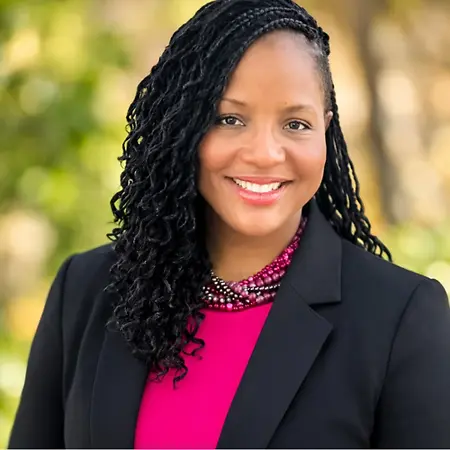
Her Story
About Anita
I've been in career services for 20 years, and my journey started with a degree in human resource management. It was very hard to get a job in human resources, so I created a staffing agency called Executive Human Resources Consulting and Staffing just to place direct hire human resource professionals - because if I can't find a job, I want to help someone else find a job. I did that for about 15 years while also working with people individually on their careers and resumes. What really led me to career services is my experience in human resources - I didn't like firing people and I didn't like the way it made me feel. I found satisfaction with helping people with their careers instead. People were making an impact that couldn't be erased, and it became really solidifying for me as a person in my career that this is the path I need to be in. Right now, I have a contract with the government where I work with 6 sessions to help military spouses with their career paths. I am also the owner of Career Services Academy, a workforce development company that specializes in career readiness as well as career consulting services. I graduated from Graduate School of Management in 2005 with my master's degree.
Her Interview
Ten minutes with Anita
01What’s the best career advice you’ve ever received?
The best career advice I've received is to have multiple streams of income - specifically 8 streams of income. Do not rely on one job to hold your family, because at any moment, the job can go. That advice has carried me for over 20 years. I try my very best to live up to that by working with the contract and trying to work in my business. It's been like that throughout my entire career, having a business and working as well, whether it's in contract career services. I prefer contract career services, and so having multiple streams of income in addition to other things as well has been my approach.
02What advice would you give to young women entering your industry?
If you're going into career coaching or consulting, number one is to never take it personal. There is a wealth of resources out there and a lot of people that think they know a lot, and they get advice from family members, friends, and people that have never written a resume. Don't take it personal - keep your goal of helping this person effectively at the forefront of your mind so that they can really have an impact. Stay focused on the goal, which is the reason why they hired you as a consultant or why you're working for this company as a contractor. If they signed up for a federal resume writing session, stay focused until the resume is done. Don't take it personal because people will say, well, I heard you're not supposed to do this, I've heard this, I heard that. It's also important to stay on top of new and emerging technologies as it relates to every career field. Make sure you know your audience and their field that they are going into. Educating yourself on different fields is going to make you even more effective. For example, when I was the Director of Career Services for an EdTech Bootcamp, I didn't know anything about cybersecurity, but I had to learn about it - the intricate details, the blue team, the red team, all of the great pathways into cybersecurity - so I can articulate that to my students and help them effectively. Make sure you know your students, make sure you know your clients and the industry they're going into. You should be the expert in that industry, even though you don't have any experience or a degree. And the final thing I would say is it's okay to be transparent in the industry - not to the point where you are compromising your job by being too transparent and too personal, but just be okay with being transparent with your clients going forward. That helps build a rapport and solidify the relationship and partnership that you have with your client.
03What are the biggest challenges or opportunities in your field right now?
Right now, I would say we are in an AI generation in which people are going to AI rather than humans, and so they're trusting AI rather than a career coach. That's one of the challenges. What I've found is that AI can only do so much. It doesn't take away from the human factor, it doesn't take away from the discerning of a pathway for a person, the human touch. It doesn't take away from preparing a pathway, talking through a pathway for success in their careers. So that's one of the biggest challenges, I think, for all coaches at this time, for all professionals in human resources as well as career services.
04What values are most important to you in your work and personal life?
I really do value empowering people. I value making sure that they are in alignment to their purpose. I definitely value purpose-driven work. I definitely value faith-led and purpose-driven work going forward, and just making that impact. I value people and the work I do just to change the narrative and the life of people. I truly do value that - taking the steps towards the goal that they have for their family, making steps towards the goal, and just having a plan for that. I do value results.
Join Influential Women and start making an impact. Register now.