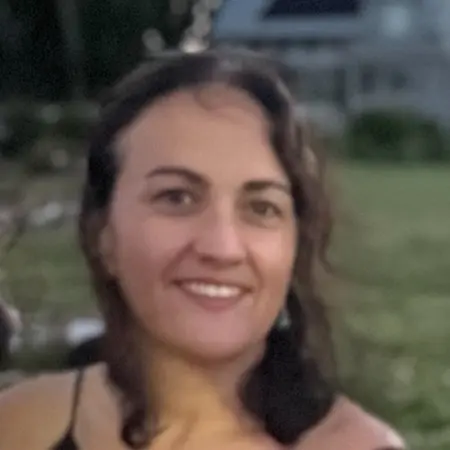
Her Story
About Cheryl
I've been drawn to the radiology profession for about 20 years because of the constantly evolving technology. I started at Rhode Island Hospital where I completed my certification, and I literally graduated on a Friday and started working on a Monday. I stayed there for 19 years, bouncing around into different departments. I spent about 9 years in vascular interventional radiology, then moved to the OR where I became the lead for a while, and even worked in corporate for a period. But about 3 years ago, I decided I wanted to go back to clinical work and be more involved with patients, so I moved to a company closer to home. Now I run the CT scanner by myself on third shift, dealing primarily with ER trauma and emergency situations, as well as ICU and floor patients who have emergencies throughout the night. I send the scanning images and history to outside radiologists for stat reads to help the ER doctors get diagnoses for patients as quickly as possible. What I find most rewarding about this field is being able to help deliver the best care for patients and knowing that I can help doctors give a diagnosis so patients can get treated efficiently and quickly.
Her Interview
Ten minutes with Cheryl
01What do you attribute your success to?
I think just having that drive of being able to want to provide a good life for my kids has been a big motivator. My mom had a diagnosis of leukemia and actually passed away while I was going to school, and I think a lot of people in my field either know someone who had something happen to them healthcare-wise, or even their own healthcare situation motivated them to go to school and learn more about the field so they can help other people. So I think that was a big driver for me. The technology itself was also a driver, being able to know that it's not just the same thing day after day. I feel like you always learn something different, even if you've been in the field for years. There's always something new if you talk to a co-worker, and you end up finding out how to do something different.
02What’s the best career advice you’ve ever received?
I had a really good mentor, a nursing supervisor, who encouraged me to go back for my master's degree when I was working in vascular interventional radiology. She told me I was already used to being in school and to just take a couple classes at a time, so I listened to her and went back and got my master's degree. That encouragement to keep going with my education was really impactful.
03What advice would you give to young women entering your industry?
It's a hard field, it's definitely challenging and demanding, especially if you're short-staffed. But it's rewarding to be able to help patients out, to see the outcomes. Not all of them are positive, but being able to give that care to patients definitely is rewarding. You have to be adaptable and able to meet the challenges of new software, new equipment, and protocol changes. Being able to remember all those things is kind of key to the role. You also have to be very efficient and prioritize, especially when you're working by yourself. I always try to stay time efficient and do the best I can to make sure that patients are getting the best care that they can.
04What are the biggest challenges or opportunities in your field right now?
I would say one of the biggest challenges is the shortage of people. We're constantly working short-staffed, which affects delivering patient care because nobody wants to wait a long time, but in the same sense, there's only one of you. At night, I'm always by myself, so I have to very much prioritize and try to keep going. I feel for the patient, I wouldn't want to be someone's grandmother waiting, so you always have to make sure that you try to stay time efficient and do the best you can with things that are in your control to make sure that the patients are getting the best care that they can. On the opportunity side, I think keeping up with the technology is important because it's a constantly evolving field. There's always something to be learning and something new, so being adaptable and able to meet those challenges of new software, new equipment, and protocol changes is key.
Join Influential Women and start making an impact. Register now.