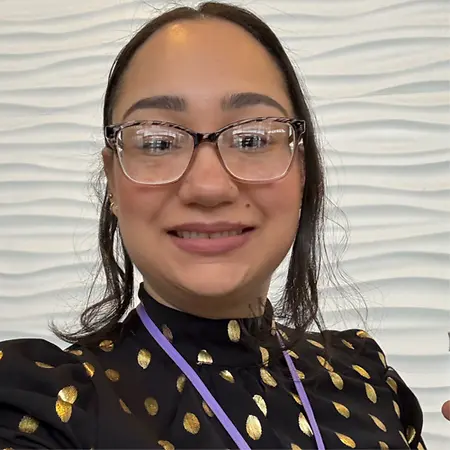
Her Story
About Deadria
My journey into respiratory therapy began in a deeply personal way when my daughter was sick with RSV. I was working as a CNA at the time and met a respiratory therapist who was doing breathing treatments for my daughter. I asked her what she did because I understood she wasn't the nurse, but I wasn't sure what her title was. She told me she was a respiratory therapist, and it intrigued me, particularly the idea of helping people breathe better. As a first-generation college student from a very poverty background in Mississippi, I didn't have my parents to help me through my education journey because they themselves don't have the education. I was pretty much on my own through everything, and during respiratory school, it was a challenge financially paying bills and for school. I would donate plasma, do fish fries, garage sales, and different other things to help me pay for my tuition. Once I got into the field, I realized that they need more people in my field that are like me and that would grow. I've been on my journey to be a manager for a long time, and what led me to ECU Health is the fact that they had a children's respiratory manager position open. I lived in Metro Atlanta at the time and flew here to ECU for the interview and was picked for the job. Now, as a manager, a typical day for me involves connecting with my direct reports because their family life is important to me. Growing up in a poverty family, family's a big thing for me and a big deal. Being that I'm new here, I definitely want to get to know them more about them personally, more than their work ethic. As a new leader, you have to almost kind of prove that you're the one for the job in order to lead people, and you also have to play some ethics in that role too and just kind of be more of a people's person.
Her Interview
Ten minutes with Deadria
01What do you attribute your success to?
I attribute my success to resilience, faith, and refusing to give up even when life was difficult. As a first-generation college graduate from Mississippi and one of 18 siblings, I learned early that hard work, sacrifice, and consistency could change the trajectory of my life. During respiratory therapy school, I worked hard to fund my education, including organizing fish fries, garage sales, and even donating plasma for gas money. Those experiences taught me perseverance, humility, and determination.
I also believe success comes from pouring into others. Throughout my career in healthcare leadership, I’ve focused on mentoring staff, building strong teams, and creating environments where people feel supported and empowered to grow. Every challenge, setback, and opportunity has shaped me into the leader I am today.
02What’s the best career advice you’ve ever received?
The best career advice I’ve ever received was: “Never stop growing, and never gatekeep what you’ve learned.” That advice changed the way I approach leadership and success. I believe true leadership is not about being the smartest person in the room — it’s about helping others grow beside you.
In healthcare, I’ve learned that technical skills can open doors, but character, consistency, and the ability to work well with people are what sustain long-term success. I’ve carried that mindset throughout my career by mentoring others, embracing new opportunities, and continuing my education and professional development.
03What advice would you give to young women entering your industry?
The one advice that I would give them is to not give up. You can have a lot of no's, but one yes is a game changer. And just keep going. You know, don't give up. Like, failure is not an option. I think my biggest achievement out of this is just showing women that come from that lower poverty level that education can be the way out. I just want to show women who feel like even when times get hard, you know, we're supposed to put aside our education, our things to focus on family, but showing women that come from that lower poverty level that education can be the way out is what I want them to know.
04What are the biggest challenges or opportunities in your field right now?
I think that my industry is overpopulated with aspiring leaders, because with respiratory, you don't have a lot of avenues besides education or leadership. The challenge is that sometimes when we're overpopulated with earning the title, we forget that leadership begins at bedside. So I think that in our career, if we can stop looking for the title of the leadership and start implementing them at bedside without the title, it helps with patient outcomes significantly.
05What values are most important to you in your work and personal life?
Family is a big thing for me and a big deal. Growing up in a poverty family, family is really important to me. As a manager, a typical day for me involves connecting with my direct reports because their family life is important to me. Being that I'm new here, I definitely want to get to know them more about them personally, more than their work ethic. That will show me, because that's something that is done daily, but getting to know them personally is the biggest thing that I'm trying to win over. As a new leader, you have to almost kind of prove that you're the one for the job in order to lead people, and you also have to play some ethics in that role too and just kind of be more of a people's person.
Join Influential Women and start making an impact. Register now.