
Influential Woman · Education
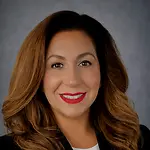
Deanna JamesHughes
Director of Student Services, Hudson City School District
Hudson, NY
Her Story
About Deanna
I started my career as a career changer through the New York City Teaching Fellows program, which was one of the most competitive years they had. I was moments away from moving to Washington, D.C. for a PR job after majoring in journalism, but when I got the call from the Teaching Fellows, it chose me for special education, grades 5 through 9. I declined all my other plans and went with my gut, and from day one, it was one of the most life-changing experiences ever. I was immediately put in a place where I was connecting with youth and adults, hearing their stories, and I realized I wasn't just coming in to serve instructionally - I was coming in to heal and support, to hold community. The things I got from the people I worked with and the sense of purpose fed me in ways that filled other pockets I needed fulfillment in. I aligned myself with people who were strong in their craft, picked up little things from different people, and formed who I became based on the experiences, interactions, the need, and the calling. I noticed how literacy was a huge deal, so I made sure to put myself in positions to listen to researchers, read the research, go right to the source, and bring things back. Over my 19 years in education, I've served as a teacher, worked between building and district initiatives, and now serve as an administrator and Director of Student Services for the past year.
Her Interview
Ten minutes with Deanna
01What do you attribute your success to?
I attribute my success to lifelong learning, first and foremost. You have to commit to lesson learning and mentorship - it doesn't have to be pronounced, but it's a combination of investment and research. This is not for the weak, because at any given moment, you are everything - you are a mom, you are a social worker, you are a teacher. You have to have the level of commitment and be able to find joy. You can't be close-minded or say 'I've arrived' - you have to be open and able to reciprocate on so many different levels. You need the grit and tenacity to keep going. You know you're in the right place when you hear the voices replaying in your mind, when you're awake and when you're asleep, constantly thinking about what do I need to know, what do I need to do, what do I need to consider to make things better. That reflection is key.
02What’s the best career advice you’ve ever received?
The best career advice I ever received is that your network is your net worth. It can be tempting to stay where your roots are, to stay comfortable with the people and places you know, and that's fine - but it's also important to be knowledgeable of what's going on outside of your immediate zone. If you only stay within your zone, you're cutting yourself off from a realm of possibilities. I'm a big learner, and I like to learn not just for myself, but to retrieve and share. If you don't know what's happening around you - whether it's competitiveness, trends, whether we're prepared, really good research, or what other districts are doing - you miss out. You have to balance ideas off each other. Humans were not meant to be in isolation. When you get into positions, it's easy to feel isolated because you're tasked with your job and you stay fixed on it, but there's so much levity when you meet people, whether local or out of state. There's a fundus of knowledge that you can't measure, and you never know what you're going to come across.
03What are the biggest challenges or opportunities in your field right now?
The biggest challenges right now are definitely resources. There's been a major shift in terms of what is funded and what is not funded, so a lot of districts are grappling with what we would call unprecedented times. The other major piece is literacy, because a third of our nation are emerging readers. If you look at the teacher preparation pathway, it doesn't mandate that you take a science of reading course for many collegiate levels, or that you are very astute in facilitating that work. What ends up happening is you get into a classroom and the teacher can, without a doubt, know which child needs the support, but because they haven't had that training unless they went on to be specialists, they have no idea how to adjudicate and meet that child wherever they are. Worse yet, if you have folks who are buying curriculum, they don't have that exposure - they don't know what the arms of reading are, they may buy into one program, and it's not a one-size-fits-all type solution. Literacy impacts all areas.
04What values are most important to you in your work and personal life?
Honesty and commitment are most important to me, and that commitment has to come from the heart. It cannot be about gain or what can I get from this - it has to be honest dedication, something that is driving you to the greater good. If not, it's disingenuous and not long-lasting. You also have to really lean in to an understanding of people, being like an empath and just being aware. If you don't know what is going on with the people in your community, you cannot serve them. If they're not on their best, if they're not showing up, if there are things going on with them personally and you are unaware or do nothing to meet them, that's not fair and not long-lasting. On a personal level, I lost a loved one due to suicide, and how that affected me both personally and professionally really drove home the value of relationships. I'm very cognizant of maintaining and knowing relationships. When we get in the dark space of thinking that no one is looking, that's when things take root. We have to be cognizant - that relationship part is so key. I also believe in leading with the sense that people want to do right. When people show up in their worst space, although it may be reactionary to take it personal, step outside of that and ask what's going on under the surface, what's really happening here, why are they showing up the way they're showing up. We can't afford to reject each other on our bad days because that's not realistic. If you're a systems leader, you're working with people - that's the job - so the people under you can do the best job they can to support our most precious resource, which is our children.
Keep Exploring
More Influential Women · New York




Join Influential Women and start making an impact. Register now.