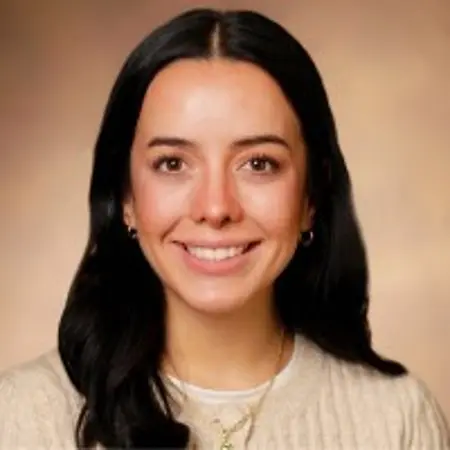
Her Story
About Elisa
My career path has been driven by a passion for medicine and crisis management, combined with a deep curiosity about human behavior. I started in a COVID lab at the University of Denver working with Nancy Lawrenson, where we analyzed spit samples and wastewater to determine virus levels. After that, I worked as a victim advocate with the state attorney in Leon County, Florida, and at Florida State University during my master's program. I developed a real passion for crisis management and being there when things get really rough, but I wasn't sure about the legal side of things because I always had a passion for medicine. When I got the opportunity at Vanderbilt, I decided to pursue the medical side without going to medical school. At Vanderbilt, I've been incredibly fortunate to hold two roles simultaneously - as a clinical research coordinator and a licensed master social worker. This dual position has given me a comprehensive understanding of everything from starting and managing trials to closing them out, while also caring for patients, managing crises, and advocating for them. My typical day involves crisis management - handling patients with suicidal ideation, brain bleeds, psychosis, hallucinations, or medication issues. I check the health portal, coordinate with pharmacy, notify providers and sponsors, conduct IRB-appropriate procedures, review consent forms, participate in budgeting meetings, and spend Fridays in clinic where patients now know me and rely on me to address their needs alongside their providers. I also do speech language therapy scheduling and pharmacy advocacy. My main area of expertise is neurology, specifically Huntington's disease, which I deal with every day. I'm fascinated by how inhibitions go down and people act on impulse more - they'll spend all their money or act differently sexually. I run the EnrollHD study, and we're the second site in the country with the most enrolled patients. I'm also involved with focus groups through HDSA and CUREPSB, helping write papers. What I'm most proud of is that patients have trusted me to walk them through the medical journey of getting this devastating disease where there's no cure and no treatment. Getting to be there for them and dedicating my time to earning their trust is something I'm really proud of. After college, I've continued taking classes in anatomy, nutrition, and physiology to further understand the human body, and I'm currently studying to be a certified clinical research coordinator through ACRP.
Her Interview
Ten minutes with Elisa
01What do you attribute your success to?
I attribute my success to my parents, Hector and Maria, and my brother Andres. Obviously, we're not from this country, so moving here, staying here, being so far away - I haven't been home and seen my extended family in 3 years, like my grandma and grandpa - it's so hard. But my parents and brother visit, and if I didn't have them, I think I would have failed. I have fallen many times, but they've always pushed me, like, you can try again, and you can try again, and I've tried and finally, I feel like I'm at a place where it's like, I'm proud of what I'm doing, I think I'm good at what I'm doing. And now that I have my boyfriend Brian, he's also incredible - just having a team behind you is what drives success, I feel like.
02What’s the best career advice you’ve ever received?
I think what my dad told me - my dad has an incredible career and really built it on his own, like, just didn't come from much and has achieved great things. He was like, never stop working towards bettering yourself, even while you're working. So, like, keep going to school and keep taking classes on the side. And my mom also said this, just like, keep seeing in which ways you can grow as a person and in your profession. So they have really impulsed me to take classes and do certifications and take exams.
03What advice would you give to young women entering your industry?
I would always say, if you're sure - if like, if you know you know something, then don't doubt yourself or apologize for asserting that knowledge, you know? I think that's a big one. I think we apologize a lot as women, so even when like, you know you're right about something, you're like, oh, I'm sorry, like, I don't know, or you just don't speak up. And I think it's like, if you are sure of yourself, and sure of your knowledge, and your training, and your preparation, then speak up and find your voice, because it's absolutely worth it.
04What are the biggest challenges or opportunities in your field right now?
The biggest challenge has been being away from what I would consider home and having to build a new home. Being an immigrant woman in a fairly Republican, very conservative city - I think as a woman already, you're undervalued for your work and you're doubted. That's been hard to break, I guess, and it's been a challenge. I am in a great position though - my boss is the best. She really works towards having a female-driven clinic, so I think I'm in a great position. But yeah, missing home while also wanting to work for a better future has been huge. As far as opportunities, I think the growth opportunities have been incredible. They gave me the opportunity to explore two roles and then kind of pick the one I like the best. I came in mostly with a background in social work, and then I was interested in research, and they really gave me the opportunity to do both. I don't think a lot of people have that opportunity - they're just kind of pigeonholed in one role, and mine was really expansive.
05What values are most important to you in your work and personal life?
Respect is huge - like, respecting anyone for who they are. Honesty is also critical. And just doing things in good faith. I don't really know if there's like a word for that value, but like, kind of just like benevolence, I guess, would be just like, do things for the better of everyone and yourself.
Join Influential Women and start making an impact. Register now.