Influential Woman · Non profit
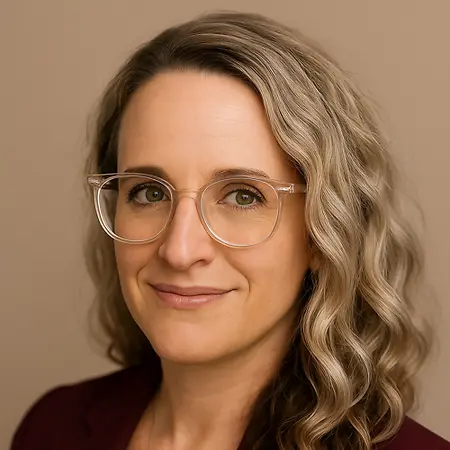
Elisabeth Whitmire
CEO & Director of Legal Services, Post Conviction Project Inc
St Petersburg, FL 33702
Her Story
About Elisabeth
I became an attorney in 2014, and for years I did what most criminal defense attorneys do—I showed up at the courthouse, fought hard for my clients, and moved on to the next case. What I didn't fully appreciate until later was how much of the fight happens after the verdict.
Post-conviction law is the one area of criminal proceedings where the Constitution offers no guarantee of counsel. You go to trial, you get convicted, you appeal, and then, even if your attorney made serious mistakes, you're largely on your own. Most people don't know that. Most people assume the system keeps checking. It doesn't.
That's why I co-founded Post Conviction Project Inc., a Florida Supreme Court-approved nonprofit providing post-conviction legal representation and reentry support to incarcerated and formerly incarcerated individuals across Florida. We work on wrongful convictions, unlawful sentences, and criminal appeals, and we pair that legal work with reentry programming to help people rebuild after release. It's a dual mission because the problem is dual: the courtroom and the community are both part of the same story.
I spent several years as a public defender before this, which I'll recommend to any new attorney without hesitation. I said in law school it was the one job I'd never do. I was wrong. It's overworked, underfunded, and completely transformative. It taught me how to try cases, how to talk to people, and how to learn fast, and crucially, you don't have to bill, so you can actually focus on getting good.
PCP is fully remote, which wasn't a lifestyle choice so much as a practical one. We cover the entire state of Florida, and that reach matters more than a mailing address.
Her Interview
Ten minutes with Elisabeth
01What do you attribute your success to?
Honestly? The naysayers.
I would not have pursued law if someone hadn't told me I couldn't do it. My path wasn't planned. I was working as a legal assistant when someone told me I'd never make it as an attorney. That was all I needed to hear.
I have diagnosed ADHD, and I remember sitting with an evaluator as an adult who told me that, just like someone who is four feet tall isn't going to be a great basketball player, I simply wasn't cut out to be a lawyer. When I graduated, I photocopied my bar license and mailed it to him. No note necessary.
That fire carried me through law school in two and a half years instead of three, graduating with honors and passing the bar on the first attempt. I've never been motivated by praise. I've always been motivated by someone telling me what I can't do.
02What advice would you give to young women entering your industry?
Understand what you're actually signing up for. Law school is not job training—it's a cognitive rewiring. They don't teach you the law so much as they teach you how to think, how to analyze, how to see problems from angles you didn't know existed. Most people go in thinking about prestige or income or because they like to argue. What they don't anticipate is coming out the other side a fundamentally different thinker. Be ready for that, because it catches people off guard.
Also be ready for the early years to be hard. When you first come out as an associate you are working long hours for modest pay, and the hours are not an exaggeration. Dark to dark is not a figure of speech.
My honest advice is to do a stint at the Public Defender's Office early in your career. You will be overworked and underpaid, but you will try cases, develop judgment, and learn your craft without the pressure of billing. A lot of new attorneys choose the State Attorney's Office because it pays better. I understand that. But if you're going to do public sector work anyway, why not do the side where you learn more, carry more responsibility, and come out a better attorney for it?
The legal field needs women who are willing to do the hard work first. That foundation is what everything else is built on.
03What are the biggest challenges or opportunities in your field right now?
Funding—full stop. Post-conviction legal work is one of the most complex and least-resourced areas of the legal system. There is no public defender for people who have already been convicted. There is no appointed counsel for the wrongfully sentenced. The need is enormous and the infrastructure to meet it is thin. The opportunity is that awareness is growing—donors, foundations, and the legal community are beginning to understand that access to justice does not end at conviction. The organizations that can demonstrate both credibility and impact are positioned to attract the investment this work has always deserved.
04What values are most important to you in your work and personal life?
In my personal life, my daughter is the answer. Everything I do, I do with the awareness that she is watching—the same way I watched my mother. I want her to grow up knowing that hard work is non-negotiable, that integrity is not situational, and that you can build something meaningful from nothing if you are willing to do the work.
Professionally, ethics and accountability drive everything. I chose this field in part because I believe lawyers have an obligation to be better than the reputation we have collectively earned. Not all of us are scoundrels. The ones who are do damage to the entire system and to the people that system is supposed to protect. I show up every day trying to be the kind of attorney that restores some of that trust.
Join Influential Women and start making an impact. Register now.