Influential Woman · Healthcare Technology
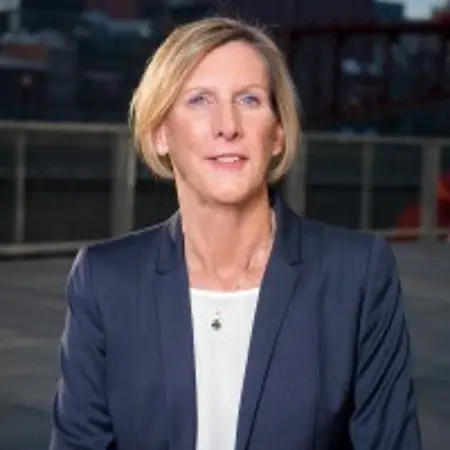
Janice Reese
FAST Program Manager, HL7 FHIR at Scale Taskforce (FAST)
Nashville, TN 37080
Her Story
About Janice
Janice Reese is a healthcare interoperability and digital transformation leader with more than two decades of experience at the intersection of technology, cybersecurity, and healthcare innovation. She has been involved in technology for most of her career, with a strong healthcare focus over the last 20 years. Early in her career, she worked at Adobe during the launch of Adobe Acrobat PDF, where she partnered with the industry standards group and led business development efforts around third-party technologies designed to reduce paper-based processes and streamline electronic workflows across industries. During this time, she also contributed to the submission of the first drug application using Acrobat in healthcare, reflecting her early commitment to advancing digital transformation in regulated environments.
Throughout her career, Janice has continued to focus on leveraging technology to solve complex healthcare challenges. She has worked across a range of organizations, including cybersecurity and healthcare innovation initiatives with Health 2047, the innovation arm of the American Medical Association, where she helped develop cybersecurity-focused technology products. She also supported a long-term services organization in the rollout of its platform to major health plans and Medicaid programs in the state of Virginia. Based in Nashville—often referred to as the “Silicon Valley of healthcare”—she has built a career centered on enabling secure, scalable, and interoperable healthcare systems through strategy, partnerships, and standards-based innovation.
Currently, Janice serves as Program Manager for the HL7 FHIR at Scale Taskforce (FAST), where she leads initiatives focused on identity, security, consent, national directory standards, and testing at scale to enable a connected and trusted healthcare ecosystem. Her work aligns closely with industry partners, including major health plans, technology companies, ONC, and CMS, with key regulatory milestones on security frameworks anticipated for implementation beginning January 1, 2027. She also leads cybersecurity and workforce initiatives, including the Women in Cybersecurity Tennessee community and the WiCyS BISO (Business Information Security Officer) group, where she champions the development of the BISO role as a critical bridge between business and security while fostering leadership opportunities for women in cybersecurity.
Her Interview
Ten minutes with Janice
01What do you attribute your success to?
I would attribute my success to a combination of curiosity, persistence, and passion. Curiosity has kept me continuously learning—whether that’s understanding emerging standards like FHIR, navigating policy shifts, or listening to diverse stakeholders across the ecosystem. That curiosity naturally evolved into a deeper passion for connecting people, systems, and data in meaningful ways.
Persistence has been essential in turning that passion into progress. In a space like healthcare interoperability, where change takes time and requires alignment across many moving parts, staying committed and continuing to move the work forward—step by step—has made all the difference.
02What’s the best career advice you’ve ever received?
“Stay at the table—and do the work that connects people.”
The best career advice I’ve received is to not step away when conversations get complex or uncomfortable, but to stay engaged and help move things forward. In healthcare especially, progress doesn’t come from any one organization—it comes from bringing people together, aligning perspectives, and doing the work in between.
That advice has shaped how I approach my career: lean into collaboration, listen carefully, and be willing to do the hard, often unseen work that turns ideas into real, scalable solutions.
03What advice would you give to young women entering your industry?
Step into the intersection of healthcare, cybersecurity, and emerging technology—this is where the most meaningful change is happening. The industry is rapidly evolving with FHIR, digital identity, AI, and new trust frameworks, and we need leaders who are willing to learn across disciplines. Don’t feel like you have to choose just one path—build a foundation that allows you to understand how policy, technology, and security all work together to protect and connect patient data.
Be intentional about developing both technical fluency and strategic perspective. You don’t need to be an engineer, but you do need to understand how systems work, how data moves, and where risks and vulnerabilities exist. In cybersecurity especially, trust is everything—so take the time to understand identity, consent, and governance as core components of the ecosystem, not afterthoughts.
Find your voice and use it early. This space benefits from diverse perspectives, particularly as we design systems that impact patients, providers, and communities at scale. Ask questions, engage in industry groups, and don’t hesitate to contribute—even in rooms where you may be the only one like you.
Most importantly, stay persistent and committed to the long game. Change in healthcare and cybersecurity doesn’t happen overnight—it requires collaboration, resilience, and a willingness to keep showing up. The women who will shape the future of this industry are the ones who stay at the table, connect stakeholders, and help turn emerging technologies into trusted, real-world solutions.
04What are the biggest challenges or opportunities in your field right now?
The biggest dynamic in healthcare interoperability right now is that we’ve moved past “can we exchange data?” to “can we trust, scale, and operationalize that exchange across the ecosystem?”—and that shift is exposing both real challenges and meaningful opportunity.
On the challenge side, the industry is still fragmented at the infrastructure layer. Identity remains inconsistent across networks, consent is often implemented in siloed or non-computable ways, and trust frameworks are not uniformly adopted. Even with FHIR APIs widely available, we’re seeing gaps in production-grade scalability—especially when workflows span payers, providers, HIEs, and emerging CMS Aligned Networks. Add to that the rise of AI, and the need for high-quality, trusted, and permissioned data becomes even more urgent. Without a coordinated foundation, we risk accelerating data exchange without fully addressing trust, provenance, and governance.
At the same time, the opportunity is unprecedented. CMS Aligned Networks, TEFCA, and industry collaboration through HL7 accelerators like FAST, Da Vinci, and CARIN are creating the conditions for a shared, standards-based infrastructure. We have the ability now to establish interoperable frameworks for identity, security, consent, and directory services that can operate at national scale. If we get this right, interoperability becomes not just a compliance exercise, but a true enabler of value-based care, patient access, and real-time, cross-network coordination.
In many ways, this is a defining moment: the technology is ready, the policy is aligning, and the industry is engaged. The focus now is execution—bringing these pieces together into a cohesive, trusted ecosystem that can actually support the future of digital health.
05What values are most important to you in your work and personal life?
I believe in bringing people together through play and breaking down divisiveness. When people come together through play, and they break bread and eat together and interact, they come to realize they're more alike than they are different, and people become more accepting. I think that's critical right now, because we're at a pertinent point in our society where media and other factors have kind of ratcheted up that divisiveness, rather than trying to have conversations where you bring people together in a way that is not confrontational, but creates awareness of who somebody is and why they feel the way they do. I'm not one of those people that wants to just sit around and drink cocktails at a beach somewhere. Right now, there's so many things that are happening in the world, the only thing you can do is make the changes you have an influence to make in a way that you can make them. That's where I feel what I'm doing with the sport and beach volleyball matters - we have an idea of maybe leaving our property in some type of a trust so it could actually live on in perpetuity, so that when people come out here, they have the experience of listening to music and playing with each other in a way that incorporates fun and learning, but also adapting to other people's belief systems.
Join Influential Women and start making an impact. Register now.