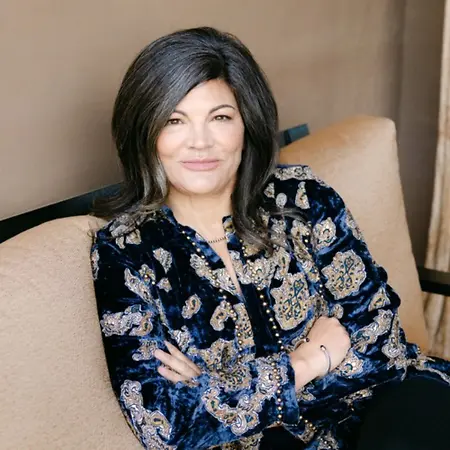
Her Story
About Juliann
I started my career in employee development working for Teletech out of Denver, Colorado, where I served as a Leadership Effectiveness Manager overseeing management training and development for 24 sites across North America. That role involved a lot of facilitation and curriculum design, and eventually evolved into more centralized corporate work focused on succession planning and talent development for high potentials. From there, I was hired as an Organizational Development Specialist at Navigant International, a global travel company where I had the opportunity to travel extensively and work on standardizing leadership development programs across the company. When Navigant was bought by Carlson Wagonlit Travel around 2000, I continued in organizational development and was eventually promoted to Director of Talent Management and Learning, a global role focused primarily on the Americas. In 2013, after years of being exposed to talent development processes and calibration conversations where leaders discuss succession planning and employee development, I stepped out on my own to start my consulting and executive coaching business. My coaching work helps people who want to do more or different than what they're doing now, whether that's through skill development, mindset shifts, or inner work around confidence and self-belief. On the consulting side, I work with groups of leaders to enhance outcomes for themselves and their teams, designing and facilitating customized programs and workshops. I'm also an instructor and mentor coach for a coaching certification school, helping other professionals meet their requirements to become certified coaches. I'm certified in applied neuroscience, and I recently completed my first book, 'Life Lessons on Two Wheels,' which took me six years to publish as I worked through my own imposter syndrome. The book uses stories from my cycling adventures around the globe as metaphors to validate human experiences, combined with coaching and neuroscience principles to help readers coach themselves through challenges.
Her Interview
Ten minutes with Juliann
01What do you attribute your success to?
I attribute my success to not quitting, even on the days when I faced what I considered to be big setbacks. Not a lot of solo entrepreneurs last 14 years, especially through a pandemic, and I've had a lot of setbacks - some of my own making, some extrinsic to me - but I've found a way to move past them. That resilience is something I'm very proud of. I'm also proud of the clients I've kept for many years, people who invite me back over and over to support them through their projects and goals. And certainly completing my book after 6 years was a major accomplishment, because I had a lot of imposter syndrome along the way, but I stuck with it. It's really about paying attention to your thinking so that it supports the direction you want to go, not believing every negative thought that pops into your head, and engaging in metacognition - thinking about your thinking in a powerful, exploratory way that changes not only your successes but your day-to-day experience of yourself and your relationships.
02What advice would you give to young women entering your industry?
The one thing that would stand out the most to me is really around the narrative that's in your head about whether you can or can't do it. It's just a matter of putting one foot in front of the other, and you can't believe every thought that you have. Our thoughts are transient, they're sort of dripping out of our subconscious, and they don't mean anything until we give them life. All of those self-critical, negative thoughts that we have - most of the time, we don't examine them, we just believe them. The idea is really to change the nature of your experience with your thoughts through metacognition, which is an awareness that you now think about your thinking. Not in a rumination type of way, but in a powerfully exploratory way, asking yourself: Is this really true? What else might be true? What other perspective could I hold here that changes my way of thinking about this? When we engage in that level of metacognition, we can significantly change not only our successes, but our day-to-day experience of ourselves and our relationships. In summary, it's really about paying attention to your thinking so that it supports the direction you want to go.
Join Influential Women and start making an impact. Register now.