Influential Woman · Education, Grief and Loss
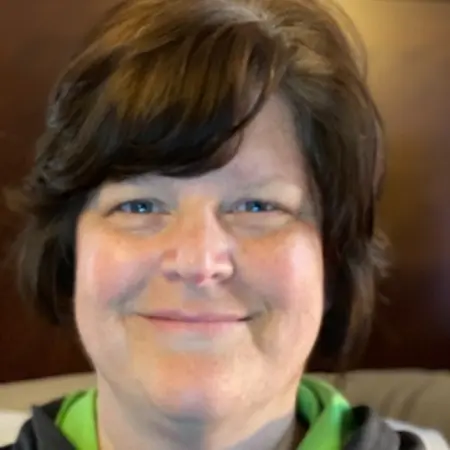
Kimberly Ann Swedberg
Educator, Elephants in Bloom
Chattanooga, TN
Her Story
About Kimberly
If I had to describe myself, I would probably start by saying that I am curious. I love to learn, I ask a lot of questions, and when something captures my heart, I have a hard time simply standing on the sidelines.
I am an educator at heart. I have spent more than 35 years teaching, but I think my students have probably taught me just as much as I have taught them. I believe there is something to learn from almost everyone we meet, especially when we are willing to listen to people whose lives and experiences are different from our own. Education, to me, has never been confined to a classroom. It is simply part of breathing.
I am also someone who tends to have several things going at once. I teach. I write. I create. I research. I ask, "What if we tried this?" probably more often than I should. I can be working on an article about grief one minute, planning a lesson for a student the next, and later find myself figuring out how many sunflower seeds we need for farms in Kenya. It may look a little scattered from the outside, but to me, it all fits together.
I care deeply about people. Encouragement has always been important to me, particularly helping people see possibilities in themselves or their circumstances that they may not see yet. That has shaped my work as a teacher, author, grief coach, and the founder of Daddyman Diaries. It has also shaped the way I approach Elephants in Bloom, the conservation project I started in Kenya to help Maasai communities and elephants coexist more peacefully.
Travel has also changed me. Being able to spend time in other countries and cultures has taught me that there is a very big world beyond our own little corner of it. Some of the most important things I have learned have come from sitting with people, listening to their stories, asking questions, and realizing how much I don't know.
I am a wife, a mom, a daughter who still carries her parents with her, a teacher who still gets excited when a student has that "I got it!" moment, and a writer who believes words can help people feel a little less alone. I love animals—elephants have obviously claimed a particularly large piece of my heart—and I believe compassion should lead us to action.
I am also a dreamer. But I don't particularly like leaving dreams as dreams. I like figuring out how to make them happen. Sometimes that means writing the book, starting the project, getting on the airplane, asking someone for help, raising the money, or being willing to try something when I don't know exactly how it is going to turn out.
I don't think influence is necessarily about being the loudest person in the room or having the biggest platform. I think some of the most meaningful influence happens quietly. It happens when we encourage someone, teach something, listen without judgment, speak up when something matters, or plant a seed that may grow long after we are gone.
I'm still learning. I'm still dreaming. I'm still asking questions. And I'm still figuring out what I want to be when I grow up.
I hope I never stop.
Her Interview
Ten minutes with Kimberly
01What do you attribute your success to?
I don't think I can attribute my success to any one thing. I have been incredibly fortunate to have people in my life who believed in me, especially my parents. My dad was an educator as well as a pediatric dentist, and both of my parents were tremendously supportive. They encouraged me to learn, to work hard, and to believe that I was capable of doing whatever I set my mind to.
But, strangely enough, I also attribute some of my determination to someone who didn't believe in me.
I wasn't a great student when I was younger. I did okay, but school didn't always come easily to me. I had to study. I had to work hard. And somewhere along the way, I had a teacher tell me that I would never amount to anything.
I remember thinking, "I'm going to prove you wrong."
And I think a little bit of that has stayed with me my entire life. Tell me I can't do something, and there's a pretty good chance I'm going to figure out a way to do it.
But that experience also shaped the kind of educator I wanted to become. When I work with teachers today, I tell them: Never say something like that to a student. You may be frustrated. You may wonder whether a student will succeed. You may even think it—but don't ever say it. We don't always realize how long our words will stay with someone.
In my case, those words became fuel. But they could just as easily have become a reason to give up.
I think my success has come from a combination of things: parents who believed in me, a willingness to work hard, a lot of curiosity, and perhaps a healthy dose of stubbornness. I don't give up easily. If I don't know how to do something, I learn. If there's a problem, I start looking for a solution. If something matters enough to me, I am willing to work for it.
I've never been the person for whom everything came easily. And looking back, I'm actually grateful for that. Having to work hard taught me perseverance. Struggling taught me empathy. Being underestimated taught me determination. And having people who loved and believed in me taught me how powerful encouragement can be.
Those are lessons I have carried with me throughout my life—and lessons I hope I pass along to every student I teach.
02What advice would you give to young women entering your industry?
Find the thing that makes you excited to get up in the morning and do it. Find what you're passionate about, what matters to you, and what makes you think, "I want to be part of this." Then pursue it with your whole heart.
And don't let someone else tell you that you can't do something. Try it. If it's important to you, give yourself the chance to see where it might lead. Maybe it will work exactly the way you hoped. Maybe it won't. And that's okay, too. Sometimes what feels like a wrong turn is really just pointing you toward a different direction.
I tell my children this all the time: whatever you're passionate about, whatever drives you, whatever excites you—do that. But also give yourself permission for that passion to change and evolve as you do.
When I started my career as a special education teacher, I never could have imagined that one day I would be standing in Africa working with Maasai communities and trying to figure out how sunflowers could help protect elephants. That certainly wasn't part of my career plan! But that's one of the wonderful things about life. We grow. We discover new things. New people and experiences change us. And sometimes we find a purpose we never knew we were looking for.
So don't feel as though you have to have your entire life figured out when you're just beginning. You don't. Stay curious. Take chances. Be willing to change direction.
Most importantly, find work that means something to you. Of course, we all need to make a living, but if a paycheck is the only reason you're doing something, it's very easy to burn out. Find something you care about. Find something that gives you a reason to keep learning and growing.
And when you find it, give it your whole heart.
03What are the biggest challenges or opportunities in your field right now?
One of the biggest challenges right now is fundraising and finding the right people who believe in what we're doing and want to be part of it.
There are so many organizations asking for support, and unfortunately, there are also scams and people taking advantage of others' generosity. I think people are understandably more cautious about where they give their money. They want to know: Is this real? Where is my money actually going? Is it really making a difference?
And honestly, they should ask those questions.
For me, that challenge has also created an opportunity. It has made me think much more intentionally about transparency and about helping people feel connected to the work rather than simply asking them for a donation. I want someone who gives $5 to understand that their $5 matters. I want them to see the farmers, learn about the elephants, understand the problem we're trying to solve, and see what is happening because people chose to help.
One of the things I love about Elephants in Bloom is that it is very grassroots. We're working directly with Maasai communities, listening to what they need, trying ideas, learning from what works and what doesn't, and building from there. That personal connection is incredibly important to me.
So while fundraising is probably my biggest challenge, I also see it as my biggest opportunity to build relationships and trust. I don't simply want donors. I want people who care about what we're doing, who follow the journey, ask questions, celebrate the successes with us, and know that they are genuinely part of something meaningful.
There is a lot competing for people's attention and generosity today. I think our responsibility is to be authentic, transparent, and willing to show both the successes and the challenges.
Ultimately, I want people to know that behind every dollar raised, there are real people, real farms, real elephants, and a very real opportunity to make a difference.
04What values are most important to you in your work and personal life?
My faith is the foundation for everything else in my life. My Christian beliefs shape how I try to live, how I treat people, and how I approach the work that I do.
For me, that means trying to live with honesty and integrity, treating people with kindness and respect, and doing the right thing even when no one is watching. I certainly don't always get it right, but those are the values I try to come back to.
I also try to remember that everyone is carrying something we may know nothing about. We see such a small piece of another person's story. We don't always know what someone is grieving, struggling with, worrying about, or trying desperately to hold together. I think remembering that changes the way we treat people. It gives us a little more patience, a little more grace, and hopefully a little less judgment.
My faith has taught me to love people, to serve where I can, and to use whatever gifts I've been given to help others become the best version of themselves. Whether I'm teaching a student, supporting someone who is grieving, working alongside a community in Kenya, or simply interacting with someone in everyday life, I hope people feel that they matter.
At the end of the day, I want to live a life of faith, kindness, integrity, compassion, and service. I want the work I do to make a difference, but even more than that, I want the way I treat people along the way to make a difference.
Join Influential Women and start making an impact. Register now.