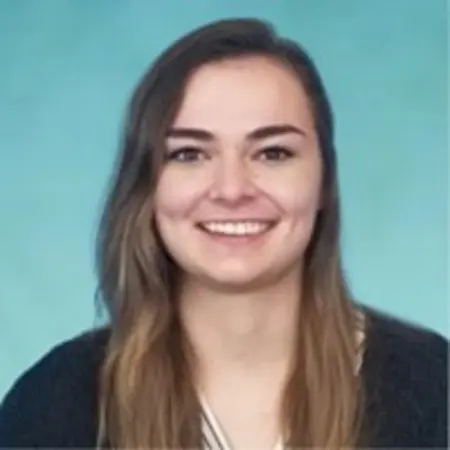
Her Story
About Madison
I've been working in healthcare enterprise data and analytics for about 5-6 years, focusing primarily on population health. My typical day involves handling mandated reporting as well as ad hoc project requests, and I support a couple different teams across my organization. What I find most important in my work is maintaining a healthy level of skepticism, because sometimes the way numbers are portrayed or calculated out can be misleading. I really value being open to collaboration from outside disciplines. For example, when I'm collaborating with another business-facing team that tends to be more clinical-oriented, like RNs and what have you, they have more knowledge on the front end of things, whereas I have knowledge of the data on the back end. There are certain things in the data that I may not understand that they could explain, like prior auth processes and things like that. I have a thousand-yard view, but they're the folks who have that clinical know-how that really know the policy behind it. It's okay to not know everything. In terms of challenges in my field right now, getting data to a point where it's fully accurate and it has integrity can be difficult, because garbage in, garbage out. Sometimes just getting ahold of data in general can be a challenge, especially with government programs, just because of red tape. As for opportunities, as we sort of transition into a more AI-centric world in the tech field, I see the opportunity to work with AI. A lot of people kind of misconstrue it as something that's going to replace analysts, but actually, it's more of a tool. It's probably going to evolve our role a bit, but it's not really something to be terrified of.
Her Interview
Ten minutes with Madison
01What do you attribute your success to?
I think it's your power of will, I guess. Not giving up. It can be intimidating coming into a field like this, especially as a female, but you just have to keep pushing forward and believe in yourself.
02What’s the best career advice you’ve ever received?
The best career advice I have ever gotten was do it scared. It can be intimidating coming into a field like this, especially as a female. So you do it scared. You know more than you think you do.
03What advice would you give to young women entering your industry?
I think it would just be do it scared. You know more than you think you do. It can be intimidating coming into a field like this, especially as a female, but don't let that fear hold you back. Trust in your knowledge and capabilities, even when you're uncertain.
04What are the biggest challenges or opportunities in your field right now?
Challenge-wise, getting data to a point where it's fully accurate and it has integrity is difficult, because garbage in, garbage out. Sometimes just getting ahold of data in general can be a challenge, especially with government programs, just because of red tape. In terms of opportunity, as we sort of transition into a more AI-centric world in the tech field, I would say just the opportunity to work with AI. A lot of people kind of misconstrue it as something that's going to replace analysts, but actually, it's more of a tool. It's probably going to evolve our role a bit, if that makes sense, but it's not really something to be terrified of. It's a tool that can help us do our jobs better.
05What values are most important to you in your work and personal life?
In my work, it's important to have a healthy level of skepticism. Sometimes the way numbers are portrayed or calculated out can be misleading, so you need to question and verify. I also value being open to collaboration from outside disciplines. For example, when I'm collaborating with another business-facing team that tends to be more clinical-oriented, like RNs and what have you, they have more knowledge on the front end of things, whereas I have knowledge of the data on the back end. There are certain things in the data that I may not understand that they could explain, like prior auth processes. I have a thousand-yard view, but they're the folks who have that clinical know-how that really know the policy behind it. It's okay to not know everything. Just being open to change and continuing to learn is essential.
Join Influential Women and start making an impact. Register now.