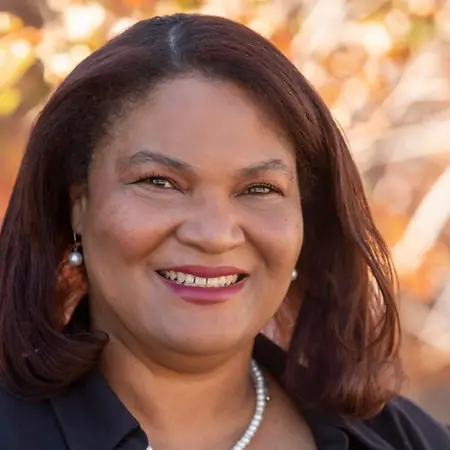
Her Story
About Marla
I've been in HR for over 20 years, and I've been at the Center for Investigative Reporting for 4 years as the VP of People and Culture. This is my first foray into journalism. I'm responsible for the human resources department, including not only the day-to-day but also strategic work, looking at forward-facing initiatives. Every aspect of HR falls under me - compensation, employee relations, learning and development, talent acquisition, talent management, and health and safety. What really inspired me to go into HR was that it was moving more towards a strategic partnership, as opposed to paper pushing. Being very aligned with the business, with regard to its goals and objectives, and then making sure that the HR initiatives are aligned to those, is extremely important in today's HR world. One of the big things that I focus on is business acumen, which is understanding not just the business, but how do we make money and how are we sustainable. We merged with Mother Jones on February 1st of 2024, so we were Mother Jones and the Center for Investigative Reporting, which included the Reveal radio show and podcast. That was a huge lift on the HR department. I'm very intertwined in how everything works, and I have to understand journalism and what they do in order to make suggestions on talent development and organizational design. I've been on panels at journalism conferences - last year I had two panels at the National Association of Black Journalists and I'll also have a panel this year. I had one at the Investigative Reporters and Editors Conference and I also spoke at the Institute of Nonprofit News. I do that because a lot of HR people don't go to these conferences, and smaller news organizations may not have HR folk on site, so I'm able to share my experience about being an HR person and what you should be looking for from a journalism perspective. One of the other things I focused on last year was mental health in the newsroom because of the stressors going on in our newsrooms. My organization is investigative reporters, so we've always stressed and made sure it's in our benefits and we had resources for our employees to get the help that they need. I've done training on how to identify burnout, and we continue to work on giving people the resources to be successful.
Her Interview
Ten minutes with Marla
01What do you attribute your success to?
I would say the biggest thing is my curiosity. One, I've been very fortunate in being able to work with and for some amazing people who have been very generous in their time and their treasure. So I think that's one of the most important things. And then the other is the curiosity. So whenever I walk into a new industry, and I've worked in various industries, having that curiosity about what do people do, what are the rocks in their plays, and where do they want to go in the future, has done me well in coming up with the processes, initiatives, HR initiatives that we need to do that are not only aligned to the business's objectives and goals but also staff as well. In human resources, you can never forget the human part. And so, that sort of curiosity, I think, genuine curiosity about what do we do, how do we do it, what's a better way to do it, and what do you need in order to do that, has done me well in my career in HR. I'm also very flexible, very adaptable, because I meet you where you are. It doesn't matter if I can know all the HR terms, because communication is really based on the person who is communicating, and I've got to use the language, in other words, the business verbiage, but also just the everyday language to get the point across. It does me no good to sit here and tell you all the HR jargon, but it's way more important that you understand, and that's my responsibility.
02What are the biggest challenges or opportunities in your field right now?
I think one of the biggest things that all of us are reckoning with is the introduction of AI into the workflow. One of my big focuses is working with our COO with regards to the change management methodology that we'll employ in order to bring everybody up to the same, at least close to minimum level. Another focus has been on upskilling, as opposed to being totally reliant upon AI. We are looking at AI as something to assist us. For example, if you use AI in what used to be 3 hours to do scheduling and it only takes you half an hour, then what do you do with that extra two and a half hours? And part of it is also upskilling, because as you know, with AI, there's also these opportunities of hallucinations, just wrong information. And so, you need to increase the skills of your staff and lean on their expertise to be able to ensure that that information is not being sent out accordingly. So for us, just integrating it into our workflows, but we are not looking at replacing people. It is more of integrating in our workflows. In journalism specifically, the ecosystem has been ever-evolving. With the attacks on journalism that's going on, the ecosystem of journalism as it's changing very recently, there's additional stressors for journalists. One of the most important things we can do as HR professionals is to make sure that our staff knows the resources that are there, continually to remind them of those resources, and help them through this.
Join Influential Women and start making an impact. Register now.