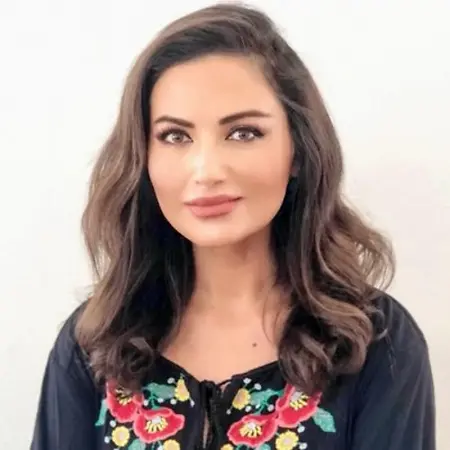
Her Story
About Nahid
I grew up in the shadow of war and displacement, in a family carrying the kind of fear many immigrant families never fully speak about because life moves too fast for reflection when survival is the priority. You learn to adapt early. You learn to keep going. You become responsible before you become whole.
I married young, and looking back now as a psychotherapist, I understand how much trauma was already sitting quietly inside me at the time. Back then, I did not have the language for any of it. I only knew I felt exhausted, anxious, disconnected from myself, and constantly focused on making it through the next day.
Then I became pregnant with my son, and something about that experience changed me in a way I still struggle to explain. I remember looking at him and realizing I did not want my children to inherit the emotional weight I had inherited. I wanted them to grow up feeling safe in their own minds. I wanted them to believe life could hold more than survival, fear, sacrifice, and silence.
At the time, I had no real roadmap for myself. One day I walked into a community college and asked how to register for classes. I still remember sitting in the parking lot afterward feeling embarrassed and intimidated, wondering whether I even belonged there. I was older than many of the students, unsure of myself, carrying children, responsibilities, trauma, and a life that already felt heavy.
But something in me kept going.
Two years later, I graduated and transferred to San Jose State University. I studied Management Information Systems because I was practical and deeply aware of financial insecurity. I wanted stability for my children. I wanted a life where they did not grow up carrying the same fear around money and uncertainty that so many immigrant families quietly carry.
That decision eventually led me into Silicon Valley, where I built a successful corporate career and earned a large six-figure income. From the outside, my life looked like the immigrant success story people celebrate. But internally, I could not ignore the feeling that something was missing.
The more successful I became, the more I found myself thinking about the people I came from. The women suffering quietly. The immigrants who looked functional on the outside while privately struggling with anxiety, grief, shame, trauma, and loneliness. The families carrying generations of pain without ever naming it because emotional survival often becomes normalized in communities shaped by war and displacement.
I realized there were not enough therapists who understood our experiences from the inside. Not only our language, but our silence. The complexity of immigrant guilt. The pressure to survive. The emotional cost of constantly rebuilding yourself.
So I made the difficult decision to leave corporate America and start over again.
I applied to Santa Clara University to study clinical psychology while continuing to work and raise my children. Years later, I became a psychotherapist, writer, entrepreneur, and advocate focused on trauma, mental health, immigrant experiences, and women’s rights.
Today I write for Psychology Today, San Francisco Chronicle, The Progressive Magazine, and Ms. Magazine, and I serve on the advisory board of Partnership for Trauma Recovery, supporting immigrants and survivors of torture.
Sometimes people look at someone’s life and only see the finished version. They do not see the woman sitting alone in a community college parking lot years earlier, wondering if she was too broken, too behind, or too lost to begin again.
Her Interview
Ten minutes with Nahid
01What do you attribute your success to?
I think for me, asking for help and not pretending that I know something that I don't really know. I think those two pieces of advice have helped me a lot. I continue to talk about the things that I ask for help about, the things that I don't know, and the things that I still need help on. It opens up the opportunity to learn more as well and continue learning.
02What’s the best career advice you’ve ever received?
The best career advice I've received is asking for help and not pretending that I know something that I don't really know. Those two pieces of advice have helped me a lot throughout my career. I continue to ask for help about the things that I don't know and the things that I still need help on, because it opens up the opportunity to learn more and continue learning.
03What advice would you give to young women entering your industry?
I would say it's not an easy job. I think sometimes it sounds glamorous in a way, like it sounds like it would be really nice to work with people and know about people's deepest, darkest secrets and hear people's stories. It sounds sometimes more interesting than it really is. If somebody doesn't love it, it could get quite overwhelming very quickly. I would really encourage people to go and volunteer in a crisis line or work with a community setting type of organization, with an NGO that works in a mental health type of setting, and get a sense of what it looks like, the day-to-day work of a therapist before they decide to invest their time into it. Because it's a lot of time investment - there's the grad school, and then there's all the hours that they have to complete, and then there's all the exams they have to sit for before they become therapists. So there's a lot of time commitment. I know of people that have gone through the whole journey and then they realize that this is not the job I want to do. They could save all those times by just knowing if they want to do that or not.
04What are the biggest challenges or opportunities in your field right now?
AI is obviously expanding a lot and it's also leaked into my field. There's a lot of opportunities that could be very beneficial to both patients and therapists if it's used correctly and utilized to make mental health more accessible to all, especially to the underserved communities. Entrepreneurs and investors are looking at that very closely. The other piece is that mental health as a whole is becoming more destigmatized, and that's also an opportunity towards more preventative help rather than just addressing it when it's too late or when people are already in crisis. That's another opportunity to continue to work with destigmatizing and helping people and making mental health more of an everyday talk rather than a hidden topic that people only talk about behind closed doors. As far as challenges, I think one is access. A lot of people don't have access to therapy. Right now with all of the job losses that we see, people lose their jobs and then their insurance access and coverages, and then therefore they cannot afford therapy. I think there is also still stigma - people say if I'm not doing that bad then I wouldn't really need therapy or I shouldn't receive therapy, therapy is for people who are worse off. Another challenge is that cultural piece - when you're looking for a therapist, if you find a therapist that is not just familiar with your culture but understands your culture and has lived in that culture, it can make a huge difference. We don't have enough therapists who are from non-white or from the minority cultures - minority culture therapists are still in the minority.
05What values are most important to you in your work and personal life?
I think I value authenticity. I very much so value empathy. I think it's really important, both at a personal and professional level, to be able to empathize with people and kind of understand their perspective. I value humanity a lot, just that human side of everyone. I think those are my biggest values in work and in my personal life.
Keep Exploring
More Influential Women · California


Join Influential Women and start making an impact. Register now.