Her Story
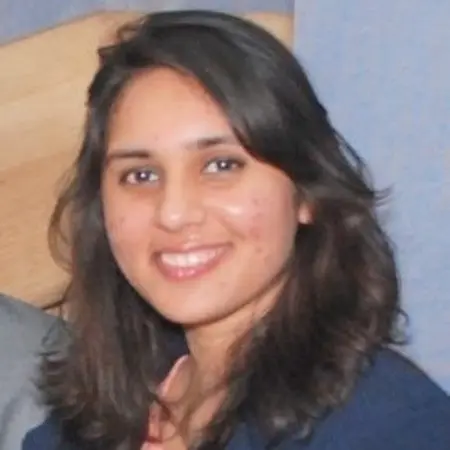
About Palak
I'm working on developing digital biomarkers that are non-invasive in nature, particularly ocular biomarkers. My work focuses on understanding whether neurological conditions, whether they affect young people or older people, can be diagnosed earlier, or if these biomarkers could serve as more of a confirmation metric with conventional testing. I completed my PhD in biomedical engineering with a special focus in vision sciences, officially graduating in January 2025. Since January 2025, I've been involved in an exciting startup called Sealight, where I'm working in my scientific capacity alongside a woman CEO and woman CMO. We're getting into regulatory FDA-facing submissions, which is why I'm also entering the regulatory world and hope to have my certification later this summer. I did my undergraduate degree in India in electronics engineering, and as I was going through that four-year course, I got introduced to the biomedical engineering med tech world and decided to pursue grad school there. I'm still pretty early career, but I'm hoping that by this time next year, my work at this startup will be my biggest achievement.
Her Interview
Ten minutes with Palak
01What do you attribute your success to?
I attribute my success to my parents. They have been the foundation of everything I've achieved.
02What’s the best career advice you’ve ever received?
The best career advice I ever received was to hope for the best, but prepare for the absolute worst. I took that as meaning there's a lot of ups and downs that are going to come, and you just have to keep gunning for the goal. So hope for the best, but be prepared for the worst.
03What advice would you give to young women entering your industry?
I would tell young women entering my industry something that I've seen in my own experiences. There's going to be loads of people - advisors, teachers, professors, even friends and family - who are going to tell you that you're probably not cut out for this, and you're probably not good enough for this. They'll say it's okay to pick up or take up that second best option, and to be practical. Just ignore all of that. Filter out the noise. The people who are going to encourage you are going to meet you every step of the way. I've had people tell me that, and thankfully, I've been able to filter out most of it. There's nothing wrong with going for what you want - don't settle for second best.
04What are the biggest challenges or opportunities in your field right now?
Currently, the biggest challenge and opportunity in my field is AI. It's a word that's on everybody's lips right now. We're trying to figure out how best to utilize it because it's here to stay, so there's a lot of opportunities there. But at the same time, integrity is crucial. As I mentioned, I'm getting into regulatory FDA-facing submissions with our startup, and of course we're going to use AI to help us refine our work, but you have to have that integrity factor in there. Whatever you're putting up in front of people, claiming as your own thing, it's got to be yours fundamentally. But you've got to learn how to work with AI and make the best of it in order to show the best version of your work. It's not a replacement for actual intellectual exercises - it's just something to help you work faster. If you can master that, you're set for the next decade or two.
05What values are most important to you in your work and personal life?
I think integrity and discipline are the two biggest values that are important to me. As scientists, integrity is everything for us, especially scientists in the medical field. We're proposing these new ideas, innovations, and technology to physicians who are directly responsible for the health and care of so many people. And to make integrity an integral part of your work, whether that's professional or personal, you've got to have discipline too.
Join Influential Women and start making an impact. Register now.