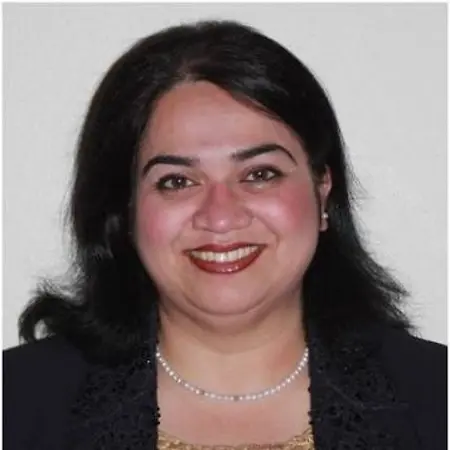
Her Story
About Rahima
I was inspired to go into mechanical engineering because I was excited about the possibilities and the fact that in engineering, I can make things happen and solve really tough problems. I use the exact same words even now - I always say that we better pick the toughest problems for us to solve, because if you solve the toughest problems, the others will follow. Engineering is a discipline where you have to make it happen. I spent 27 years at Intel before joining Vinci4D, a small startup where we apply physics intelligence using AI to solve thermal conduction and warpage problems in semiconductor manufacturing. What makes our work groundbreaking is that we can work at manufacturing resolution level, down to nanometers and micrometers, so customers can see exactly where issues are happening and design better solutions. I'm currently working on enabling co-design methodologies that would allow companies to collaborate without sharing their IP, which could reduce the time from product qualification to market from about a year to much faster. I've been trying to come up with new methodologies where companies don't need to share everything but can at least share the interfaces and still predict outcomes.
Her Interview
Ten minutes with Rahima
01What do you attribute your success to?
I attribute my success to being a very calm listener and truly understanding where the details and problems are. I seek out a lot of feedback, mainly because sometimes we are working on the toughest problems, and if somebody has faced something or would like to share details in a different way or question you, it's important to take that feedback in a very positive way. The room tells you a lot more than you actually thought about, so I keep my ears and eyes open for feedback. I also believe in always picking the toughest problems to solve, because if you solve the toughest problems, the others will follow. Wearing multiple hats actually helps - nothing gets boring, and when you're solving the toughest problems, you have to bring in the rigor and discipline of hard engineering while getting down to the details.
02What are the biggest challenges or opportunities in your field right now?
One of the biggest challenges I'm working on right now is that even after a product comes to release and qualification, it takes about a year to go to the market. This is because you're not able to do co-design. I've been trying hard to think about how to enable co-design, but co-design is a very difficult concept, especially because each company wants to keep their secret and they don't want to share their IP. That's where the simulations and the whole methodology falls apart. What I've been working on is coming up with some new methodologies where companies don't need to share everything, but can at least share the interfaces, and I can come up with a system so that I can still predict stuff. This would allow for better collaboration without compromising intellectual property.
03What values are most important to you in your work and personal life?
The values most important to me are gratitude, making an impact, and growing the next generation. I love growing the next generation pipeline and being very open to teaching others in a soft way, so it doesn't feel like you're just guiding them to do what you want - you're getting their buy-in and going through that process together. When I mentor people and they come up the ranks very quickly or accomplish something, I feel even more proud to see their accomplishment than mine. That's an exciting place to be in because you can build big communities and you never get into confusion about who wants credit. I don't need the credit - go for it, this is great. In my personal life, my husband and I feel very blessed that our donations, our time, and our ideas can really make big changes and impact people's lives. It's truly a feeling of gratitude and thankfulness.
Join Influential Women and start making an impact. Register now.