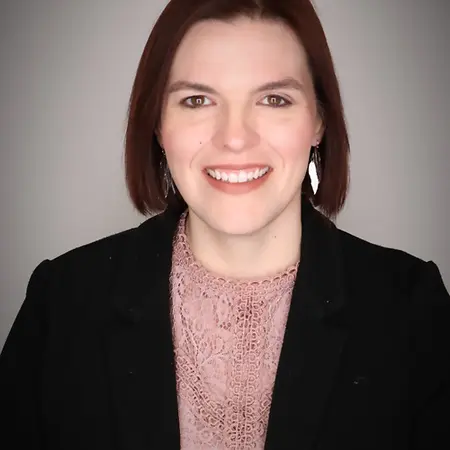
Her Story
About Renae
With over a decade of experience in education, I have dedicated my career to empowering students who face the greatest barriers to success. I began my journey in public K-12 education in Iowa, where four years as an in-school suspension teacher gave me a deep understanding of students who need advocacy the most. In March 2019, I transitioned to higher education, joining Columbia State Community College as an advisor for the TRIO program — a role that sparked my passion for guiding low-income and first-generation college students, a community I proudly belong to myself. That personal connection inspired me to pursue a Master's degree in Academic Advising from Kansas State University, which I earned in 2024.
In fall 2022, I joined Nashville State Community College as a Student Success Advisor and was promoted to Assistant Director of the Student Success Center, where I now provide day-to-day leadership, oversee program operations, and lead training and professional development for my advising team. I bring the same commitment to my colleagues that I bring to my students — believing that when advisors grow, students thrive. My work is driven by a simple but powerful conviction: that every student deserves a champion in their corner, and every advisor deserves the tools and inspiration to be one.
Her Interview
Ten minutes with Renae
01What do you attribute your success to?
My success is rooted in two things: the women who poured into me, and the confidence I've built in myself because of them. I've been fortunate to have remarkable female leaders and mentors who shaped how I think, how I lead, and how I show up. Long before I had a formal title, I was already trying to lead — encouraging honest conversation, helping my team think through challenges, and bringing solutions to the table rather than just problems. I believe leadership isn't a title; it's a posture. And the women who modeled that for me gave me permission to step into it before anyone officially said I could.
02What’s the best career advice you’ve ever received?
The best career advice I've ever received is simple but transformative: don't be afraid to try new things. In higher education, it can be tempting to default to the way things have always been done — but our student population is constantly evolving, and our approaches need to evolve with them. Innovation isn't just a buzzword; it's a responsibility. When we're willing to step outside our comfort zones and try something different, we open the door to better outcomes for the students we serve. That advice has shaped how I approach every challenge in my role.
03What advice would you give to young women entering your industry?
Stepping into a leadership role can feel overwhelming — even after nearly a year as an assistant director, I still have moments where I ask myself, how do I navigate this? The most important lesson I've learned is that asking questions isn't a weakness; it's how you grow. Early on, I was afraid that speaking up would make me seem aggressive or out of place. But I realized that asking why we do things a certain way, or saying "I want to grow in this direction — what can I learn?" is not only appropriate, it's essential. About four months into my role, I had a direct conversation with my director about how I could develop beyond my initial responsibilities and make a real impact. That conversation changed everything. My advice: don't let fear of perception silence you. You can be thoughtful and bold. And in industries like higher education, where change moves slowly, know that asking the right questions today can plant the seeds for progress a year from now. Your voice matters, even when the results aren't immediate.
04What are the biggest challenges or opportunities in your field right now?
One of the greatest challenges — and opportunities — in higher education right now is meeting students where they are. Today's students are carrying more than ever: financial pressure, family responsibilities, work obligations, and the weight of feeling like they should already have life figured out. Our job is to see that complexity and respond with compassion. But sustaining that compassion without burning out is its own challenge for those of us in the field. The opportunity lies in building systems, cultures, and support structures that allow us to show up fully for our students — consistently and sustainably. When we get that right, we don't just help students succeed academically; we help them believe they belong here.
05What values are most important to you in your work and personal life?
Honesty is everything to me. I never want the people on my team to wonder where they stand or feel like they can't come to me. Beyond that, I try to lead with genuine empathy — really listening, not just hearing. Life is complicated, and the people I work with are whole human beings with a lot going on. I want to honor that. At the end of the day, my greatest sense of purpose comes from being a support to others and building structures that help people succeed. That's true at work and in my personal life too.
Join Influential Women and start making an impact. Register now.