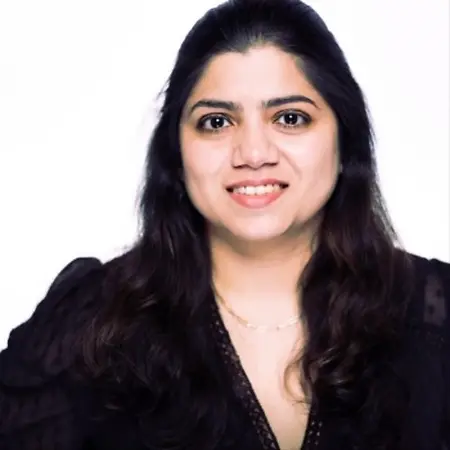
Her Story
About Saloni
I've been working in the AI and ML industry for around five and a half years now, and I'm currently a Senior AI Engineer at LinkedIn, where I've been for about a year and a half. My main areas of expertise are recommendation systems, personalization, ranking, and retrieval for large-scale social media networks, which I specialized in during my graduate school at Cornell. Most recently, I received recognition as a critical AI talent at LinkedIn in November 2024 for my contributions towards semantic search, which is one of my most notable professional achievements. Before LinkedIn, I worked at Twitter, where I had a great manager who was really invested in my growth and pushed me to keep upskilling even during the acquisition. That support allowed me to receive a PhD admission from Cornell and explore opportunities at a research lab. Ultimately, I decided not to pursue the PhD because I derive the most satisfaction from working on consumer-facing products, and since I had already completed two master's degrees with research components, I felt more inclined towards getting real-world work experience. During my time at the Robotics and AI Institute, I got to work on a compositional model using vision and language together, addressing physical AI. Throughout my career, I've also served as a teaching assistant for computer vision and deep learning courses at Cornell, which opened up many pathways for me in this field.
Her Interview
Ten minutes with Saloni
01What do you attribute your success to?
I would attribute my success mainly to the people who have been around me. Of course, my university here at Cornell opened a lot of pathways for me in the field of AI and ML. I got to be a teaching assistant for computer vision courses and deep learning courses on my campus, and I got a chance to specialize in the recommendation systems domain, which led me to work at larger companies like Twitter. At Twitter, I had a great manager who was always invested in my growth and really pushed me harder, even during the acquisition, to not be bogged down by what's happening around but just focus on upskilling myself. Because of that, I was able to get a PhD admission and then explore at a research lab as to whether I wanted to pursue that or not. So I think people have been the most influential factor in my career, the leadership and other people I've met over my career.
02What’s the best career advice you’ve ever received?
One of the career advices I got at my most recent job was to not be working towards outcomes, but to actually work towards delivering or learning on my projects, and the outcomes should take care of themselves. Oftentimes, I was earlier of the mindset that I need to chase this promotion, and that makes you over-anxious or it causes burnout and derives the pleasure out of your work. My manager, Raghwan, told me to keep a constant learner's mindset and then keep doing your work, and the outcome should show themselves up and the impact of themselves to drive the promotions. I think that's an important advice I received at work, that people are the biggest assets.
03What advice would you give to young women entering your industry?
I think our industry is always in flux, so one of the things is to be prepared to always be a student, I would say, to be up-to-date with what's going on in the industry, what's the state of the art right now in AI and ML, no matter what domain you're in. This field requires you to constantly have hands-on practical experience, which is a bit different from some other fields. For example, working on some passion projects on the side helps you upskill in ways like coding or using AI agents or how to maximize productivity at work. For implementing new research ideas and methods, I think literature study in the field of computer science or AI and ML is very essential. You need to have an understanding of what's going on in the industry, what's been implemented so far, and what are the improvements I can drive. I think you always need to wear many hats, like a researcher, learner, product manager, and as well as a student, pretty much perpetually in this career, is what I feel.
04What are the biggest challenges or opportunities in your field right now?
I think some of the biggest opportunities in the field of AI right now is to basically understand how foundational models can be integrated to solve problems in different domains, from healthcare to finance and banking, retail, manufacturing. They have a wide variety of applications, so getting your hands dirty with foundation models and vision and language would be essential. For example, when I was at the Robotics and AI Institute, I got a chance to work on a compositional model which was using vision and language together and how they blend as pieces of information from your surroundings, mainly addressing it as physical AI. I think there's a lot of scope to build physical AI, cognitive intelligence, and also athletic AI if people are interested in robotics and manufacturing fields. The industry's more at an inflection point where there's a lot happening, so carving out your niche and understanding what you're truly interested in is very essential.
05What values are most important to you in your work and personal life?
In my personal life, I would say integrity and honesty are important to me. At my work, I would say resilience and grit are two factors which have helped me over time when things have been very difficult or there have been layoffs and so on and so forth. Having those two qualities at work, along with a people-first mindset, is something that's helped me a lot.
Join Influential Women and start making an impact. Register now.