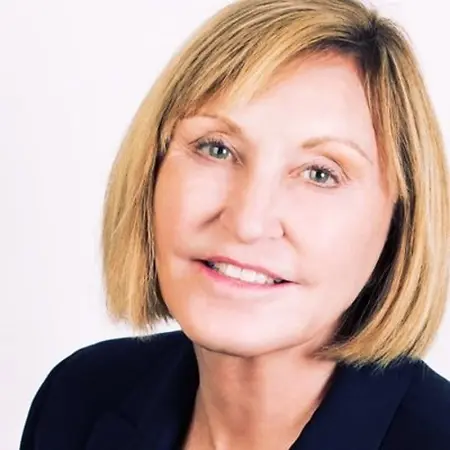
Her Story
About Sherry
My career in technology began in 1977 when I discovered I could combine my creative side with programming. I started as a TA at the University of Michigan working with the General Motors School of Design, teaching their engineers how to use computers for car design work. I spent 10 years at Digital Equipment Corporation where I did two major AI projects - one for the Air Force and one for border control - learning how to make AI work without the internet and how to get people to adopt and trust it. They transferred me to Hawaii for 7 years to set up all of Asia-Pacific operations, including India and Australia, where I had to build offices, buildings, and warehouses because there was no ability to ship quickly to that part of the world back then. I brought a hardware-software solution approach because I felt that hardware without software wasn't a true solution. I then joined Xerox PARC as part of Xerox New Enterprises, where our job was to look at all the technologies at PARC and decide what should be an IPO, what should be an acquisition, and what we shouldn't spend time on. We spun off Documentum and sold a partnership between Xerox PARC and MIT for $300 million to TIBCO with only 2 customers. I realized I wanted to actually work in the startups rather than just help create them, so I moved to iManage, a self-funded startup that I loved because they get cash flow positive faster and try to retain ownership. We were the first company to go public on the SaaS model, right at the beginning of the dot-com crash. I worked globally with companies like CSC, Accenture, and all the cable companies, supporting their infrastructure. When fraud occurred at that company - they wanted to switch from SaaS to software sales without telling anybody, which is illegal - I left within 2 weeks. I joined WebEx where Subra had been trying to get me on board for a while, and that was a wild ride. We grew to a billion dollars, did acquisitions of companies in Wisconsin and Boston, and transformed from a model where guys just got on the phone and sold orders under $2,000 to being embedded in all the telco companies. After WebEx was sold to Cisco, I worked with a company that was sold to Honeywell, spending a lot of time in the manufacturing market space working with all the big manufacturing companies in oil and gas and every kind of manufacturing. Throughout my career, I focused on understanding the value we provided to customers and solving big problems. I learned that whenever you move to a different technology, company, or solution, you can't assume what you're bringing with you applies - you have to reinvent yourself every time. I'm now retired and spend my time mentoring young women in startups, running a small nonprofit with another person that provides educational funding for foster kids, and playing around with AI for everything I do, treating it as one of my collaborators.
Her Interview
Ten minutes with Sherry
01What do you attribute your success to?
I attribute my success to focusing on value rather than money. If you focus on the money, you're focusing on the wrong thing. You've got to focus on the value and the adventure you have in obtaining the knowledge of what that value is to your customers. You'll get the joy out of that, and if you do that right, you're gonna make money. But that has to be your focus - it can't be going out and pitching and getting funding all the time. You have to really focus on where's the value in what you do, and what markets is that valuable in. The money will come if you focus on understanding the problems you're trying to solve and finding that big market for it, making sure that you tune the product to do just exactly what it has to do. I also learned so much from the founders I worked with - they were amazing in their guidance and their knowledge of the problems they were trying to solve. That's what got me excited, learning how to solve big problems.
02What’s the best career advice you’ve ever received?
The best advice I received came from Bill Kolamchik when I was in school. I was very quiet and just all about doing the work and learning as much as I could, but he kind of brought me out a little bit. He used to call me Wild Woman and try to get me to talk more in these huge auditoriums full of people. That was good because I learned that I did have a voice. He was a change agent for me, helping me find my voice and confidence to speak up, which became essential throughout my career working with founders, boards, and leading strategic initiatives.
03What advice would you give to young women entering your industry?
Number one is, if you focus on the money, you're focusing on the wrong thing. You've got to focus on the value and the adventure you have in obtaining the knowledge of what that value is to your customers. You'll get the joy out of that, and if you do that right, you're gonna make money. But that has to be your focus - it can't be all about the money, all about going to these meetings and pitching my company. That is important, but that's not the most important thing. It's much more important to get out there and understand where the value is. The money will come. I see a lot of young people not understanding that now - they think it's all about the money and pitching, but you have to really focus on where's the value in what you do and what markets is that valuable in. Another critical lesson is that whenever you move to a different technology, a different company, a different solution in our industry, you can't assume that what you're bringing with you applies to that. The market has changed, the technology has changed, the competition has changed, and you've got to reinvent yourself every time you do that. You can bring a good amount of knowledge that's useful, but some of it is not. I see a lot of people thinking that because they were successful one time, they're gonna be successful the next time doing the same methodology, and sometimes it works, but not all the times.
04What values are most important to you in your work and personal life?
The most important values to me are integrity and doing what's right, even when it's difficult. When I encountered fraud at one company where they wanted to switch from SaaS to software sales without telling anybody - which is illegal - I said no, I can't do that, I can't say those words, I can't agree with going forward with that strategy. Even though I was the spokesperson in the earnings releases and it was one of my biggest successes, I left within 2 weeks because I couldn't compromise on that. I also deeply value focusing on the problems you're solving and the value you provide to customers rather than just chasing money. Throughout my career, I've been driven by learning, solving big problems, and helping others - whether that's working with founders to build great companies, mentoring young women in startups, or providing educational funding for foster kids through my nonprofit. My dad was a foster kid, so that work is very personal to me. I focus on doing things in a smaller, more personal way rather than seeking publicity or recognition.
Join Influential Women and start making an impact. Register now.