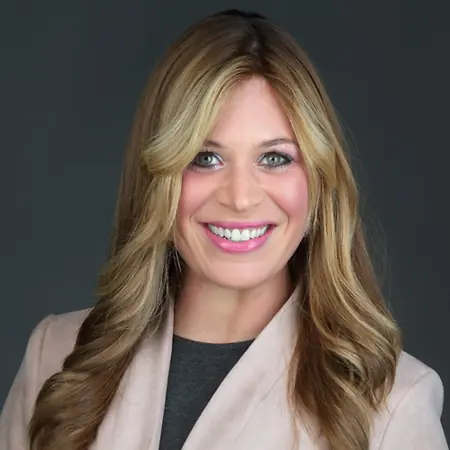
Her Story
About Simi
My life has always been in business, but what really led me to where I am today was getting remarried and experiencing stress around money. It wasn't about whether we had money or not - there was just nothing out there that worked with emotions and money. Everything was only about budgets and numbers. It was a very tense time in my life, so I went back to study the psychology of money. I created proprietary software and married therapy and numbers to create a business to help people. A big part of my work is educating consumers about problems they don't even know exist, being a brand ambassador, networking, and building a Rolodex for clients who need other supports. I'm really focused on growing the business - we're currently scaling and hiring up. One of my most notable achievements was recognizing that my initial system didn't work for everyone. I created a 30-day old money system, and when a couple came in and the husband paid off all his debt in 3 days while the wife had no money left, I realized I had missed something. That's when I started studying neurodivergency and created a curriculum specifically for ADD, dyscalculia, and dyslexia - for people whose brain wiring doesn't connect with numbers the same way. I realized what a large percentage of people, especially business owners, have neurodivergency where they're great visionaries but terrible at personal finance. My mission is aligned with my clients' vision - I don't get more money if you're a billionaire or poor. I make the same fee, so people really trust me with their money.
Her Interview
Ten minutes with Simi
01What do you attribute your success to?
I contribute my success primarily to believing in a higher power and spirituality. Whenever there was no hope, I had to tap into hope, into a bigger picture or a bigger opportunity. I recognize that I don't control what happens - I only control the effort I put in. If I'm only controlling the effort, that's much less scary than saying whatever came out of that effort is because of me. So if I fail, I don't feel as bad, and if I succeed, it doesn't get to my head, because it's the effort that I am in control of. Part of my success is the work I did on my brain to allow myself to get there, and part of it is being in the right place at the right time. Though honestly, my imposter syndrome is talking to me right now when you ask who says I'm successful.
02What’s the best career advice you’ve ever received?
The best career advice I ever received was from a marketing person who told me: if Henry Ford would have asked people what they're looking for, they would say they're looking for a faster horse. But he made a car, something that people couldn't even wrap their heads around. I'm a trailblazer in my field - there isn't anyone, really, that does what I do. So what I want to tell business people based on this advice is dream big. Dream big. It doesn't mean, because it's out there, you have to do it. If it's something you dream about, and you think that you could create that need, and it could be even better, go for it.
03What are the biggest challenges or opportunities in your field right now?
The opportunities are huge as AI comes more and more into place. People are going to be doing things on their own, and wealth advisors or places that people used to go to for budgets will be replaced - AI can create whatever template you want online. But what AI cannot create is relationships. It cannot validate, help you, clarify, crystallize, hold, or guide. It can't do any of that stuff. So I believe that our business will have a lot more opportunity, because people are going to want to understand behavioral psychology and economic and financial psychology in a way that is meaningful, because that's really what makes shift and change. As far as the challenges, I think the challenge is that very often in this type of industry, most people go into helping low net worth or middle-class individuals because they're trying to help the struggling. And trying to make money when you're helping struggling people is really, really difficult. If there's a cap on your time, there's a cap on the service, there's a cap on what you could charge them. That is a challenge in the field. People will say to me, how do you take money if I'm coming to you because I have a problem with money? I always say, so if you have marital problems and you can't afford therapy, will you go? This is called an investment. This is a skill you're going to learn for the rest of your life.
04What values are most important to you in your work and personal life?
The most important values for me are that, really, at the end of the day, when you die, you don't die looking at what's in your bank account. You die looking around at the people that surround you. So relationships, to me, are the most important thing. I very strongly value dinner time, and family time, and friend time. And, at the cost of me being super exhausted, I make sure not to drop those balls, because I value that tremendously.
Join Influential Women and start making an impact. Register now.