Her Story
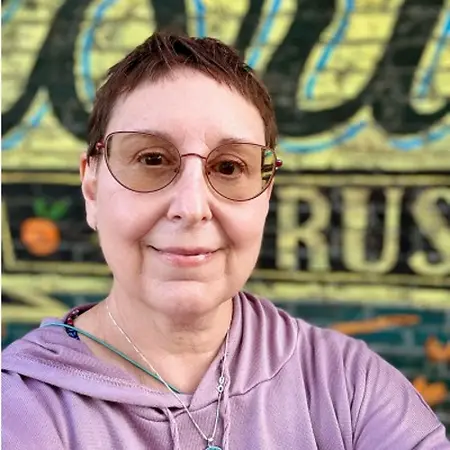
About Susan
I'm an independent book editor who has been in publishing since the mid-eighties. I work with all genres but have a focus on science fiction and fantasy for adults, young adults, and middle readers. I've supported writers at all stages of experience, but I have a particular love for shepherding first-time writers into developing publishable manuscripts. Some writers become bestselling authors, some pick up agents and publishers, and some just learn to write better. Unlike many editors, I work through the whole editorial process instead of specializing in one portion: critiques, developmental editing, line editing and copy editing, and working on submission packages. When I'm not editing, I maintain a large native demo garden, a pollinator garden, and a food forest in Florida to show people the value of native plants, growing your own food, and not wiping out every insect in your yard. In my copious spare time, I perform and occasionally teach improv, sketch writing, and storytelling. I am supervised by my cats, who like me are night owls and get things done at odd hours.
Her Interview
Ten minutes with Susan
01What do you attribute your success to?
I bring a lot of skill and experience to what I do--but also a lot of willingness to nurture writers, and I try to combine kindness with absolute honesty. My expertise is both deep and broad, which is not very common in editing--many editors focus on just one aspect of the process. One of my writers said that I had the sense of finding that one change that raised the level of the work, and I prize that comment--it's my goal in editing, along with editing in a way that adds clarity and logic but doesn't change the writer's voice or intention. I think one thing that comes through to people with whom I work is that I care about books, and I care very much about my writers. Many of them come to me saying, "This is my first manuscript; I don't know whether it's worth anything, I don't know if I'm worth anything as a writer, I don't know if I'm any good." It is true that people have different levels of skill in how they tell their story...but everyone *has* a story, and I never want a writer to hear that they can't write or their story is not worth telling. Now, whether that story is marketable is a different issue. I tell my writers that not all good books get published, and not all books that get published are good. The response or lack of it from an agent or publisher is about how your work fits their marketing niche, not an overall assessment of you as a writer. My goal is of course to help writers get their manuscripts into publishable state...but even if they don't publish it, they learn something about the value of imagination combined with discipline. Many of my writers move along when they get picked up by a publisher that includes an editorial department, but I also have writers who come back to me book after book. I think this is because while there are many good editors, it's not every day that you find a highly skilled editor who is also passionate about your dreams and your success.
02What’s the best career advice you’ve ever received?
I'm drawing a blank on a memorable quote that I could put on a refrigerator magnet. But I can tell you that though I wanted to be a creative editor who worked on book content, I started in the managing editor/book production track. It wasn't where my heart was, but given how hard it was to get into publishing, I didn't feel like I could hold out for another couple of years freelance-reading unsolicited manuscripts from the "slush pile." What I didn't know when I accepted that role was the height of the wall between "management" and "creative," and how hard it would be to breach.
But some of the editors I worked with recognized my hunger for working with the content, not just the production process, and gave me projects to edit and books to assess for acquisition. The immortally talented and kind editor Margaret K. Mcelderry took me under her wing and gave me books to edit. Some of them were by quite well-known authors. When one day I plopped down in her office and expressed doubt that I'd ever get to where I wanted to be in publishing, she said, "It's obvious to me where your heart is, and so you must follow it. And besides...you're good at this." I will forever treasure those editors who took the risk of letting me cross over to their side of the wall to work on a project of theirs. Having someone you admire express confidence that you will do something, and do it well, is a pearl beyond price.
As it happened, I didn't stay in NYC's in-house market. I went to Seattle in 1990 to attend the Clarion West Workshop for Writers of Science Fiction and Fantasy, something I'd longed to do for years. And I fell so deeply in love with the Pacific Northwest that I simply stayed. Had remote work been feasible in 1990, I would have just continued working from my room with the view of Mt. Rainier. But it wasn't, and after spending a few years writing children's nonfiction books for Macmillan, I got sucked into Seattle's burgeoning tech industry. Which was actually great fun, and by the time I might have thought about going back to NYC, my roots were too deep.
So the shiny career burgeoning in New York City was truncated. But I have still spent a lot of my life with writers and manuscripts. And I still love it.
03What advice would you give to young women entering your industry?
I'm an independent editor, so honestly I'm not plugged in to what the publishing workplace is like for women today. But if you're an independent editor who grew up acculturated as a woman, you might be inclined to consider what you do as a little subordinate to the tasks of your daily or family life; to view your own work as unimportant, a side quest instead of the mission. But don't do that. Make the time and space for your work and don't let others tell you or imply that it's not a real job or valuable work. Just because you're sitting in a room in your house doesn't mean you're available. Your work has value spiritually, pragmatically, and monetarily.
04What are the biggest challenges or opportunities in your field right now?
The divisions between traditional publishing and self-publishing are getting very fuzzy. A challenge for a lot of editors who've been in the field for a long time is that they have to make this shift to thinking differently. Traditionally, they've thought of getting an agent and a mainstream print publisher as the finish line for their writers, and that's not necessarily really true anymore. If our writers want to go for mainstream publishing, we have to help them navigate between originality and salability. Novelty is often hard to sell to publishers, many of which want to reiterate success with tried-and-true formulas. From an independent editor's perspective, the contract with a mainstream publisher isn't necessarily your writer's desired outcome, and your role might be to help a writer create something they can self-publish that's ideally going to be popular and get them traction and personal satisfaction. The changing methods of publishing have created a pressure for us to learn how to navigate this new environment.
05What values are most important to you in your work and personal life?
Honesty, kindness, and working from a strong sense of ethics that doesn't allow your success to be at someone else's expense.
Join Influential Women and start making an impact. Register now.