Her Story
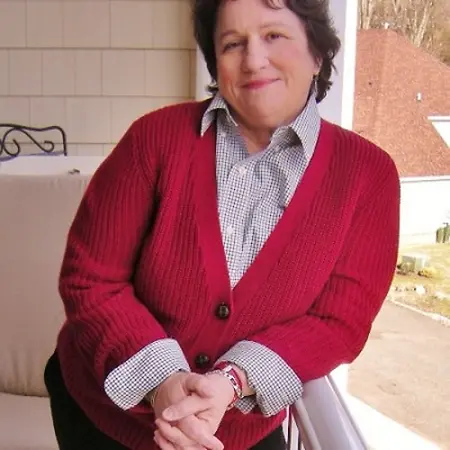
About Amy
I've had a very untraditional journey to journalism, which is why I call myself an accidental journalist. I started out in life thinking I was going to be an academic. I was a double major in English and Philosophy at Smith College, and when I graduated, I was in two PhD programs at the same time - studying English at Boston College and philosophy at MIT. After a year, I discovered I was bipolar, and that sent me on a journey for 10 to 20 years of working through mental illness and hospitalizations and medications. In the late 80s, through a combination of nepotism and serendipity, I got a chance to be a fact-checker at Sports Illustrated. I loved sports and was a big reader, but I didn't know anything about journalism. I knew a lot about poetry and Plato and Aristotle, but not much about journalism. Three years into fact-checking, I wrote my first story, a first-person story about loving to play baseball as a kid but being embarrassed because this was before Title IX. I got a wonderful response to it, and it was like the slowest light bulb going off over my head. I was accepted into the part-time program at Columbia Journalism School and got my master's in journalism over 2 years. I realized that as much as I loved sports, I wanted to write about everything else. I talked to people at the Star Ledger, freelanced for a while, and within a year was hired full-time. That really began my career in journalism, and honestly, I was in my early 40s by then. I got to do everything at the Star Ledger - I started in features, but I also loved working in the news department and working on deadlines. I wrote book reviews, health stories, long profiles, but I made my mark in doing big projects. I was a finalist for a Pulitzer in 2009 and was awarded the Pulitzer in 2011 for feature writing. I began writing books part-time at the same time, and now I'm doing that full-time. I feel so privileged that I was able to find my way to this career, and I'm grateful for every bump and every joy along the road.
Her Interview
Ten minutes with Amy
01What do you attribute your success to?
I think journalism was a profession for someone with a short span of attention and steeped in curiosity about the world and about other people. That has always been true of me. I just come naturally to be an observer of the world, and I am just curious about everything. Journalism is one of those professions that allows you to move around. You've got great elbow room, and you can focus on something for if you're working on a project for 9 months at a time, or for one day, and become an expert on it, and then have to move on. It's constantly enriched my life. I'm also a little bit relentless if I'm onto something. I want to know as much as I can, and go as deeply as I can. I use all of the skills that I learned as someone who loved philosophy and someone who loves literature. I've given talks on the Walt Whitman School of Science Writing because I believe all the tools of someone who's literary, expert in poetry, works for science writing - the ability to make analogies, the ability to find themes and metaphors, and look for larger connections and things. I'm very much a liberal arts person, and I've drawn on that my whole life, and I feel very blessed about my background as well, even though it took me so long. I'm very, very happy with what I've been able to do and I'm able to continue to do, so I feel very blessed.
02What’s the best career advice you’ve ever received?
There are a couple of pieces of advice, very specifically, professionally. You're never ready to write a story until you know what your lead is gonna be, and your kicker, even if that changes. Always arrive early to an event to see what's going on and what's happening beforehand. Try and go to a place where no one else goes to get the same story from a different angle. And get there earlier and stay later than anybody else. Outwork the other person. There's always something you can uncover, and just keep your eyes open. Keep your eyes and your ears and your heart open all the time.
03What advice would you give to young women entering your industry?
If you're anyone who is curious about the world, and you'd like to ask questions, keep doing it. It's the greatest skill as a journalist. Being curious can't be learned. It's something that comes naturally, I think, to you. What can be learned is the craft of journalism, and just keep writing. It doesn't matter who you're writing for, Cooking Magazine, or an online blog. The more you do, the better you get. I used to tell students, I have yet to meet a student who got worse the more they wrote. They only got better. It's a craft that has a lot of art to it and an art that has a lot of craft to it. And those things you can learn on your own. The world is your lab, and nothing can stop you from doing it. Trying to get paid for it is the hard part these days, but there are a lot of places where you can start out. In the old days, it used to be work at a small regional newspaper, and you can work your way up. Start online, and sometimes you have to start online by working without pay. But in this world, as the world 100 years ago, you're only as good as your clips. The more you write, the better you get, the more you can share what you've been able to do, the more people will be interested in hiring you or in hearing your voice. And that's always been true, and I think that's still true.
04What are the biggest challenges or opportunities in your field right now?
We have so many challenges right now. Finding a place to work is certainly one of them, with the closing down of newspapers and magazines. There are more of them that are closing every day than certainly that are opening. I think the biggest challenge is local reporting and investigative journalism. Investigative journalists are the first ones to lose their jobs because they spend so much time on one thing, and we need that. But I also think in this day and age, in the politics of the day, it's holding up our reputation as truth-tellers when there's so much misinformation out in the world. There's so much that makes their way online that looks like news and is not. There is a place for the profession of journalism and we've kind of lost that. The profession has to reestablish itself by just keep doing the right thing, which is telling it like we see it, telling it as it is, and calling it out. I think we were slow to call out the lies and falsehood and the semi-truths as journalists early on. I think we need to make up for that now by, as often as we can, correcting the record. That's all that we can do and trying to hold that as our guiding principle. The speed of the news is also very difficult to get things right the first time. That's why we have to make sure that we keep correcting the records. There's a lot of pressure on journalists to be getting things online fast, and we just have to make sure we get it right the first time.
05What values are most important to you in your work and personal life?
Honesty, loyalty, kindness, and empathy. Empathy, more than anything else, is a value that crosses from career into personal life. I think the best writers are people who are empathic and can imagine the lives of others, the pains and the joys of others, and then make them come alive on paper or on a screen. I think empathy is one of the greatest things of being a human being, as well as being a good journalist.
Join Influential Women and start making an impact. Register now.