Her Story
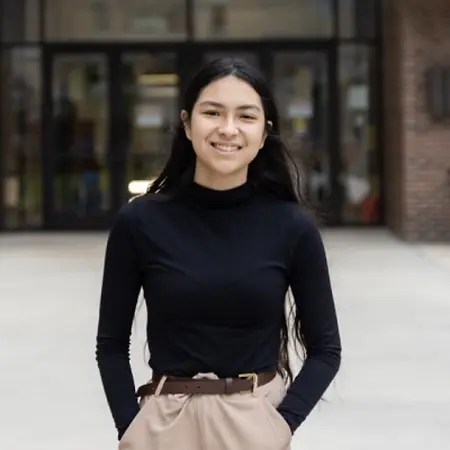
About Christina
My journey into medicine started in 8th grade when my father was diagnosed with Moyamoya disease, a condition that's pretty uncommon in males and especially in people of non-Asian descent like my father. He's had 6 strokes in the past, and that really got me interested in the brain. I reached out to neurosurgeons in my area and got the opportunity to shadow at Tampa General, where I observed a DBS surgery - deep brain stimulation. I just fell in love with functional neurosurgery from that moment. That experience led me to medical school, specifically the BAMD program at UMKC, which is a fast-tracked, accelerated dual degree program. I'm currently in my second year and will graduate in 2030. Most of my time now is divided between studying and working on research. I work in several different neurosurgery research groups, but my main focus is functional neurosurgery and brain-computer interfaces, which I've been particularly interested in. I work in basic science labs, including one at the School of Medicine and another at Duke University, where I spent a month last year working in person. I'm also working with two other students from UMKC School of Medicine on a healthcare startup called Kairos. We've secured 10K in funding and are working on pushing that forward, hopefully into clinical trials soon. My goal is to pursue a neurosurgery residency and then do a fellowship in functional neurosurgery.
Her Interview
Ten minutes with Christina
01What are the biggest challenges or opportunities in your field right now?
I think one of the challenges I've faced is that neurosurgery is such an amazing field, but when I was younger, like in middle school, looking to this career, a lot of the most notable figures have not been female. Especially in the surgical world, there are now more and more women surgeons, which is absolutely fantastic, but I think trying to find a place for yourself and contribute meaningfully to the field when you are not looking the same as everyone else - I'm not saying it's impossible, but it's just something that you kind of have to work a little bit harder to overcome. I also think that overall, the healthcare system and just advocating for patients is something I really believe in. Not only being a strong future physician and providing great clinical care, but making sure your patients feel well heard and advocated for. As a medical student, your ability to directly impact or control their care is limited because you're still in training, but a lot of times patients want to be heard and they want someone to not overlook them. I think that's something tremendous that we as students and as future physicians can provide to them.
Join Influential Women and start making an impact. Register now.