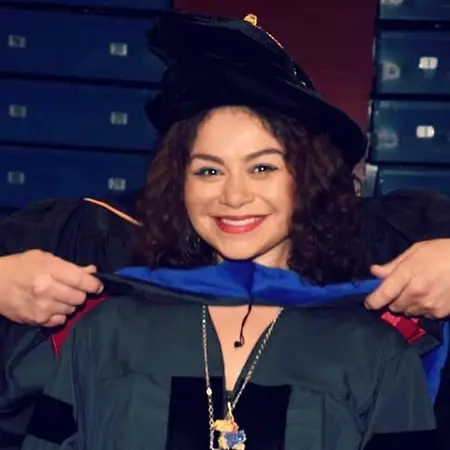
Her Story
About Dr. Amilee
About Dr. Amilee Turner
Dr. Amilee Turner is a political scientist, mixed‑methodologist, and social justice–driven researcher whose work bridges rigorous academic inquiry with lived experience and community impact. A native of Lawrence, Kansas, she earned her PhD in Political Science from the University of Kansas in 2022, specializing in the development of innovative methodological frameworks that integrate qualitative and quantitative approaches to better understand the subjective mindsets of individuals who empathize with, support, or engage in violence—including crime, political violence, domestic violence, and other forms of harm.
Her doctoral research earned multiple prestigious awards, including the Social Justice Research Award (SJA) within the Dean’s Research Excellence Initiative for her dissertation on the causes of terrorism. She was also honored with the E. Jackson Baur Award for Research and Study of Social Conflict and Its Resolution from the KU Graduate Studies Committee, recognizing her contributions to understanding the roots of violence and pathways to conflict resolution.
Dr. Turner’s scholarly work extends beyond her dissertation. She received the Allan J. Cigler Academic Enrichment Fund Award to co‑author a published article with Dr. Brittnee Carter titled #PressforProgress: The Impact of Gender Equality on Domestic Terrorism, contributing to the growing body of research on gender, political violence, and global security. She also received an International Studies Association (ISA) Travel Grant to present her research at the APSA Conference in Boston, MA—an acknowledgment of the national relevance and scholarly merit of her work.
Her professional experience includes three years as a Lead Research Analyst at the Kansas Department of Corrections, where she conducted behavioral corrections research, analyzed complex data, and supported evidence‑based policy development. She has also worked with multiple nonprofits, applying her research expertise to community‑centered initiatives.
During the COVID‑19 pandemic, Dr. Turner’s commitment to service took a creative form. Sponsored by KU’s Emily Taylor Center, she designed and sewed more than 2,000 face masks—entirely by hand—distributed across the country to individuals, institutions, and her local community. Her work was featured in the Center’s first Virtual Skill Share Series, highlighting her blend of artistry, compassion, and leadership.
Her academic journey also includes being selected as one of only seven students statewide to present research at the Kansas State Capitol, where she shared her project Developing Sustainable Cities in Kansas: A Framework and Methodology for the Successful Reduction of Greenhouse Gases with legislators and policy leaders.
Beyond academia, Dr. Turner has spent more than a decade working with the Girl Scouts of NE Kansas & NW Missouri, serving as a troop leader in the Outreach Program, a National Delegate, and a Spokesperson—roles that reflect her lifelong commitment to empowering young women and building strong communities.
Today, Dr. Turner continues to expand her impact as an author, designer, artist, and public speaker. She is developing a YouTube podcast and video series and is writing a book about surviving domestic violence and addiction—an honest, powerful narrative meant to help others rise from their own darkest moments. She is rebuilding her life at 36 alongside her 9‑year‑old daughter, guided by her belief in resilience, accountability, and the transformative power of facing oneself with honesty and courage.
Her work—scholarly, creative, and personal—reflects a profound conviction: that even the most painful chapters of life can become the foundation for purpose, strength, and a renewed sense of self.
Her Interview
Ten minutes with Dr. Amilee
01What do you attribute your success to?
I attribute every measure of my success first and foremost to our Creator, whose grace carried me through seasons I did not think I would survive. I also attribute it to my daughter—my heart, my purpose, and the human being I brought into this world. She is the reason I rise, rebuild, and refuse to give up, no matter how many times life has tried to break me.
I attribute my strength to the failures, the shortcomings, the challenges, and the year I hit rock bottom in 2024. That year stripped me down to nothing and forced me to confront myself with honesty, humility, and courage. Rising from that place—like the phoenix—is one of the greatest honors of my life.
I owe my resilience to my support system: my sister, my niece, my mother, my brother, and my brother‑in‑law, who held me up when I could not stand on my own. I am forever grateful to the people who walked beside me through domestic‑violence recovery—especially my therapist, Sam Baptiste, whose guidance helped rebuild the pieces of me that trauma tried to erase. I am grateful to my psychiatrist at Beacon Mental Health, the souls in group therapy, and the staff at CSTAR, who helped me reclaim my mind, my stability, and my hope.
And finally, I attribute my success to myself—to the long, painful, transformative process of individuation and self‑awareness. To facing my own reflection without running. To confronting my hearing disability and learning to live unapologetically as the woman I am, not the woman the world expected me to be.
My success is not the product of a single moment. It is the result of faith, love, community, healing, and the relentless decision to keep choosing myself—even when it was hard, even when it was lonely, even when it felt impossible.
02What’s the best career advice you’ve ever received?
The best career advice I’ve ever received was simple, direct, and life‑changing own your decisions. Every choice—good, bad, triumphant, or painful—belongs to me. And when I learned to embrace my failures with the same honesty and dignity that I embraced my successes, everything shifted. Failure stopped being a verdict and became a teacher. It became the place where I learned resilience, humility, and the courage to begin again.
I was also taught that fear kills more dreams than anything else ever will. Fear will talk you out of opportunities you’re qualified for, rooms you deserve to be in, and futures that are already yours. So, the advice was this: go for it. Put the work in. Believe in what you’re building. And manifest the career you want with intention, discipline, and faith.
That guidance has shaped every chapter of my professional life. It taught me that success isn’t about perfection—it’s about courage, accountability, and the willingness to keep moving forward even when the path is uncertain. It’s about trusting yourself enough to leap and trusting the process enough to grow.
03What advice would you give to young women entering your industry?
If I could offer one piece of advice to young women entering this field, it would be this: understand what you are walking into. Take the time to learn the environment, the culture, and the people around you. Know the landscape you’re stepping into so you can navigate it with clarity instead of confusion. Awareness is not fear—it is preparation.
Second, know yourself. Have a core set of principles that are non‑negotiable, no matter who is in the room or what pressures you face. Be adaptable, but never at the cost of your integrity. Do not be afraid to use your voice. Remember that you are a human being—your worth is far greater than any title, paycheck, or form of currency. Your humanity is your power.
Third, find your passion and your motivation. Give yourself direction. Failure and mistakes are inevitable, but they are not the end of your story. What matters is your ability to get back up, stay disciplined, and remain focused on your objectives. That is where true success is built.
And especially in male‑dominated industries, this matters even more. You will be challenged, underestimated, and tested. But if you know who you are, what you stand for, and what you’re working toward, you will not only survive—you will rise.
04What are the biggest challenges or opportunities in your field right now?
In my field, the opportunities are just as vast as the challenges—there is truly no limit. One of the most beautiful aspects of being a social scientist is that whether we come from psychology, sociology, anthropology, or political science, we are all, in our own way, doctors of the human mind. There will always be opportunities to generate new insights into human behavior, especially when studying crime, political violence, terrorism, domestic violence, and the many forms of harm that shape societies. The human experience is endlessly complex, and that complexity creates an infinite landscape for discovery, innovation, and impact.
But the challenges are equally expansive. Studying the cognitive, emotional, and subjective dimensions of human behavior—while simultaneously developing methodological tools capable of capturing those phenomena—is profoundly difficult. Unlike the natural sciences, where objects of study can often be quantified, isolated, or observed with relative clarity, social scientists work within the fluid, layered, and deeply contextual terrain of human thought. Capturing that with accuracy, rigor, and ethical responsibility is one of the greatest challenges of our discipline.
And yet, these are challenges we must continue to confront. With the rapid evolution of artificial intelligence, the stakes are even higher. AI will intensify both the opportunities and the challenges in our field. It will push us to think critically about accuracy, bias, representation, and the preservation of humanity at scale. It will require us to protect the integrity of human cognition while learning to regulate, integrate, and ethically harness the power of emerging technologies.
The future of social science will demand adaptability, innovation, and vigilance. But it will also offer unprecedented opportunities to deepen our understanding of human behavior, strengthen our methodologies, and shape a more informed, humane, and resilient world.
05What values are most important to you in your work and personal life?
The values that guide my life begin with Honesty and Transparency. To me, being honest means being 100% true to who you are as a human being—beyond the social identities, expectations, and roles that society tries to place on you. Transparency is the courage to show up as your real self, without performance, without masks, and without apology.
Another core value is owning your decisions and letting go of fear. I believe deeply in understanding your power as an individual—created by the Divine with intention and purpose. When you take accountability for your choices and release the fear that keeps you small, you step into a version of yourself that is grounded, powerful, and free.
My non‑negotiable values include my sobriety, my worth as a human being and as a woman, and the principles that guide me as a mother, a doctor, a sister, an aunt, and a member of my community. These are the pillars that cannot be compromised, no matter the circumstance or the room I’m in.
I also hold firm to the values of mutual respect, mutual recognition, and dialogue. I believe in seeing people as whole human beings, honoring their dignity, and engaging in communication that is honest, direct, and rooted in understanding. Communication is one of my most profound values—especially in a generation that struggles deeply with it. To communicate clearly, courageously, and compassionately is to build bridges where others build walls.
These values are not abstract ideals. They are the compass that guides how I live, how I lead, how I mother, how I heal, and how I show up in the world. They are the foundation of my integrity and the source of my strength.
Join Influential Women and start making an impact. Register now.