Her Story
About Etta
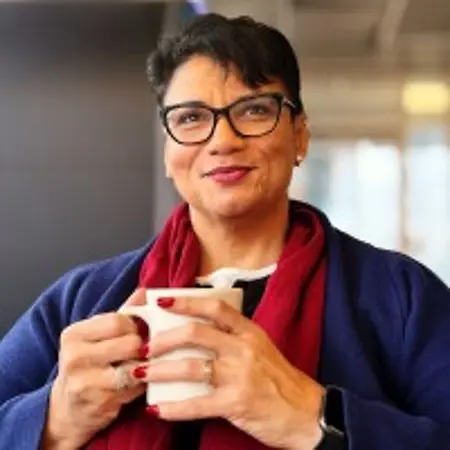
Etta Mitchell is the mother of two, married to her husband George for 28 years, and the joy in her heart comes from being “Grammy” to her 6 year old grandson. She has dedicated her career to the heart work of transforming behavioral healthcare and services for individuals and families with developmental disabilities.
Her Interview
Ten minutes with Etta
01What do you attribute your success to?
I attribute my success to curiosity, gratitude, and the people who believed in me before I fully believed in myself.
I have always been deeply curious. I want to understand how systems work, why outcomes differ, and how we can do better for the individuals and families we serve. That curiosity has kept me learning, stretching, and growing throughout my career. It has also kept me humble enough to know there is always more to understand.
But I did not get here alone. Along the way, generous and courageous mentors invested in me in ways that changed the trajectory of my leadership. One moment I will never forget was traveling to Washington, D.C. with my mentor, Qiana Thomason, to speak with legislators about Medicaid access for people with behavioral heath needs.. When we walked into Senator Claire McCaskill’s office, I immediately tried to sit off to the side. I felt inexperienced. I felt unsure. I was surrounded by seasoned leaders.
Qiana gently but firmly said, “No ma’am, your seat is here at the table.” She reminded me that it mattered that I was present. It mattered that I was seen. It mattered that I spoke.
That moment stayed with me. It taught me that the tables where I feel uncertain are often the ones where I most need to show up. I have learned that if I want to contribute, I cannot quietly decide that I do not qualify. Growth happens when we step forward, not when we shrink back.
My success is not just about hard work. It is about staying curious, honoring those who opened doors for me, and choosing—again and again—to take my seat at the table with courage and purpose.
02What’s the best career advice you’ve ever received?
The best career advice I have ever received is this: you cannot get your time back.
Early in my career, if I was invited to participate in an innovative project, my answer was almost always yes. I was passionate, ambitious, and deeply committed to making an impact. And I do not regret that drive. It shaped me.
As the years passed and my children grew, I began to understand something more profound. There is no true formula for balance. There are only choices. Every “yes” is a “no” to something else. Time is finite. Seasons are fleeting. Childhood, especially, does not wait. My babies are now 25 and 33, my grandson is 6.
That perspective reshaped how I lead and how I live. I became more intentional about where I invest my energy. I learned to ask not just, “Is this important?” but also, “Is this aligned with what matters most right now?” You cannot recover missed time with the people you love. You cannot rewind seasons of life.
So my advice is to invest wisely. Be passionate about your work. Contribute fully. Stretch yourself. But also be just as intentional about investing in your family, your health, and the moments that define your life outside of a title. Success is meaningful, but it is hollow if it costs you what matters most.
Time is our most nonrenewable resource. Spend it in ways that reflect your values.
03What advice would you give to young women entering your industry?
Self-care is not optional; it is foundational. Managing your energy is just as important as managing your calendar. We all have real, human needs to fill every day, such as rest, connection, reflection, movement, support. When we ignore those needs, we may continue functioning for a while, but we are no longer leading or serving at our best.
It truly is the oxygen mask principle. You have to secure your own mask before assisting others. In leadership and in service-driven work, that can feel counterintuitive. Many of us are wired to prioritize everyone else first. But if you consistently deplete yourself, your capacity to help others diminishes. Burnout does not make you more committed; it makes you less effective.
One of the hardest and most humbling skills to develop is asking for help. It requires vulnerability. It requires trust. And it requires environments where people feel safe enough to say, “I need support.” That is why I believe so strongly in creating spaces that are welcoming, encouraging, and engaging places where people can show up fully.
Taking care of yourself is not selfish. It is responsible. When you protect your energy and honor your limits, you expand your ability to serve, to lead, and to care for others in a sustainable way.
04What are the biggest challenges or opportunities in your field right now?
One of the greatest challenges in healthcare is consistently access and funding for services for people in rural and urban settings. On average, individuals with some behavioral health diagnoses still die decades earlier than the general population in the United States. A substantial portion of that disparity is tied to untreated or undertreated physical health conditions, fragmented systems, and limited access to coordinated care.
For me, the core challenge is ensuring that people can access care for their whole wellbeing without stigma, without unnecessary barriers, and without feeling diminished in the process.
We also have to acknowledge a human truth: asking for help is hard. It requires vulnerability and trust. It often requires overcoming fear, shame, or past negative experiences. That is why the experience of care matters just as much as access to care. Services must feel welcoming, encouraging, and engaging. When someone takes the courageous step to reach out, the response they receive can determine whether they continue the journey or retreat from it.
What gives me hope is this: exposure matters. Every positive interaction with support, every respectful encounter, every opportunity to see care modeled in a safe way increases the likelihood that someone will accept help when they are ready. If today is not the day, we continue building trust. We create another opportunity. We stay present.
05What values are most important to you in your work and personal life?
Three words resound: Belief, Compassion, and Forthright. I believe in people, in learning, recovery, and human kindness. I am constantly thinking about how others experience the world, whether that is a patient navigating care, a family seeking answers, or a team member managing competing demands. Understanding perspective shapes better decisions and stronger systems. People also want clarity and trust. They want to understand the “why” behind decisions, especially in times of change. When you take the time to explain your reasoning with honesty and respect, you build trust. And once people understand your why, they are far more willing to align, innovate and challenge you for the better.
Join Influential Women and start making an impact. Register now.