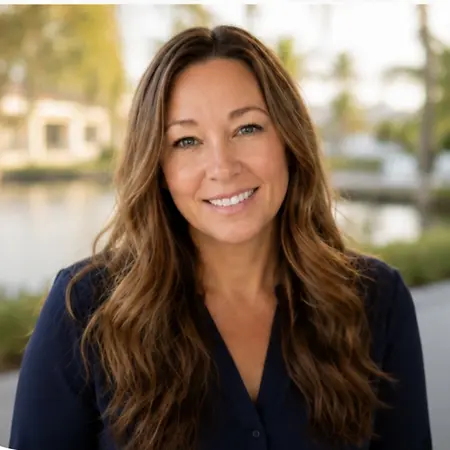
Her Story
About Jessica
Jessica McElroy is a healthcare revenue cycle and operations leader with more than two decades of experience in skilled nursing, senior living, and healthcare financial management. As Director of Revenue Cycle Management at Tutera Senior Living & Health Care, she provides enterprise-level leadership over revenue cycle strategy, operational performance, payer relations, reimbursement processes, business office operations, revenue audit, private collections, Medicaid pending, Managed Care, Medicare, and senior living revenue support across a large multi-state portfolio.
Jessica’s career has been built from the ground up. She began in healthcare with an early interest in patient care before discovering that her strengths were rooted in the business and operational side of healthcare. After transitioning into a skilled nursing business office role, she was mentored by leaders who helped her understand not only the technical side of reimbursement and collections, but also the importance of communication, accountability, leadership, and follow-through.
Over the course of her career, Jessica has worked across nearly every area of the revenue cycle, including admissions support, billing, collections, auditing, credentialing, contracting, payer strategy, compliance, reporting, and regional operations. That foundation gives her a practical and strategic perspective. She understands how one missed step in admissions, documentation, payer setup, authorization, billing, or follow-up can affect reimbursement, cash flow, compliance, and ultimately the resident experience.
In her current role, Jessica is known for creating structure, identifying revenue risk early, improving Days Sales Outstanding, strengthening accountability, supporting operational transitions, and developing processes that help teams work more consistently and confidently. Her approach is not centered on finding fault, but on connecting the dots, improving processes, and helping teams understand the “why” behind the work.
Jessica believes successful revenue cycle leadership requires more than technical knowledge. It requires collaboration, adaptability, curiosity, and the ability to bring people together around a shared purpose. She is passionate about mentoring team members, developing future leaders, and creating a culture where people feel supported while also being challenged to think critically, solve problems, and own their outcomes.
Although her work is deeply connected to financial performance, Jessica keeps the resident at the center of the process. For her, strong revenue cycle operations help protect the stability of the organization, support the communities providing care, and ensure resources remain available for the residents who depend on them.
Her Interview
Ten minutes with Jessica
01What do you attribute your success to?
I attribute much of my success to the leaders and teams who saw potential in me at different stages of my career and challenged me to grow into the next version of myself.
Early in my skilled nursing career, Jackie Parks played a significant role in helping me understand the business office side of healthcare. She took me under her wing during my first SNF role and helped build the foundation I still rely on today- understanding the process, asking the right questions, staying close to the details, and recognizing how every step in the revenue cycle impacts the resident, the facility, and the organization.
I was also fortunate to work with a strong SWAT team at Trilogy Health Services, where collaboration and support were truly part of our daily routine. That team challenged one another, learned from one another, and made each other better. The experience taught me the value of surrounding yourself with people who are willing to share knowledge, ask hard questions, step in when needed, and grow together. I carry that with me today in how I lead and develop our revenue cycle team at Tutera.
Today, I also give a great deal of credit to Kiley Brooks, my CFO, who has taken my years of hands-on revenue cycle experience and helped position it at a much broader leadership level. Under her support and leadership, my role has expanded into enterprise-level oversight of Tutera’s revenue cycle structure, providing strategic direction across six specialized revenue departments and more than 50 revenue cycle professionals. Each department has its own leader, and my role is to help align those leaders around the larger vision, connecting people, process, policy, data, and performance across the organization.
One of my biggest goals has been to help restructure revenue cycle from a reactive, month-end function into a proactive, forward-looking operation. That means building stronger teams, creating new policies, developing best practices, reviewing data before issues become financial outcomes, exploring AI-driven tools, and investing in our staff so they have the knowledge, confidence, and longevity to support the organization well into the future.
For me, success has never been about doing the work alone. It has come from being mentored, being part of strong teams, staying willing to learn, and then using those experiences to build something sustainable for the teams and communities we support.
02What’s the best career advice you’ve ever received?
The best career advice I’ve ever received was to never become so comfortable with a process that you stop questioning whether there is a better way to do it.
Healthcare especially skilled nursing and senior living revenue cycle, changes constantly. Regulations change, payer expectations change, technology changes, and operational challenges evolve faster than most people realize. Early in my career, I learned that success does not come from simply repeating what worked five years ago. It comes from being willing to adapt, ask questions, stay curious, and continue learning no matter how much experience you have.
That advice shaped the way I lead today. I encourage my teams to understand the “why” behind the process instead of just memorizing steps. When people understand the bigger picture, they become stronger problem-solvers, stronger leaders, and stronger partners to the communities they support.
I also believe some of the best growth comes from being willing to listen, especially when someone challenges a process or offers a different perspective. Some of the strongest operational improvements happen when teams collaborate, think critically, and stay open to change rather than becoming attached to “the way it has always been done.”
03What advice would you give to young women entering your industry?
My advice to young women entering this industry is to never let the complexity of healthcare operations make you feel like you have to know everything before you can grow into leadership.
This is an industry where the learning never stops. Regulations evolve, reimbursement models shift, technology advances, and operational expectations continue to change. Even after more than 20 years in revenue cycle and healthcare operations, I still learn something new regularly. The most successful leaders are not the ones who pretend to have every answer, they are the ones willing to ask questions, stay adaptable, and continue learning alongside their teams.
I would also encourage young women to build strong relationships and find mentors who challenge them, support them, and help them see potential in themselves before they fully see it on their own. Some of the most important growth in my career came from leaders and peers who pushed me outside of my comfort zone and helped me think at a broader level.
Most importantly, do not underestimate the value of understanding the operational details. Leadership is not just about titles or strategy discussions, it is about understanding how the work actually happens, supporting your teams through challenges, and helping people connect their daily responsibilities to the larger mission of the organization.
04What are the biggest challenges or opportunities in your field right now?
One of the biggest challenges in healthcare revenue cycle today is the increasing complexity of reimbursement, compliance, and operational expectations, especially within skilled nursing and senior living. Organizations are expected to move faster, operate leaner, stay compliant, improve cash flow, manage staffing challenges, navigate changing payer requirements, and still maintain a strong resident-centered focus at the same time.
At the same time, I believe there is tremendous opportunity for organizations willing to rethink how revenue cycle operates.
Traditionally, many healthcare organizations have treated revenue cycle as a reactive function, reviewing financial performance after the fact and working backward to identify issues. I believe the future of revenue cycle is much more proactive and operationally integrated. The opportunity is in building systems, teams, and technology that identify risk earlier, improve visibility into trends, strengthen collaboration between departments, and allow organizations to make decisions before problems become financial outcomes.
I also believe technology and AI will play a major role in the future of healthcare operations. Used correctly, AI has the potential to improve efficiencies, strengthen reporting and analytics, reduce repetitive administrative work, and allow teams to spend more time focusing on strategy, problem-solving, and supporting the communities they serve.
Equally important is investing in people. As the industry continues to evolve, organizations that prioritize education, leadership development, collaboration, and long-term team growth will be the ones best positioned for long-term success. Strong revenue cycle operations are not built by one person, they are built by strong teams that understand both the details and the larger purpose behind the work.
05What values are most important to you in your work and personal life?
What values are most important to you in your work and personal life?
The values most important to me are integrity, accountability, collaboration, gratitude, and keeping residents at the center of the work.
In revenue cycle, it can be easy for people to think the work is only about numbers, claims, collections, or reports. To me, it is much bigger than that. Strong revenue cycle operations help protect the financial stability of the organization, which allows our communities to continue providing care, supporting staff, and serving residents and families.
One thing I value deeply at Tutera is the alignment between revenue cycle and senior leadership. Our executive leadership understand that financial performance and resident-centered care are not separate priorities, they are connected. That perspective has helped create an environment where revenue cycle is not viewed as simply a back-office function, but as a strategic part of supporting our communities, our teams, and the residents who depend on us.
Collaboration is also very important to me. None of this work is successful in a silo. The strongest outcomes come when people are willing to share knowledge, talk through challenges, learn from one another, and celebrate wins together. I value being part of a team that is willing to challenge the process, support one another, and keep improving.
In both my work and personal life, I try to lead with purpose, gratitude, and accountability. I want people to feel supported, but I also want them to understand the importance of ownership and follow-through. To me, that balance is what builds strong teams, strong processes, and a stronger organization.
Join Influential Women and start making an impact. Register now.