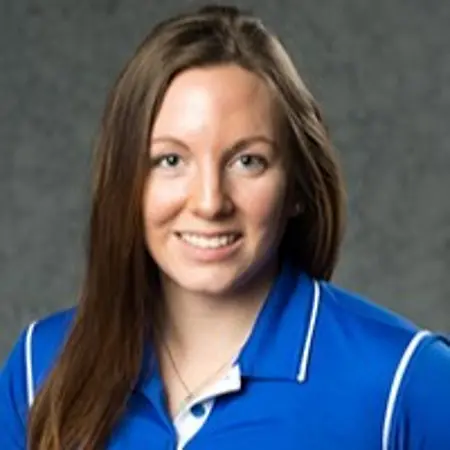
Her Story
About Lisa
I've been in collegiate athletics for about 15 years, and I've been in my current position as Associate Athletic Director for Sports Medicine and Head Athletic Trainer at Wayne State University for 5 years. As the main coordinator of healthcare services for our student athletes, I serve as the liaison between our physicians, our hospital affiliate, our mental health and nutrition services - anything that's healthcare-related goes through our department, so I oversee all of that. I really got into the field to help student athletes, so I feel like any time that we really make an impact, bringing a student athlete from a pretty traumatic injury back to the field with full return to play, I don't think it gets much better than that. Outside of the clinical care, one of the initiatives we started at Wayne State was a blood drive competition between us and another university, and I'm pretty proud of that initiative and the increase in blood donors that we've been able to get because of that. I also work closely with the American Red Cross and have also done initiatives with Alternatives for Girls, a women's shelter in downtown Detroit, doing a lot with them in the month of October for domestic violence awareness.
Her Interview
Ten minutes with Lisa
01What do you attribute your success to?
I think the emphasis that we as a whole, as a department, place on our student-athletes really comes through, and when you're passionate about what you do, I think success tends to follow. So I'd like to think that it's my passion for the clinical side, for helping student athletes, for the medicine, for the medical background, that people have responded to, and I've been able to make it to where I am.
02What’s the best career advice you’ve ever received?
I think the best career advice would be to know your value, and to not accept anything less. That kind of ties into "Athletic Training" not really being a well-recognized profession, and so knowing in yourself where you should be, or what your skill set is, and not accepting less from the people around you - whether that's the staff, the administration that you work with, the coaches, or the athletes - and always being an advocate for what you deem to be appropriate recognition and respect.
03What advice would you give to young women entering your industry?
I would say that athletic training is, and probably always will be, a labor of love, that you really have to enjoy athletics and all that comes with athletics. So, yes, it's nights and weekends and long hours, and yes, you're dealing with muddy, dirty, sweaty athletes, but at the end of the day, I mean, it's such a wonderful field, and you're helping these young adults, these young people, achieve something wonderful, and really helping them through this tumultuous time in their lives where they're really finding out who they are. And being able to be there as a support system for them is so incredibly rewarding.
04What are the biggest challenges or opportunities in your field right now?
I think the biggest challenge is no one knows what an athletic trainer is, or what we do. I see a lot of people who confuse athletic trainers with personal trainers or fitness professionals, and so having to constantly explain that we are healthcare, that we are medical. I mean, it's a challenge to get recognized for the healthcare and the medical services that we provide. But I mean, this is a huge moment, I think, in collegiate athletics. I think there's a lot of moving parts, especially at the NCAA level. So I think this is an opportunity for collegiate athletic trainers, especially, to kind of make their voices heard, and for colleges to come back and recognize the value that athletic trainers bring to those departments.
05What values are most important to you in your work and personal life?
I think, you know, integrity has to be at the top. Working in the medical field, I think ethics and integrity are right up there. Obviously, you need to have the skills to do the work that you're doing. But there's a lot of autonomous care and autonomous decision-making, and so to be able to put the patient first, be able to put the student athlete first, I think you put a lot on the provider. So that's a value that I carry a lot, I think, professionally, but it's something that I think comes and stems from my personal life.
Join Influential Women and start making an impact. Register now.