Her Story
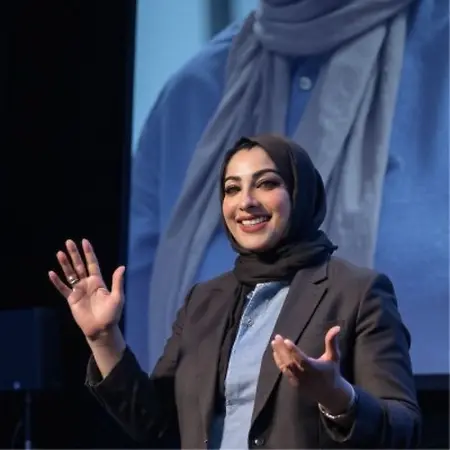
About Sarah
My career spans 23 years in data engineering, enterprise architecture, and AI strategy. Today I operate at the intersection of AI, data, and governance, where my role is to influence decisions at scale and sometimes make the hardest decisions. I'm CEO of RideShare iChef and CTO for EQ AI through Envo, which brings emotional intelligence to the corporate sector. I also work on startups in rideshare technology and food technology. I wear multiple hats, but I focus mostly on high-level decisions and strategy roadmaps, delegating the rest to my teams. My biggest achievement isn't a title or project - it's my ability to see what others didn't and turn that into real impact. I've worked with complex enterprise systems, led architecture decisions, and driven AI and data strategy across large organizations. The real achievement is that I moved from being someone who delivers work to someone who shapes direction. There were moments in my career where I could have stayed comfortable, just executing and delivering. Instead, I chose to step into the rooms where decisions were being made, even when it was uncomfortable and my perspective challenged the norm. Today, when I influence how data is governed, how AI is implemented, or how teams align across an enterprise, that ripple effect impacts thousands, sometimes millions of users indirectly. My real goal isn't to just succeed personally, but to redefine how technology, intelligence, and human potential all come together.
Her Interview
Ten minutes with Sarah
01What do you attribute your success to?
I attribute my success to learning, and definitely the people around me who helped me. But fundamentally, it's clarity of thinking and the discipline I learned to act on it. I have always questioned things deeply - not just what we are doing, but why it matters and what it leads to. That habit alone separates the noise from the real opportunity and allows me to focus on problems that actually move the needle, instead of getting lost in busy work. Resilience is also key - my journey was never smooth, and I've had to rebuild myself several times, personally and professionally more than once. But I never stayed down for long. I adapt fast and keep moving. One of my biggest strengths is pattern recognition. Over time, I trained myself to see connections across systems, teams, and even human behavior. That's what helped me move from execution into architecture and strategy. Once you can see the pattern, you can predict outcomes, and that's where the real value is created.
02What’s the best career advice you’ve ever received?
I've received a lot of advice, but one of the best pieces was simple yet it changed a lot of things: don't just be valuable, be visible. Early in my career, I believed that if I worked hard enough, people would notice. Sometimes they did, sometimes they didn't - not always consistently. That advice forced me to rethink how I showed up. I started communicating outcomes, aligning with leadership, and positioning my work in a way that made its impact clearer. Another piece of advice that stayed with me is: if you are the smartest person in the room, you are in the wrong room. That pushed me constantly into environments where I was challenged, where I had to grow, not just perform. On a more personal level, the most powerful advice I got was: know who you are, or the world will define you for you. That took me time to understand, but once I did, it changed how I make decisions, how I choose opportunities, and how I handle setbacks. If I combine all three, the message is clear: be intentional about your growth, your presence, and your identity.
03What advice would you give to young women entering your industry?
Stop waiting to feel ready. You will never feel ready, because growth begins the moment when you step into rooms that feel slightly beyond you. Build your real competence first - confidence that is not backed by skills fades quickly. When you know your domain deeply, your voice naturally carries weight. Invest in understanding, not just doing. Learn to communicate your impact. Many women do exceptional work, but they stay quiet, assuming it will be noticed. It won't, at least not consistently. So speak about outcomes, not just efforts. Position your work so others understand its value. And don't stay in the execution box for too long. Delivering is important, but if you want to grow, you need to start influencing decisions. That means asking better questions, challenging direction, and thinking beyond your immediate task.
04What are the biggest challenges or opportunities in your field right now?
One of the biggest challenges in my industry, especially in the time of AI, is that data platforms and cloud capabilities are advancing really faster than organizations can adopt. Most companies are not struggling because they lack the tools - they are struggling because they have too many tools. They have fragmented strategies and unclear ownership. There is a gap between ambition and execution. Everyone wants to do AI, but few are willing to invest in the fundamentals: clean data, governance, standardized architecture. Without that foundation, AI becomes a collection of experiments and POCs rather than stable capabilities. Another critical challenge is responsible implementation. As AI becomes more powerful, questions around data privacy, bias, and control are not only optional, they are mandatory now. Many organizations treat governance as a blocker instead of an enabler, which creates risk. The industry is not limited by innovation - it's limited by clarity, discipline, ability to execute at scale, and understanding what exactly we want before we get the tools.
05What values are most important to you in your work and personal life?
Identity and clarity are at the top for me, because I believe that confusion is one of the biggest blockers in both life and work. Whether it's strategy, communication, or decision making, I prioritize understanding things deeply but not taking all of my time, and keeping them simple. Integrity is non-negotiable - not just in the obvious sense of honesty, but in alignment. What you say, what you do, and what you stand for should match. That consistency builds real trust over time. Ownership is a core value. I don't believe in passing responsibility. If something is in my space, I take full accountability for it - outcomes, decisions, consequences. I also value growth. I'm constantly evolving, learning new technology, questioning assumptions, and pushing beyond my comfort zone. Stagnation is not an option for me. Finally, impact is key. I don't measure success by effort or activity - I measure it by the difference it creates. Whether it's influencing a decision, improving a system, or helping someone think differently, impact is what matters for me. So my values are: identity, clarity, integrity, ownership, growth, and impact.
Join Influential Women and start making an impact. Register now.