Influential Woman · Legal / Travel and Tourism
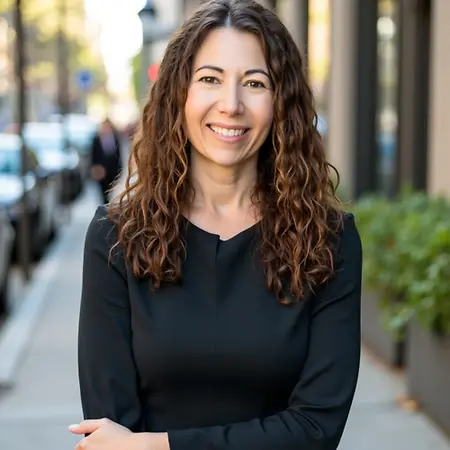
Stacy Carey, Esq.
Judicial Law Clerk / Travel Advisor, West Virginia Supreme Court of Appeals
Barboursville, WV 25504
Her Story
About Stacy
Stacy Carey, Esq. is a West Virginia attorney, Judicial Law Clerk, doctoral student, entrepreneur, and community advocate based in the Charleston–Huntington area of West Virginia. Her work spans law, leadership, travel, and community service, but the common thread is simple: she helps people navigate complex systems with clarity, care, and purpose. Stacy serves as a Judicial Law Clerk for the West Virginia Supreme Court of Appeals, where she conducts in-depth legal research, analyzes motions and filings, drafts court orders and opinions, and supports judicial decision-making across a wide range of civil, criminal, juvenile, and appellate matters. With nearly two decades of experience in the West Virginia court system, she has built a career grounded in legal analysis, public service, procedural fairness, and a commitment to thoughtful, well-reasoned outcomes.
In addition to her legal career, Stacy is pursuing a Doctor of Executive Leadership at the University of Charleston. Her academic interests focus on leadership, complexity, procedural justice, institutional change, and the ways organizations can better serve the people who depend on them. Her doctoral work reflects her broader belief that systems should not only function efficiently, but also operate with accountability, humanity, and respect.
Stacy is also the founder of Carey-ed Away Travel, a boutique travel advisory business specializing in customized itineraries, group travel, cruises, international travel, and destination experiences. Through her travel work, she helps families, couples, and groups turn complicated logistics into meaningful, personal, and well-planned experiences. Her business reflects both her entrepreneurial spirit and her belief that travel can create connection, perspective, and lasting memories.
Outside of her professional roles, Stacy is deeply committed to advocacy and community service. She is especially passionate about children and families, animal welfare, education, foster youth support, and experiential access projects that create opportunities for people who may not otherwise have them. Whether she is working in the court system, planning travel, studying leadership, or supporting a community initiative, Stacy brings a practical, people-centered approach rooted in clarity, accountability, respect, and service.
Her Interview
Ten minutes with Stacy
01What do you attribute your success to?
I attribute much of my success to my family. Before they retired, my parents were incredibly hardworking people. They taught me to keep going, even when things were hard, and I learned that not just from what they said, but from how they lived. My dad showed that work ethic every day. He would drive two hours each way to work and often worked away from home for weeks at a time to provide for our family. Watching him make those sacrifices taught me the value of commitment, responsibility, and doing what needs to be done, even when it isn’t easy.
I was also shaped by watching my mom and stepdad build an extremely successful business from the ground up. It started with one single bubble gum machine they placed at our local grocery store while they were both working low-paying jobs with the West Virginia Department of Highways. Over time, they grew that small beginning into a business that expanded into Ohio and Illinois. They allowed me to be involved from a young age, and that experience had a lasting impact on me. It taught me what entrepreneurship really looks like: hard work, risk, persistence, problem-solving, and believing that something small can become something much bigger.
Education was also deeply encouraged by both of my grandmas. My Grandma Jean and I shared a love of reading, and that connection helped nurture my curiosity and love of learning from an early age. My Grandma Nina, a retired teacher’s aide, also encouraged my education and always made me feel like I could accomplish anything.
I’m the first person in my family to go to graduate from college, much less earn a law degree now pursue another doctoral degree. I grew up in rural West Virginia, up what we call the head of a holler, in a community where poverty, addiction, and limited opportunity have affected many families.
I hope to use my experiences to help address some of the challenges we face in West Virginia and to influence those issues in a positive and meaningful way.
02What’s the best career advice you’ve ever received?
The best career advice I’ve ever received is to take the hard right instead of the easy wrong. That's really guided a lot of my decisions and kept me grounded. In the legal field, you’re constantly dealing with competing pressures, rules, and outcomes that don’t always line up perfectly. At the end of the day, we still have to do what the law requires of us, even when we don’t personally agree with it.
I’ve also been fortunate to work with leaders who prioritize doing things the right way the first time. My boss, Circuit Court Judge Chad Lovejoy (6th Judicial Circuit, Cabell County), always says “do it right the first time,” and that’s really stuck with me. Even when it takes a little longer, I think there’s real value in slowing down, being intentional, and getting it right from the start. We owe that to the people we serve, especially when so much is on the line, like freedom, parental rights, or financial stability. At the end of the day, it comes back to being able to stand behind my decisions and know I handled things with integrity.
03What advice would you give to young women entering your industry?
My advice to young women entering this field is not to be intimidated by working in male-dominated areas. You belong in there. You don't need to be anyone other than yourself in order to be effective.
I’ve learned that success in this profession isn't about becoming a hard ass. It’s really about staying grounded, recognizing your strengths and using those to your advantage. There is a lot of value in bringing perspective and emotional intelligence into tough situations while still doing the harder, more technical parts of the job.
I'd also say to stay confident in your abilities, do the work well, and trust that you don't have to change who you are in order to be taken seriously or be successful.
04What are the biggest challenges or opportunities in your field right now?
One of the biggest problems in the legal field right now is the shortage of new attorneys coming into the system. At a recent statewide conference, we were told that a large majority of counties in West Virginia are considered legal deserts. This isn’t unique to West Virginia; it’s happening across the country. As experienced attorneys retire, there’s a growing gap in capacity to meet the public’s legal needs.
At the same time, courts are seeing rising caseloads tied to addiction, housing instability, mortgage foreclosures, vehicle repossessions, and credit card defaults. Demand on the legal system continues to grow, while the number of available attorneys hasn’t kept pace. That imbalance has created real strain on the system and we haven't even seen the real impact yet.
In my work in the travel industry, I've noticed a different but related problem with the use of AI tools. While I realize AI is here and we need to adapt to its use, I still have major concerns about its accuracy. We see it hallucinating case law within the court system and citations/sources in academia. Now we are seeing the cost travelers are paying when they trust generative AI results. In my experience, AI is helpful as a starting point, but it still needs a human brain to ensure accuracy and context.
05What values are most important to you in your work and personal life?
Integrity, honesty, dependability, education, family, curiosity and justice
Join Influential Women and start making an impact. Register now.