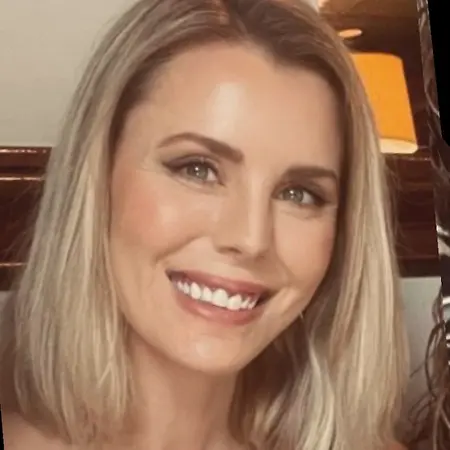
Her Story
About Whitney
I spent 17 years in the auto industry, working my way up from sales to director in finance and general management positions. My husband and I were both working in the dealership world when our son was diagnosed with autism at age 2, and that diagnosis completely changed the trajectory of our lives. We're from West Virginia, which is not only the lowest in the nation for resources but also the lowest for funding, so when our son was diagnosed, we didn't just get to go search for the therapies that were needed - we had to create them. We launched our nonprofit just under 2 years ago while I was still a full-time caregiver to my son, managing his intense therapy schedules of up to 30 hours a week. Within our first year, we were able to figure out the nonprofit, raise money, and develop 6 different programs. We've really seen the need and growth over the past year and a half, connecting so many different families in West Virginia and Ohio. We primarily focus on families raising children with autism or intellectual and developmental disabilities, offering therapy and counseling, virtual learning and trainings, sensory-friendly events, and advocacy support. A typical day for me starts at 5 AM depending on whether our son allows us to sleep through the night, and doesn't end until around 9 or 10 PM. I'm constantly available because parents will message me at 1 in the morning when they're in crisis, needing help with everything from resources to paying bills, finding food, or finding shelter. In the nonprofit world, you don't just get to stay in your little niche - you really focus on ways of supporting people throughout their entire journey, whether that's financially, physically, or mentally.
Her Interview
Ten minutes with Whitney
01What do you attribute your success to?
I attribute my success to living this 24-7. We don't get a 9 to 5 clock in and clock out. Even at the dealerships, even though I was there for 50-plus hours a week, I still got to come home and at the end of the night, I checked out mentally and left the work there most of the time. But when you're a full-time caregiver and you're running a nonprofit, you don't get to clock in, clock out. There's parents that will message me at 1 in the morning that they're in crisis. There's families that need help for more than just resources - they're needing help with paying their bills, finding food, finding shelter. When you're in the nonprofit world, you don't just get to stay in your little niche. You really do focus on ways of supporting people throughout their entire journey, whether that's financially, physically, mentally. There's no set time - we're just constantly needed in some fashion. That can be a little bit taxing on your mind, but it can also be really rewarding because you know that you're doing more than just connecting people to their next therapy center. You're connecting them to potentially getting on Medicaid, or maybe finding financial relief that they didn't know that they could get.
02What’s the best career advice you’ve ever received?
The best piece of advice I would say would be keep going. There's so many times that we've not ever considered giving up, but we've thought, are we doing this right? Are we doing enough? And then you'll meet a parent or a family who said that because of your organization, it's completely changed their path, changed their life in some way, and then you know, okay, no matter what, we're doing the right thing.
03What advice would you give to young women entering your industry?
Make sure you surround yourself with a really good support team. If it's in the nonprofit sector, no matter what category you land in, make sure that you have a strong team to help lead, because passion's not going to always be what gets you the funding. Yes, you need to be able to tell your story, yes, you need to be able to relate, but you have to have a strong support team, or a strong board, to help guide you along the way, because there's so many different areas in this business that can be pretty difficult to navigate.
04What are the biggest challenges or opportunities in your field right now?
For us specifically, the biggest challenge is funding. You're in this sector and you're not selling anything, you're asking for donations, and donations in the nonprofit sector have gone down 25% year after year, which is difficult. For us, we don't qualify yet for that big federal funding or some of the big state-funded grants. We rely heavily on donor support, and that is really difficult. Even though we know that our organization is needed, we've proven that quickly, and we've expanded beyond our capacity, we can't outgrow the funding that we don't have. We want to make sure that we are very mindful about that. We hear the need constantly, we hear people that are voicing their opinions, their concerns, but without that foundation, we can't grow into those programs just yet. The biggest opportunity is growth. We've already proven that we are needed. Autism itself has been on a national platform for over a year, and we know that our children, no matter what state they're in, still need extra support and care that they're not receiving. The opportunity is to show not just the state of West Virginia how much growth is needed, but the country. There's an increase in autism, okay, but what are we doing about that? Autism's nothing without action. We wanted to see what the community was doing to support our needs for that education and awareness piece. We've really pushed this year for not autism awareness, but autism acceptance and action.
05What values are most important to you in your work and personal life?
Trust is always a big factor and a key role in any work or personal relationship. You have to know that you can trust the person on the other side. Honesty is critical. Always leading with integrity and transparency in everything that we do. I think that will help develop your team and also your organization as a whole, because if people think that their money's not going to the cause or to the purpose, they're likely not going to give. But also, the families have to feel supported too, so you want that complete transparency with them as well.
Join Influential Women and start making an impact. Register now.