How She Learned To Accept Good Things Without Feeling Unworthy
Women sharing how they embraced success, love, or recognition without self doubt.



Women sharing how they embraced success, love, or recognition without self doubt.
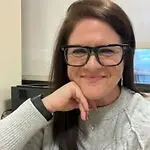
I started to simply say "thank you" without following it up with something to put myself down. It was uncomfortable but repetition is the ingredient for healing. Just say, "thank you" and sit with the uncomfortable to ease into the comfortable.

For a long time, I struggled to receive good things, praise, opportunities, and even simple kindness. I was so used to working through challenges on my own that receiving felt unfamiliar, almost uncomfortable. Part of me believed I had to overprove myself to deserve anything positive. That shifted when I began building ZLIBS™ with my husband and expanding CBA Media Group™. I finally saw the impact of my work and the resilience behind my journey. I realized the good things coming to me weren't accidents. They were confirmations that I had earned my place. What helped me change was giving myself permission to slow down, acknowledge my accomplishments, and stop shrinking so others felt comfortable. Today, I receive fully and confidently, not because everything has been easy, but because I understand that blessings show up when you're aligned and ready. Receiving isn't about worthiness. It's about allowing yourself to grow into everything meant for you.

The Rejection That Changed Everything I still remember the weight of that email. The CDC PHAP Fellowship, a position that would have launched me into a traditional public health career path, was mine for the taking. My mentors celebrated. My family beamed with pride. But something inside me whispered: What if there's more? When I declined that fellowship to stay on the unconventional path as a Systems Strategy and Operations Consultant, three years later, I started my own firm, Intensity Health Solutions. The doubt wasn't just external. It was internal, gnawing, relentless. Who was I to believe I could build something better than what the CDC offered? Who turns down prestige for uncertainty? The Unworthiness That Follows Achievement Here's what nobody tells you about breaking barriers: every milestone can feel like borrowed time. As a Black woman in healthcare consulting, I'd watch contracts come through and think, "They'll realize they made a mistake." Revenue would increase 157% at AdventHealth, and I'd attribute it to timing, not talent. Training 1,800+ pharmacy staff at CVS Health felt like something anyone could have done. The impostor syndrome was suffocating. Each success felt like evidence that I'd somehow fooled people rather than proof that I belonged. The Turning Point My shift began in an unexpected place: the health ministry at Carter Tabernacle CME Church. Watching underserved community members receive health education and wellness resources, I noticed something profound. They struggled to accept help the same way I struggled to accept praise. We'd offer free health screenings, and people would ask, "What's the catch?" That's when it clicked. My unworthiness wasn't humility, it was a barrier preventing me from fully stepping into my purpose. What Changed Three practices transformed how I receive: Reframing Achievement as Stewardship: I stopped viewing my skills as something I had to earn the right to use and started seeing them as gifts I'm responsible for stewarding well. When I trained those 1,800+ pharmacy staff members across multiple specialty locations, that wasn't just checking boxes; that was my ability to translate complex systems into knowledge that transformed how people showed up for patients every day. Documenting the Evidence: I started keeping a "proof file" of every kind email, every successful outcome, every moment of impact. When doubt creeps in, I review the receipts. The data doesn't lie, even when my feelings do. Understanding That My Discomfort Doesn't Serve Others: The communities I serve through Intensity Health Solutions need me to show up fully, confidently, and unapologetically. My false humility wasn't protecting anyone; it was limiting what I could offer. The Work Continues Even now, as a DHA candidate running a certified women-owned healthcare consulting firm, I catch myself minimizing achievements. The difference is I recognize it faster and correct course quicker. When partnership opportunities arise with organizations like Flourish Research or Care Access, I no longer wonder if I deserve a seat at the table. I know my lived experience bridging health systems with community needs is exactly what these spaces require. For Those Still Learning To Receive If you're struggling to accept the good things, the promotion, the praise, the opportunity, ask yourself this: What would you tell your younger self who dreamed of being exactly where you are now? Would you tell her she's unworthy, or would you tell her to own every bit of it? Your accomplishments aren't accidents. Your opportunities aren't mistakes. And your presence in spaces that weren't built for you isn't luck, it's purpose, working exactly as it should. Sometimes the most radical act of faith is simply believing you deserve to be where your hard work has taken you.

Impostor syndrome is always something I've struggled with. I would have to say it started in my undergraduate studies in college. Everyone had told me I was too intellectually inadequate (they used less professionally proper verbiage and prose) to attend college. This remained with me even though I had earned every major award CSU's College of Liberal Arts & Social Sciences presented, all the way through graduate school and into law school and now with my own business. I would be lying if I said that each success I fought and struggled for wasn't rooted in a sense of vengeance against those who said I would never be enough to measure up. I count the good things that happen, and I am thankful for them, but there's always a degree of bitterness.
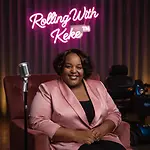
I didn't struggle to receive good things because I lacked confidence. I struggled because the world kept handing me reasons to believe I wasn't supposed to have them. Being big. Being Black. Being disabled. Being a survivor of domestic violence. Every one of those identities came with commentary. Some loud. Some subtle. All persistent. The message was clear even when it wasn't spoken. You should be grateful for scraps. You should not ask for more. You should not expect ease, care, or generosity without proving yourself first. So when good things showed up, my first instinct wasn't joy. It was suspicion. Who gon' take this away. What's the catch. Who decided I deserved this today. The opinions of other people did more damage than any single circumstance. Folks deciding what my body meant. What my survival meant. What my limitations meant. Folks projecting pity, fear, or control and calling it concern. What saved me was not affirmation culture. It was faith. It was family. It was my son. Believing in God anchored me when my body failed me and when people did too. My family reminded me who I was before the world started grading me. My son gave me a reason to stay here and a mirror that reflected worth without negotiation. And almost dying a few times will rearrange your spirit if you let it. When you've stood close enough to death to smell it, you stop arguing with life about whether you're allowed to live fully. You stop apologizing for receiving what keeps you here. You stop confusing survival with humility. I didn't learn to accept good things by becoming more deserving. I learned by rejecting the lie that said I wasn't. Now when something good comes my way, I don't flinch. I don't explain. I don't minimize. I receive it like somebody who knows staying alive wasn't accidental.

I used to brush off praise because I didn't think I'd earned it. What changed was realizing that accepting good things isn't about perfection; it's about letting myself grow into the person others already saw.
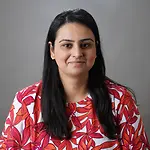
For a long time, I believed that if I didn't struggle for something, I hadn't earned it. My life was a sequence of systems to navigate. Moving from Oman to Dubai, then India, and finally the United States, I became a master at adapting. I learned how to perform, how to win, and how to blend in. From my foundation in psychology to my STEM-designated master's at University of Illinois, Urbana-Champaign to building the Somagraphic Framework, I knew how to work. But ironically, I had no idea how to simply let good things happen. When things came easily, I felt uneasy. I was so addicted to the "grind" of proving myself that I mistook self-sufficiency for strength. I thought that asking for help (or even accepting it) diluted the rigor of my work. If I received an opportunity I hadn't fought for, I'd write it off as a fluke. I told myself that speaking at UIUC WebCon 2026 or being featured in AI directories was just "good timing." I also spent years wondering why I felt so different. My global background felt like a puzzle with pieces that didn't fit. I spent so much energy trying to "normalize" myself within whichever country I was in, never realizing that my "different" was actually my edge. The shift didn't come from a new credential. It came from the people who knew me before the titles. My friends and family (who are spread all across the globe) didn't need a spreadsheet of my achievements to value me. Their support was steady and unconditional, and at first, that made me uncomfortable. In a world where everything is assessed and justified, their belief in me felt like a "positive" glitch in the system. It forced me to ask: If the people who know me best don't need me to prove my worth, why do I? I started small. I practiced saying "yes" to opportunities without adding a disclaimer. I stopped explaining why I "deserved" to be in the room. I stopped hiding my global path and started accepting that a perspective shaped by four different cultures is exactly WHY my work in AI and learning reaches further. Learning to receive hasn't made me less driven; it's made me more HUMAN. I've realized that growth doesn't always have to be a battle. Sometimes, it's just about being ready when the door opens... Today, when something good comes my way, I don't shrink. I've learned that receiving isn't an act of ego. It's an act of respect for the work I've done and the journey that brought me here. Worthiness isn't a finish line you cross... it's a choice you make every time you stop struggling and just let the good things in.

“Leadership isn’t something I learned from comfort. It’s something I embodied by choosing purpose when stability was gone and clarity when circumstances were uncertain.” I didn’t follow a conventional path. My influence was not built through titles or privilege, but through lived experience, discipline, and an unwavering commitment to growth; even during periods when I had no permanent home, no safety net, and no guarantees. I learned leadership not from theory alone, but from surviving, rebuilding, and leading myself forward when everything familiar had fallen away. My foundation is in Human and Organizational Psychology, with a focus on leadership psychology: how individuals think, decide, regulate themselves, and lead under real-world pressure. My education did not happen in isolation from life; it ran parallel to it. While navigating homelessness, instability, and profound personal loss, I developed an intimate understanding of self-leadership, cognitive resilience, emotional regulation, and values-based decision-making. I didn’t wait for ideal conditions to grow. I led myself through uncertainty with intention and structure. Rather than allowing hardship to define me, I used it as a proving ground. I built routines without resources, clarity without certainty, and momentum without external validation. That period sharpened my ability to translate psychological principles into practical systems; frameworks that work not just in theory, but in moments when people are overwhelmed, under-resourced, or rebuilding their lives. Authenticity became my anchor. I chose transparency over image, integrity over performance. I shared my story not for sympathy, but to demonstrate what conscious leadership looks like when applied consistently over time. Through books, blogs, speaking, and coaching, I focused on creating substance; tools, language, and insight that help people lead themselves and others with clarity and sustainability. My work bridges strategic thinking with human-centered leadership. I integrate psychological insight with lived experience, ensuring that leadership development is grounded, ethical, and actionable. Through Mindful Resilience, I created a space where growth is realistic, self-trust is cultivated, and success does not come at the expense of well-being. By 2026, my influence is measured by depth, not visibility. Leaders who trust themselves. Organizations that value alignment over burnout. Individuals who understand that leadership begins long before a title is granted. My work stands as evidence that influence is earned through consistency, service, and the courage to lead with clarity, regardless of circumstance. My story is not an exception; it’s a model. Self-leadership before external leadership. Strategy grounded in lived truth. Vision executed with discipline. I didn’t just rise; I demonstrated what leadership looks like when it is built from the inside out.

"Tell me what I cannot do-I will show you otherwise." In my life there was never a struggle to accept praise, it was the opposite for me. I had a narcissistic father that made sure I heard I was useless, female and never going to amount to nothing. I learned on my own, by myself that for all the deprecating remarks and undermining I would prove him wrong. On the contrary, I could not understand why the hurtful words and beatings. I actually prayed to God why I had such a cruel father. I would compare my friend's fathers, and I could see the vast difference. How do we get past this kind of mindset? It was out of my hands and out of my control. But I had my father God. In faith I pulled myself up from my bootstraps and made the woman I am today. I prayed for direction and guidance every day. I was built brick by brick by my father God.

I never set out with a grand plan to become a leader. My path unfolded through responsibility, persistence, and a willingness to step in when something needed to be done. Over time, I learned that leadership isn’t about having all the answers or waiting for the perfect moment—it’s about showing up, especially when things are uncertain. Early on, I realized I couldn’t do everything at once. I learned to focus on what was directly in front of me—one decision, one conversation, one problem at a time. Progress came from consistency, not perfection. Each small win built confidence, not only in myself but in the people around me. I also learned the importance of being honest and transparent. There were many moments when I didn’t have every answer, and instead of pretending otherwise, I chose openness. Clear communication, even when the message was difficult, built trust. Trust became the foundation that allowed teams to work through challenges together. People have always been at the center of how I lead. I pay attention to how others are doing, not just what they are doing. I listen more than I speak and make space for conversations that matter. When people feel supported and valued, they are more engaged, more capable, and more willing to rise to the occasion. Leadership has required making difficult decisions and standing by them. Not every choice was popular, but I learned that long-term stability and integrity matter more than short-term comfort. I take responsibility when things go wrong and make sure credit is shared when things go right. There have been moments of exhaustion and self-doubt, but those moments pushed me to reconnect with my purpose. I remind myself why the work matters and why the people matter. That sense of purpose keeps me grounded and moving forward, even when the path isn’t easy. What I’ve learned along the way is that leadership isn’t about control or titles. It’s about presence, accountability, and consistency. The most meaningful leadership moments aren’t always visible—they happen quietly, in everyday decisions and steady follow-through. I’m sharing my story because so many women lead in this same way—without fanfare, without spotlight, and without waiting for permission. If there’s one thing I’ve learned, it’s that you don’t have to have everything figured out to lead. You just have to be willing to step forward, take responsibility, and keep going. That’s how I did it.