How She Learned to Ask for Help Without Shame
Stories of women who stopped carrying everything alone.



Stories of women who stopped carrying everything alone.


I learned that asking for help isn't weakness; it's wisdom. God often answers our prayers through people, and leaning on mentors, friends, and a praying community allowed me to transform my struggles into purpose and lead from a place of fullness.

Early on in my career, I recognized the "Power of Peers". When I accepted support from my peers, I quickly recognized the value-add of their shared/learned experiences and knowledge that ultimately strengthened my capabilities as an entry-level leader. The Power of Peer(s) support allowed me to shift my leadership style and approach, by recognizing that leaning on supports, I too can strengthen the skills I bring to the table. Allowing for a holistic approach to my leadership style!

Letting others support me shifted my perspective on leadership. I realized that asking for help didn't diminish my strength - it expanded it. Collaboration, mentorship, and trust allowed me to grow faster, lead more effectively, and show up more authentically for others.

For much of my career, I believed strong leaders carried the weight alone. Responsibility felt personal, and the stakes were often high. Over time, I came to understand that leadership is not sustained by isolation; it is strengthened by perspective. Inviting trusted mentors and advisors into my most difficult decisions didn't dilute my authority; it deepened it. I became more measured, more strategic, and more grounded. True strength is not about carrying everything yourself. It is about recognizing that shared wisdom produces stronger outcomes. It allowed me to lead not just with strength, but with longevity and wisdom.

As a Project Manager with PMP, PMI-ACP, and CSM certifications, I was trained to have all the answers. I thought "strength" meant navigating my career gap, motherhood, and a move to the U.S. entirely on my own. I treated my professional reintegration like a solo mission. The turning point came when I realized my most important project, my own comeback, couldn't be managed in a silo. What Changed When I Let Others In: Strategic Clarity: By reaching out to mentors and my Bay Area network, I stopped guessing what recruiters wanted. I learned to align my 10+ years of operations experience with the current market. Confidence Through Connection: Sharing the challenges of motherhood and career gaps with other women proved I wasn't alone. I realized my "gap" wasn't a void; it was a period of intense growth in resilience and prioritization. A Sustainable Foundation: Accepting support allowed me to focus on high-value goals, like earning my ITIL 4 and PMI-ACP credentials, while leaning on my community for guidance. My Advice to Women "Rising Again" True success isn't about how much you can carry alone; it is rooted in resilience, and resilience is a team sport. Whether you are returning from a health journey or a career break, "Project Managing" your life requires a support system. When you let others in, you don't just find a job; you find the courage to lead with your whole, authentic self.

I grew through the fire. When encouragement was scarce, I learned to trust my own voice. Hardships built my grit. Challenges sharpened my focus. Every setback became a lesson, not a stopping point. I set clear goals, made a plan, and showed up consistently—even when it was hard. I embraced failure as feedback and kept my vision in front of me. Through resilience, faith, and determination, I didn’t just build a business—I built a life rooted in purpose. That’s how I did it.

For a long time, I wore independence like armor. I thought that if I asked for help, people would assume I wasn't capable; But the moment I allowed myself to lean on others, everything shifted. I realized that asking for help isn't a sign of weakness; it's an act of trust. It invites collaboration, builds deeper relationships, and opens the door to perspectives I could never reach alone. Instead of feeling smaller, I actually felt stronger: more grounded, more connected, and more human.

Leading House of Rise & Pray showed me that strength isn't doing everything alone; it's having the courage to ask for help and grow together.

For a long time, I confused self-sufficiency with strength. I thought that handling everything on my own — the business, the legal work, the family, the advocacy, the writing — was proof that I was capable. What I didn't realize was that I was also proof of something else: that I was exhausted, and quietly carrying weight that was never meant to be carried alone. I grew up understanding resilience as a solo act. When you come from a background where asking for help can feel like exposing a vulnerability — especially as a woman, especially as a Latina navigating spaces that were not built for you — you learn to present a version of yourself that has it together. Always. The idea of letting someone in, of saying "I need support," felt like admitting defeat. And defeat was simply not an option I allowed myself. What changed for me was not a single dramatic moment. It was the accumulation of many small ones. It was realizing that co-leading a business with my family was not a compromise of my independence — it was a multiplier of what I could build. It was sitting across from a mentor who gave me honest feedback I had not asked for but desperately needed, and recognizing that their investment in me was not charity — it was a gift I had to be humble enough to receive. Writing Redefining Strength cracked something open in me. The process of putting my story on the page — the real story, not the curated version — required me to acknowledge the moments I had not navigated alone. The people who showed up. The hands that steadied me. And I realized: erasing them from my story did not make me stronger. It made my story smaller. When I finally let others support me, what changed was not that I became less capable. What changed was that I became more effective. Decisions got sharper because I stopped making them in isolation. My advocacy work deepened because I stopped trying to be the only voice in the room. My coaching became more honest because I had allowed myself to be coached. You cannot pour from a place you have never allowed to be filled. I now understand asking for help as a form of leadership. It signals trust. It creates space for others to contribute their best. It models something powerful for the young women I mentor and the communities I advocate for — that strength is not the absence of need. Strength is knowing what you need, being willing to name it, and having the courage to let someone meet you there. I built a career on advocating for others. The most important advocacy I have ever done was learning to advocate for myself — and part of that was learning to say, simply: I could use some help with this. Everything shifted the moment I did.
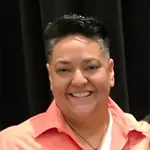
Before I learned to ask for help, I had to unlearn the belief that seeking guidance meant I was inconveniencing people who were more competent than me. I had to release the parts of my upbringing that taught me to shrink myself for the comfort of others. Stepping into my voice meant recognizing that asking questions is not a burden—it's a catalyst for learning, growth, and connection. What changed for me was the presence of strong, invested mentors who created a space where curiosity was welcomed and vulnerability was respected. Their support taught me that asking for help is not a sign of weakness but an act of courage and professionalism. It strengthens teams, deepens trust, and models the kind of collaborative spirit our field depends on. When we allow others to support us, we expand what's possible—not just for ourselves, but for the communities we serve. In my work, that collective strength translates into more responsive, compassionate care for the people who rely on us. Letting others in didn't make me smaller; it made the work bigger, more meaningful, and far more sustainable.

I learned early in life how to be independent, maybe a little too early. I graduated high school at 16 and started college shortly after. At that age, I thought being an adult meant figuring everything out on my own. I worked two full-time jobs and paid for my first two years of college entirely in cash. I was determined to prove that I could do it by myself. But independence without guidance can come at a cost. Despite all that work, I still found myself in financial ruin and had to go through debt consolidation twice. For someone who had spent years trying to prove they were capable, asking for help felt like admitting failure. I had spent so long trying to be an adult as a child that I believed struggling alone was just part of the deal. What changed for me was the people I met when I entered the professional world. Along the way, I was fortunate to have powerful female mentors who stepped in at critical moments of my career. They offered guidance, perspective, and sometimes just reassurance that I didn't have to navigate everything alone. Those relationships reshaped how I saw success. These women showed me that other women are not competition to be "won against." They can be mentors, collaborators, and advocates. They modeled what it looks like to lift others up, share knowledge, and create space for someone else to grow. Because of them, I learned that asking for help isn't a sign of weakness. It's an act of trust and growth. None of us gets where we are alone, and the willingness to lean on others can open doors you never expected. Today, I carry that lesson forward. The support and mentorship I received are a big part of why I'm where I am, and it reminds me how powerful it can be when women show up for one another.

No one succeeds completely alone. True independence means knowing when to seek input or insight from your peers. Reframe vulnerability as competence. Never give up and always ask the hard questions even when those questions spark criticism.

For most of my life, I believed that being strong meant doing everything on my own. I was the reliable one, the person who solved problems, handled crises, and rarely asked anyone else for support. Asking for help felt like admitting failure, like I was not capable enough. That mindset worked for a while, especially in my career. Being independent and driven helped me grow professionally. Over time, I realized something important. Constantly carrying everything alone is exhausting. It also quietly isolates you from the people who genuinely want to show up for you. The shift did not happen overnight. It started with small moments. I began asking a colleague for input instead of trying to solve everything myself. I let a friend know when I was struggling instead of saying I was fine. Each time I did it, I discovered something surprising. People did not judge me. They respected my honesty and often felt closer to me because I trusted them enough to ask. What changed the most was my understanding of strength. Strength is not about never needing anyone. It is about recognizing that we are human and allowing ourselves to be supported. When I started asking for help without shame, my relationships deepened, my work improved, and life felt less heavy. Now I see support as something mutual. Sometimes I am the one offering it and sometimes I am the one receiving it. Both are equally human and both make us stronger.