How She Learned to Work With People Who Disagreed With Her
Finding productive ground without requiring everyone to think alike.



Finding productive ground without requiring everyone to think alike.

I've learned that I can stand firmly in what I believe without diminishing someone who believes differently. When we lead with grace, listen with humility, and remember that every person has value, disagreement doesn't have to divide us it can become an opportunity to understand one another.

Don't be rigid. Respect the other party but show that you can meet in the middle.

I learned to clarify expectations early, and within that, to be clear about where the decision-making responsibility actually fell. Leaders get caught in the trap of creating democratic processes around decisions of all types in an effort to be fully inclusive and fair. It ends up creating counter-impact and becomes a mechanism for further division. The best thing a leader can do is to create clarity around what is up for group debate and input, and what choices they have executive authority over, and which they plan to exercise.

Common ground isn't a place you find; it's a bridge you build. I've learned that trust is cultivated plank by plank: listen with curiosity, lead with respect, and stay focused on a shared purpose strong enough to carry everyone forward.

I've learned that building trust starts with listening with an open mind, respecting different perspectives, and finding the common goal we can all work toward. I focus on empathy, clear communication, and collaboration, because progress happens when people feel heard and valued even when we don't see things the same way.
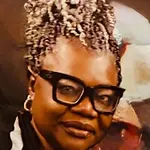
Trust across disagreement grows when people feel heard before they feel persuaded. Once we name a shared value--even a small one--cooperation becomes less about changing minds and more about moving forward together.

Some of the strongest relationships I've built have been with people who challenged my perspective. I've learned to lead with curiosity, listen to understand, and find the common ground that allows everyone to move forward.

Get to know people, give them a chance so you can find common ground. Healthy debates are needed for innovation and growth but it should never be at the expense of others.
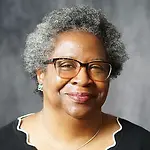
While people may disagree, common ground is found when both agree on the foundation to which the problem or disagreement exists. For example, a colleague may disagree on how to address a specific educational task with students, but we both agree that a specific skill is foundational to improve their writing skills. I attempt to establish common ground by listening, repeating what has been stated, demonstrating respect, and then presenting my proposed solution. The solution is based on evidence, not speculation. That also demonstrates that I am versed in the subject which also develops trust.

One quote I use a lot when working with people is this, "Positive thoughts, positive actions get positive reactions, so remember to be kind in your words and actions, you never know what may happen."

After 35 years as a senior and litigation paralegal, I have learned that you do not have to agree with everyone to work successfully together, because trust is built by listening, respecting different perspectives, communicating openly, and always bringing the focus back to what matters most our clients and the pursuit of justice. At the end of the day, we may disagree on strategy, opinions, or approaches, but when we can find common ground, move the case forward, and know that we gave our very best to the people we serve, everyone can go home feeling heard and respected.
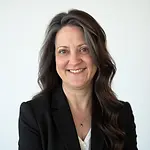
I have learned that being heard and being agreed with are two different things. I choose to be happy over being right.
Trust grew when I stopped viewing our different work styles as a conflict and began seeing them as different operating tempos. Cooperation became possible through curiosity, clear communication, and recognizing that both urgency and thoughtful deliberation bring value.

After more than 40 years working closely with people, I've learned that we don't have to see the world the same way to respect one another. Listening with an open mind, while staying true to who I am, has allowed me to build trust and find common ground even when our perspectives are very different.

Healthy disagreement ultimately leads to better projects. As an interior designer, I've certainly had moments on job sites where builders didn't take me seriously at first. I've found the best response is to stay entirely logical and solution-focused. Laying out the pros and cons without emotion naturally earns respect. I always keep an open mind if someone on site has a better idea, I'm quick to acknowledge it. But when I know my design or technical direction is correct, I stand firm without arrogance, relying on clear logic and professionalism to win them over.

True cooperation does not require everyone to think or speak the same way; it requires active listening and a commitment to a shared objective. In fast-paced customer service environments, I have frequently worked alongside individuals with vastly different communication speeds, training styles, and professional expectations. As a Black autistic woman, my natural communication style is deliberate and structured, which can occasionally contrast with the rapid, reactive pace of a high-stress workplace. To build trust and find common ground in these situations, I lean heavily into transparency and operational reliability. When faced with a coworker or supervisor who disagrees with my approach or pace, I consciously separate personal friction from the ultimate goal of the shift. I establish common ground by explicitly aligning on our shared objective whether that is maintaining register accuracy, reducing customer wait times, or ensuring a seamless transition between shifts. What makes cooperation possible for me is proactive clarity and an unwavering work ethic. Even when structured training or guidance is absent, I focus on what I can control: consistently arriving early, executing my core responsibilities flawlessly, and asking targeted questions to bridge communication gaps. By demonstrating a deep commitment to the team's operational success and remaining anchored in empathy, I have successfully turned moments of professional disagreement into opportunities for mutual respect and reliable collaboration.

Promoting a disruptive technology presents arguments by nature and disagreements are par for the course. However, in the case of narrow piano keys, I knew from the start that concerts by pianists playing narrow keys would be indisputable. The proof is in the action and there is no argument. This one idea has allowed me to withstand all the naysayers, all the back-and-forth and disagreements for decades. I knew that the moment anyone heard the music, and experienced performances, there would be no argument, even if I didn't know in the early days of my efforts that I would be the one producing the concerts.

If you want change, you have to be willing to change.

I showed respect and kindness while expressing my opinion. When you respect others, you commonly get respect back.

Cooperation is possible when you keep the basics in mind, listen to understand, respond to contribute to a solution, and remain respectful at all times.